Last Updated: October 18, 2026
Last Updated: October 18, 2026





~Abhishek Vij
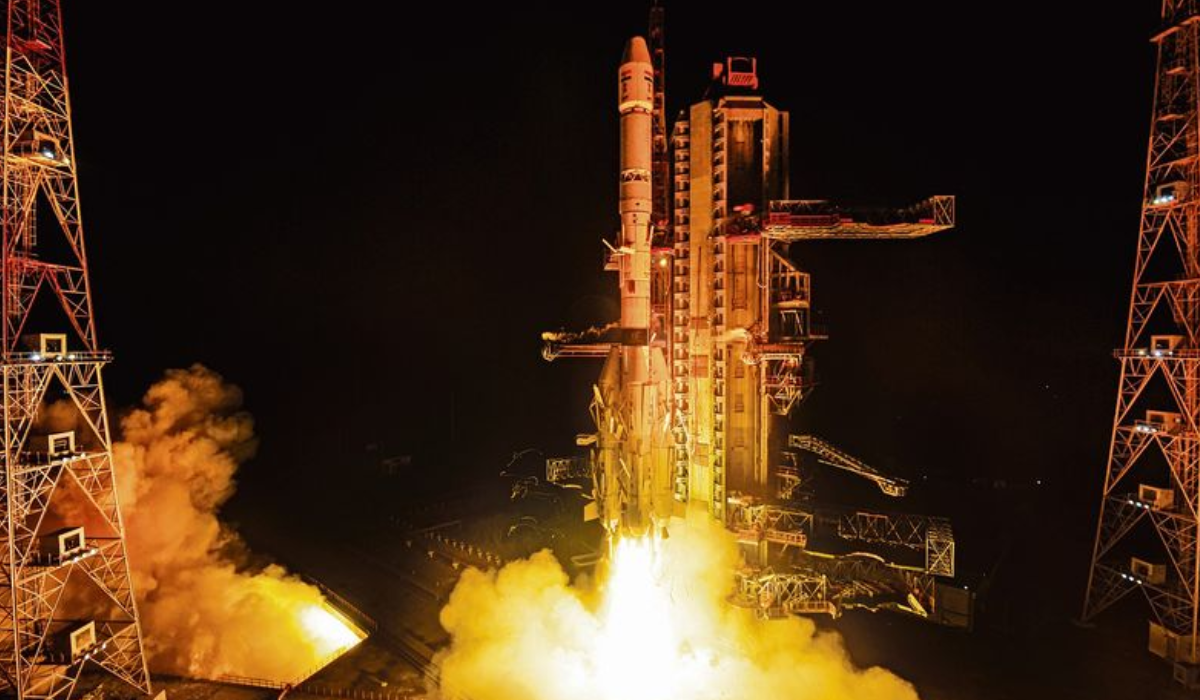
After 13 months, India has achieved a major success in space. On September 4 at 2.55 pm, ISRO created new history by launching an imaging satellite from Sriharikota in Andhra Pradesh. 16,500 scientists and engineers were waiting for the success of this mission in mission control rooms, launch complexes and tracking stations spread across the country. 19 minutes later, at exactly 3.14 pm, the country’s first imaging satellite was successfully launched. ISRO chief V. Narayanan said in a statement that the GSLV-F17 vehicle has accurately placed our advanced EOS-05 geo-imaging satellite in the desired and required orbit. In simple words, you can also call it the eye of India. The heaviest satellite, weighing 2367 kilograms, will be operational for nine years and will be able to take images of any part of the country’s land every half hour. This is a breakthrough after 13 months, as the previous successful rocket launch was on July 30, 2025, by the GSLV-F16. However, two subsequent rocket launch missions failed to achieve success. Prime Minister Narendra Modi congratulated the country, calling it a proud moment. He said it demonstrates India’s growing capabilities for innovation in space. Discussing the benefits of this eye on India, the primary benefit is that it will enable real-time monitoring of events like floods, cyclones, and forest fires. Furthermore, it will be possible to assess crop health, soil moisture, and vegetation health in agriculture. This satellite will be able to take images of key areas every five minutes, improving national security and environmental monitoring. Situated at an altitude of 36,000 kilometers above the Earth, the satellite matches the Earth’s rotational speed, allowing it to provide realtime images of any area. Typical remote satellites orbit at low altitudes and have the capability to take images once every few days. This satellite will also be strategically beneficial, providing assessment data for maritime security, border surveillance, and national security missions. Indian security agencies can formulate their defense policy based on this data. Recently, we have seen that all ISRO’s launch plans are being developed from a commercial perspective. Revenue potential is being explored. ISRO has also planned an unmanned Gaganyaan mission in six months. When we are able to include humans in this mission, this project will prove to be a profitable venture for India. Currently, India is also launching small communication satellites for neighboring countries through ISRO. Clearly, it is economically and scientifically impossible for these smaller countries to launch communication satellites, but India is pursuing this as a business venture and earning money for the country. ISRO has also opened its profitable projects to the private sector. Today, due to public-private partnerships, India’s economic growth rate has increased. Our economic growth rate is among the highest in the world. ISRO’s contribution to India’s economic development cannot be underestimated. Successful space missions have generated revenue for India through other countries’ satellite launch programs. Following the failure of the previous PSLV-C62 EOS-A1 mission on January 12, 2026, ISRO deserves considerable praise for this new success.
Nepal is seeking substantial financial assistance from India ahead of Prime Minister Balendra Shah’s proposed visit to New...

The race to succeed Antonio Guterres remains uncertain after three leading candidates faced opposition from two permanent members...

Democratic lawmakers have criticised Donald Trump for waiving key sanctions and tariff provisions under the Graham Act, citing...

Shipping Minister Sarbananda Sonowal confirmed that all 24 Indian seafarers aboard two vessels struck in separate incidents in...

Katie Zacharia has left her role as White House press secretary less than a week after her appointment....

US President Donald Trump has praised Kaylub Giamanco for intervening during a shooting at Silver Rail Elementary School...

Aries: The day will be auspicious...