Last Updated: October 15, 2026
Last Updated: October 15, 2026






I write this not as a distant observer or merely as a commentator on agricultural policy, but as a farmer living in Punjab. Although I spent a major part of my life in public service, I have remained closely connected with my ancestral occupation of agriculture. Like millions of farmers across India, I have experienced both the satisfaction of seeing a crop grow and the disappointment of not receiving the full value of the labour, investment and risk involved in producing it. This experience raises a fundamental question: when the farmer takes the greatest risk, invests substantial resources and contributes the greatest amount of labour, why should the largest share of the value created by agriculture so often go into the hands of others? Why should a farmer have to spend valuable time and resources coming onto the streets every few years, waiting for a political announcement, a new policy or financial relief? As India completes eighty years of independence, the time has come to look beyond temporary solutions. We need a transformation in the way we think about agriculture. The farmer must become an entrepreneur, agriculture must develop as a modern industry, and the farmer must become a productive and powerful partner in the national economy. Farmers’ struggles are not unique to India. During the past century, farmers in the United States, Canada, Australia and many other countries have organised themselves around issues relating to prices, debt, taxation, land, transportation and market access. Over time, many farmers’ organisations have evolved beyond protest movements. They have developed into cooperatives, marketing institutions, service providers and powerful instruments of economic representation. The objective has increasingly become not merely to protest against a system but to strengthen the farmer’s position within that system. The central challenge before Indian agriculture is simple: the farmer must receive a larger share of the value generated from the produce that originates on the farm. We frequently blame the middleman for this situation. However, the issue is more complex. Intermediaries often perform useful functions such as collecting produce, transportation, storage, grading, packaging and connecting producers with markets. The real question is not whether every intermediary should disappear. The real question is why farmers, either individually or collectively, should not be able to perform a larger share of these functions and retain a greater share of the value. When farmers organise themselves effectively, they can aggregate their produce, establish grading and storage facilities, undertake processing and packaging, develop their own brands and negotiate directly with hotels, restaurants, retailers, food-processing industries, exporters and large institutional buyers. The farmer should not remain merely a producer of raw material. The farmer must become an active participant in the entire value chain. In my view, one of the central ideas of the next agricultural revolution should be this: the farmer should not always have to go looking for the buyer; wherever possible, the buyer should come to the farmer. Today, the normal practice is that the farmer carries produce to the mandi or market and then searches for a buyer. In such a system, the balance of power often remains with the buyer or intermediary. The farmer may have produced the crop, but someone else may possess greater control over the market. Even farmers’ markets, which are useful in many ways, are often organised only once or twice a week and may not provide a regular and dependable marketing mechanism for every farmer. We need to rethink agricultural marketing. A farm should not be regarded merely as a place where crops are produced. It should increasingly become a centre of economic activity. Wherever practical, farmers or groups of farmers should have access to facilities for grading, packaging, storage and direct marketing at or near the farm. This does not mean eliminating every middleman. A good service provider should always have a place in the agricultural economy. But the farmer must have choices. The farmer should be able to sell directly, use professional marketing services, store produce for later sale, process it, sell collectively through a cooperative or invite buyers to a farm-based collection centre. Economic freedom requires options. We must also change our understanding of agricultural income. A farmer should not be dependent entirely upon one or two crops and wait six months or more for the next major income. Wherever land, climate, water availability and market conditions permit, agriculture should aim to create income throughout the year. Vegetable cultivation, dairy farming, beekeeping, mushroom production, nurseries, floriculture, poultry, fisheries, fodder cultivation and food processing can become valuable complementary activities. No farmer is expected to undertake all these activities. That would neither be practical nor desirable. But every farmer should consider one fundamental question: “How can my farm generate income during every month of the year?” We need to develop twelve-month agricultural income calendars suited to different regions and categories of farms. These should identify opportunities for daily, weekly, monthly and seasonal income. A farm must gradually evolve from being merely a place of cultivation into a well-managed economic enterprise. This requires another important change: we must understand the market before deciding what to produce. The principle should be simple: study the market, plan the production and then manage the risks. This does not mean abandoning traditional food crops. Food security remains a national priority. However, alongside essential food grains, we must encourage diversification and agricultural activities that increase income, improve sustainability and reduce excessive dependence on a limited number of crops. Farmers’ organisations must also move towards a more constructive economic role. Their importance in a democracy cannot be questioned. Farmers need a strong collective voice to protect their legitimate interests. But a farmers’ organisation should not be judged solely by its capacity to bring thousands of people onto the streets. Its real strength should also be measured by its ability to help farmers obtain better prices, access new technology, reduce costs, develop markets and increase incomes. Along with asking, “What will the government do for us?”, we must also ask, “What can we build for ourselves?” Modern farmers’ organisations can facilitate collective purchasing, shared machinery, storage facilities, processing units, branding, marketing and direct negotiations with large buyers. Government must provide essential infrastructure and support in areas such as irrigation, roads, electricity, research, agricultural advisory services, crop insurance, credit, storage, cold chains and reliable market information. Yet the ultimate purpose of government support should not be permanent dependence. It should be empowerment. A prosperous farmer should not have to return to the streets repeatedly simply to secure economic survival. The farmer should possess the strength of sustainable income, strong institutions and access to multiple markets.
Sofia: A vessel sailing under the flag of San Marino caught fire in the Black Sea near Romania...

New Delhi: Accusing the Congress of double-speak on women dignity, the Bharatiya Janata Party (BJP) Mahila Morcha on...
New Delhi: NITI Aayog’s Frontier Tech Hub released a Data Centre Evaluation Framework to help states plan for...
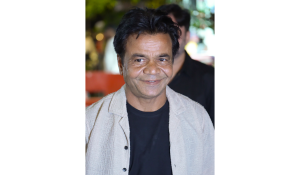
New Delhi: The Supreme Court on Thursday referred the cheque dishonour cases against actor and comedian Rajpal Yadav...
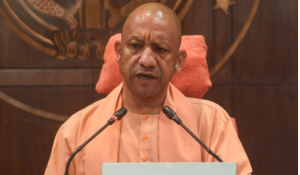
Mirzapur: Uttar Pradesh Chief Minister Yogi Adityanath on Thursday accused the Samajwadi Party (SP) and the Congress of...
Congress leaders and workers in Dehradun raised slogans outside Lok Bhavan on Thursday regarding the infamous Ankita Bhandari...
Aries: The day will be auspicious...