Last Updated: October 3, 2026
Last Updated: October 3, 2026





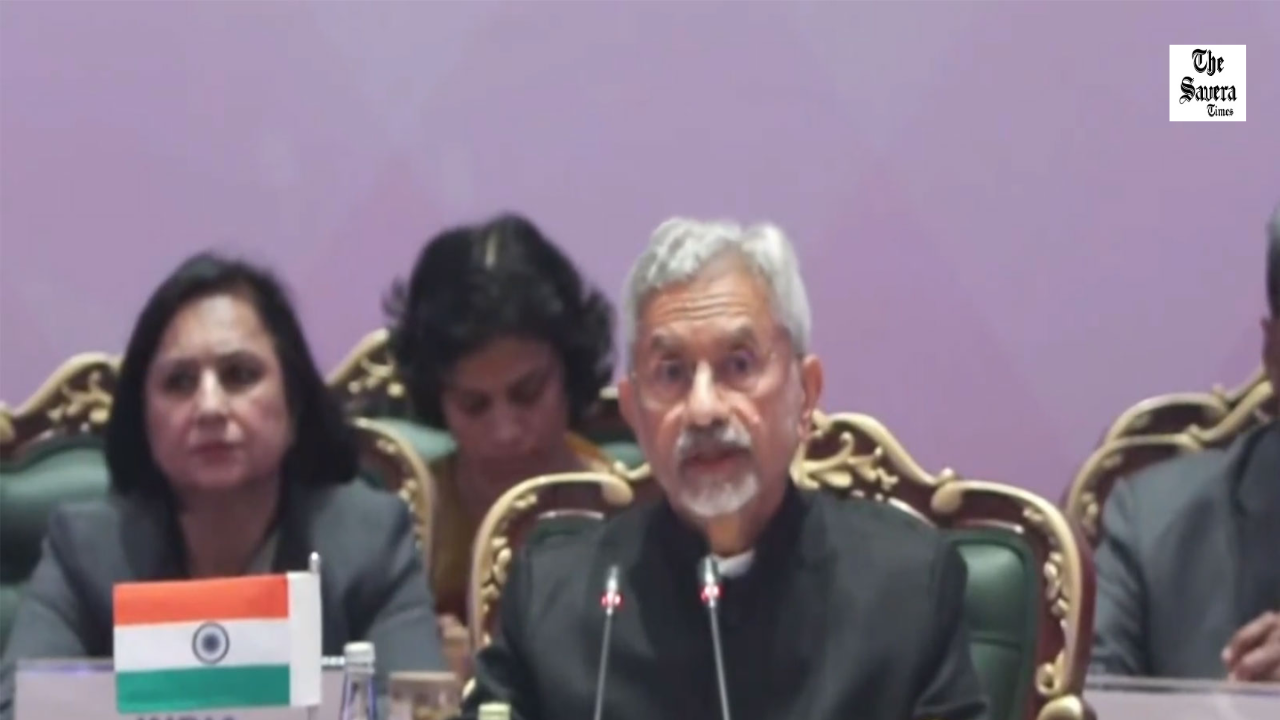
NEW DELHI, INDIA — External Affairs Minister S. Jaishankar has said that the ongoing transformation in the Middle East is highly relevant to India’s relationship with Arab nations, underscoring that geopolitical shifts in the region have significant implications for New Delhi’s strategic, economic and diplomatic engagements. Jaishankar made these remarks during the Second India-Arab Foreign Ministers Meeting held in New Delhi, where foreign ministers from the Arab League and Gulf countries gathered to strengthen institutional cooperation with India.
My opening remarks at the 2nd India – Arab Foreign Ministers’ Meeting. https://t.co/Fbb5q66GDg
— Dr. S. Jaishankar (@DrSJaishankar) January 31, 2026
Jaishankar highlighted that the current transformation in the Middle East comes at a time when global order is undergoing major realignments, and that India is watching these shifts closely. The minister emphasized that developments in the region are not isolated but are deeply connected to India’s West Asia policy and have a direct impact on how India engages with Arab nations on matters ranging from trade and energy to security cooperation. He said that both sides share mutual interests in stability and prosperity, and that sustained dialogue and diplomatic engagement are essential amid dynamic regional trends.
The meeting saw foreign ministers from several Arab countries arrive in New Delhi for the 2nd India-Arab Foreign Ministers’ Meeting, illustrating New Delhi’s intent to deepen institutional ties and cooperation frameworks with the Arab League. These high-level discussions are being held against the backdrop of a rapidly evolving geopolitical landscape in the Middle East, marked by shifting alliances, economic diversification and emerging security challenges.
India’s relationship with the Middle East and Arab nations has multiple layers. The Gulf region alone accounts for a major share of India’s energy imports, and trade volumes with Gulf Cooperation Council (GCC) countries run into hundreds of billions of dollars annually. Beyond energy, the Indian diaspora numbering in the millions across the region plays a key role in strengthening people-to-people connections and remittance flows. Analysts note that India’s engagement with the GCC and wider Arab world also opens avenues for cooperation in technology, trade, infrastructure and renewable energy sectors, reflecting a broadening of ties beyond traditional areas.
Jaishankar’s remarks also resonate with India’s efforts in institutionalizing regular dialogues with Arab countries such as the India-Arab League cooperation forums and strategic ministerial meetings which are intended to enhance coordination on global issues like counterterrorism, maritime security, economic connectivity and regional stability. These platforms enable India and Arab partners to align on shared priorities and respond to emerging challenges more cohesively.
Another key aspect of India’s relationship with the Middle East and Arab nations is cooperation on security challenges, including terrorism and extremism. Jaishankar and counterparts have highlighted the importance of collective action against threats that transcend national borders a priority that has featured prominently in India’s diplomatic outreach in the region. This strategic alignment also underscores India’s desire to play a constructive role in promoting peace and stability across West Asia.
As the Middle East continues to undergo political and economic transformation, India’s diplomatic strategy appears focused on deepening these multifaceted ties balancing energy security, economic opportunity, strategic cooperation and diaspora interests while adapting to the shifting contours of regional geopolitics.
Jammu: A 17-year-old girl from Pakistan-occupied-J&K (PoJK) was detained by the Indian Army on Saturday after she crossed...

New Delhi: The Delhi Police has registered at least three cases in connection with Friday’s protests near Jantar...
Vrindavan: The ashram of spiritual leader Premanand Maharaj has come under attention after the family of a 17-year-old...

Dhaka: Amid growing concerns over mounting threats to press freedom in Bangladesh, at least 162 journalists faced attacks,...

New Delhi: Tech giant Apple has said it will tighten controls around Full Disk Access on Mac computers...

Mumbai: Bollywood superstar Salman Khan has lauded Indian pilot Captain Smit Machchhar for his courage and presence of...

Aries: The day will be auspicious...