Last Updated: October 21, 2026
Last Updated: October 21, 2026





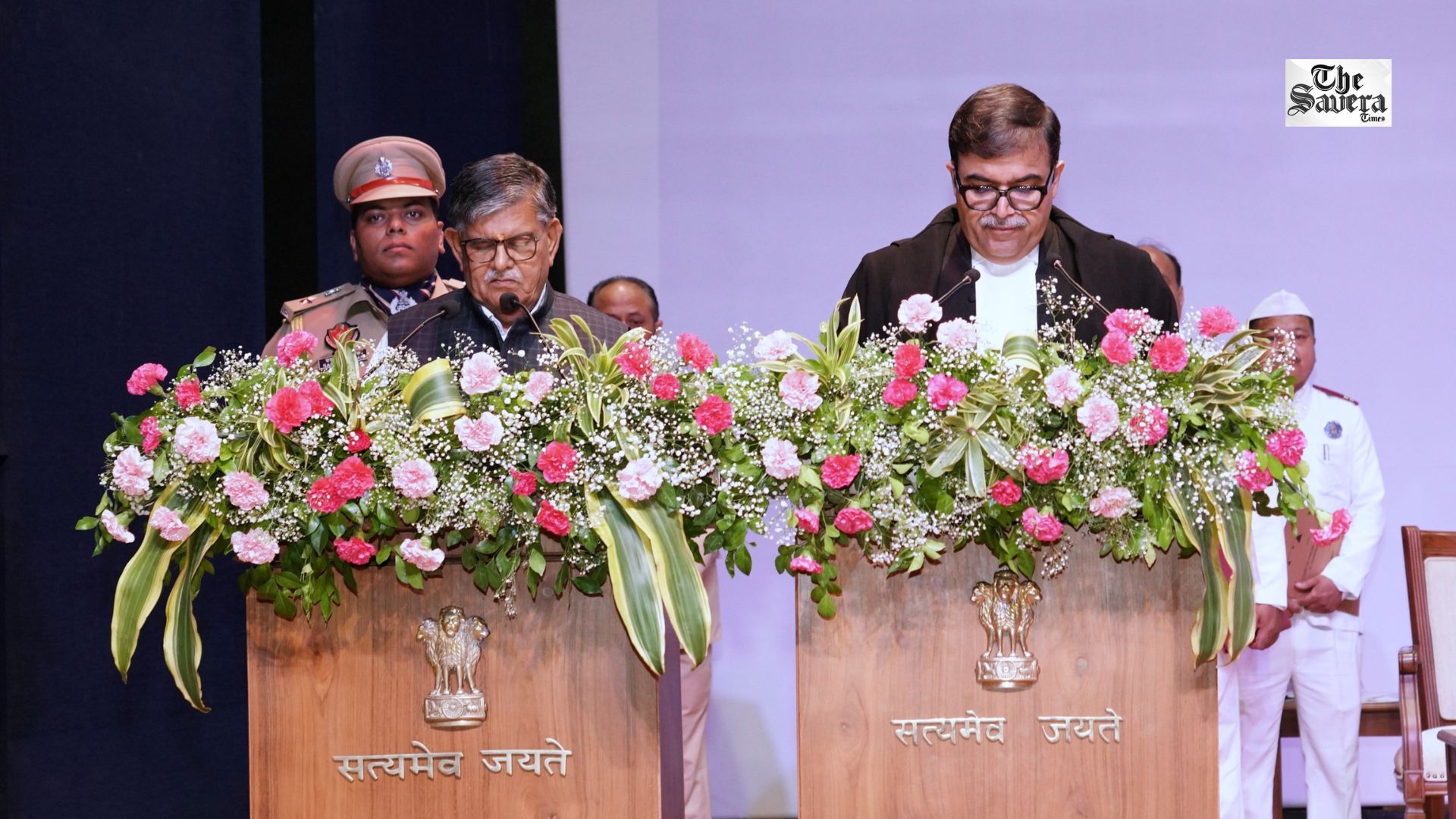
Chandigarh: Justice Ashwani Kumar Mishra on Monday took oath as the 37th Chief Justice of the Punjab and Haryana High Court, bringing an end to days of controversy over his appointment after the Punjab government led by Chief Minister Bhagwant Mann strongly opposed the move.
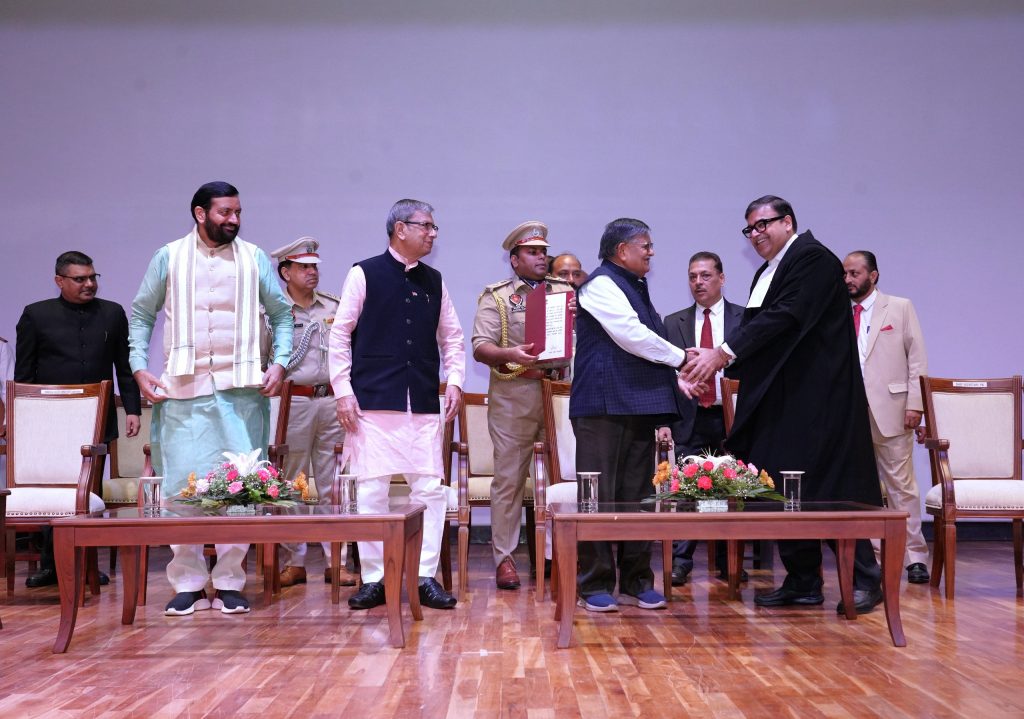
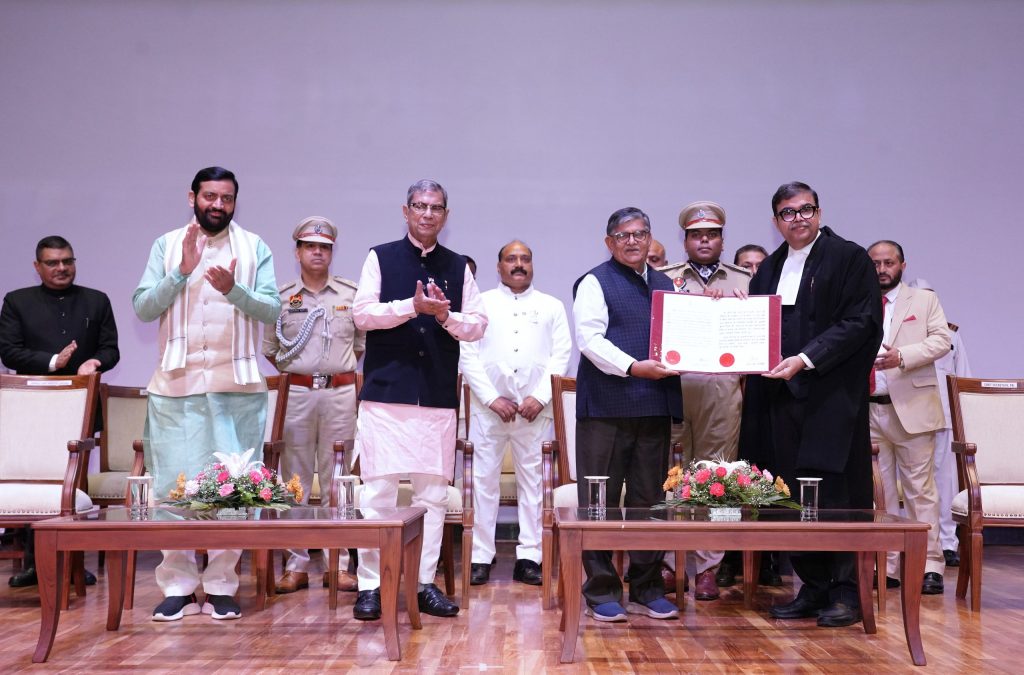
Punjab Governor Gulab Chand Kataria administered the oath of office to Justice Mishra at Punjab Lok Bhawan on September 7. The ceremony was attended by judges of the High Court, senior government officials and members of the legal fraternity, besides Haryana Chief Minister Nayab Singh Saini and Haryana Governor Prof. Ashim Kumar Ghosh.
However, Punjab Chief Minister Bhagwant Mann and his entire Cabinet were absent from the swearing-in ceremony. Their absence came barely a day after the Punjab Cabinet passed a resolution objecting to Justice Mishra’s appointment and sought a stay on the oath-taking.
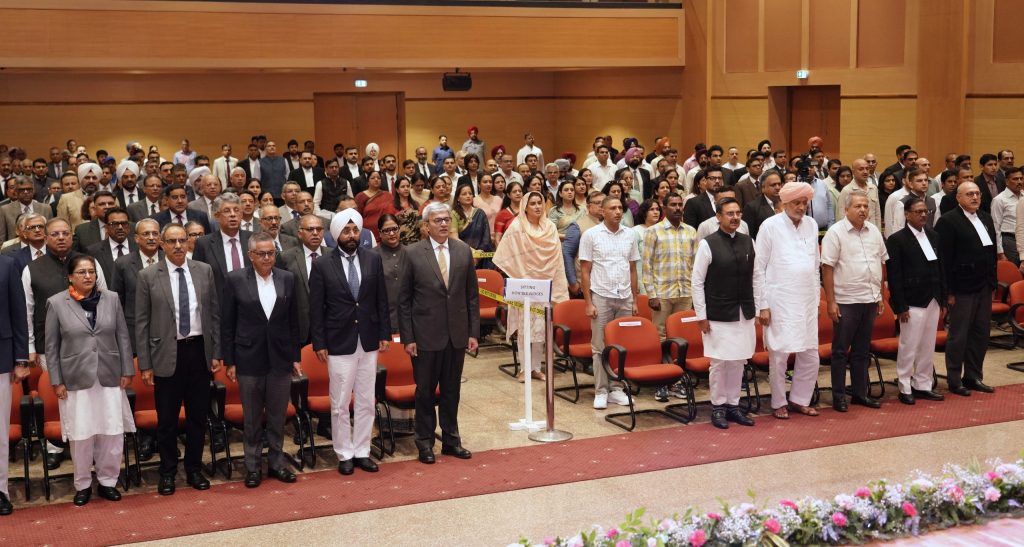
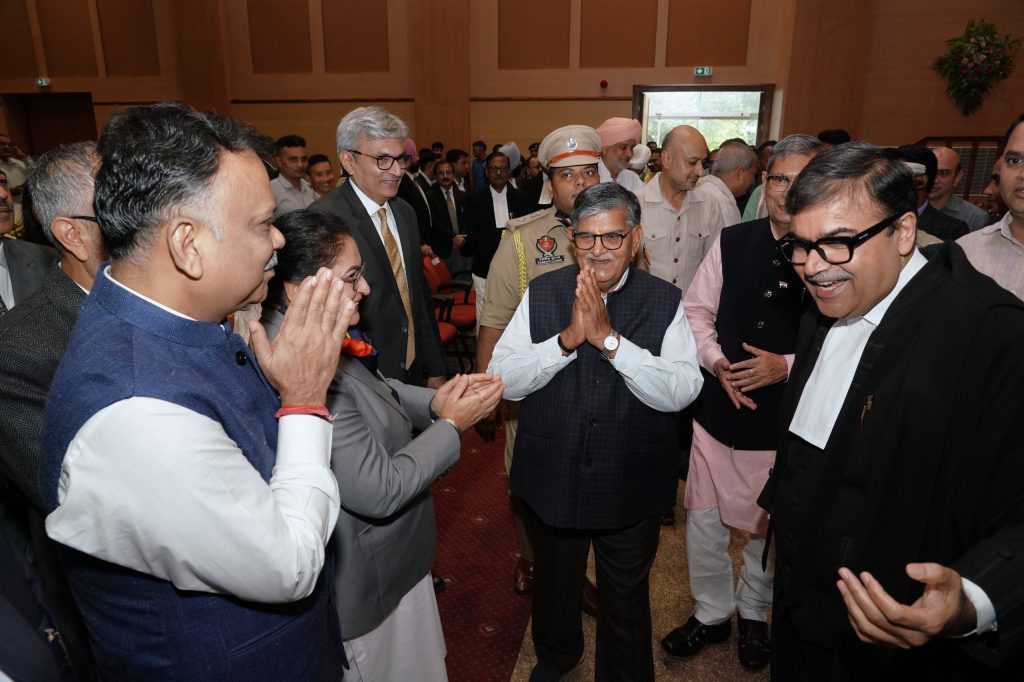
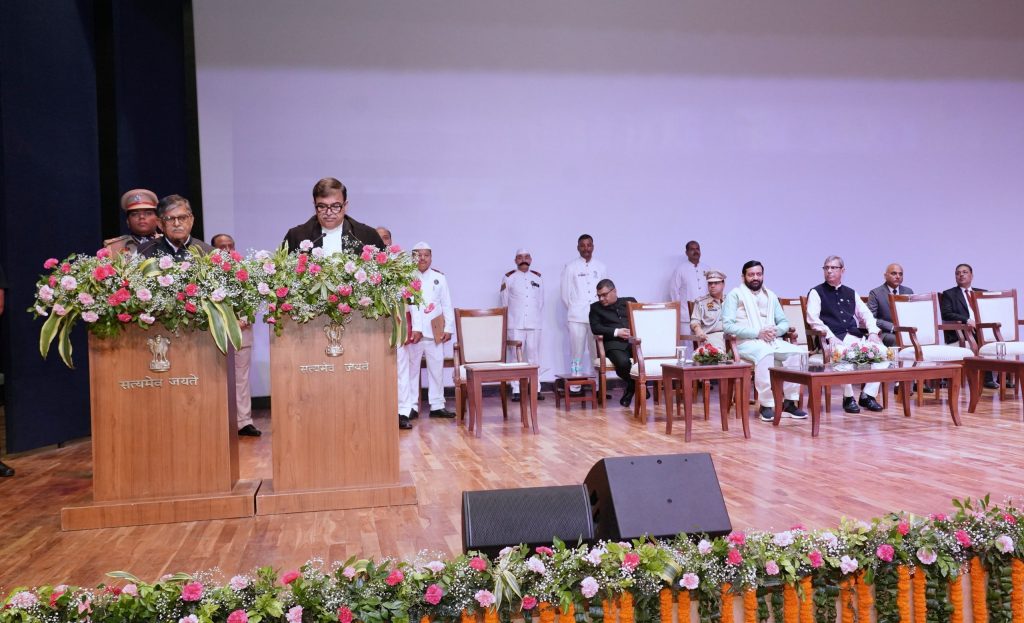
The development has triggered an unusual political and constitutional dispute between the Punjab government and the Centre over the process followed for appointing the Chief Justice.
Justice Mishra succeeds Justice Sheel Nagu, who was elevated to the Supreme Court in June 2026.
Punjab Government Opposes Appointment
The oath-taking came a day after the Punjab government stepped up its opposition to Justice Mishra’s appointment.
On Sunday, September 6, Chief Minister Bhagwant Mann convened an emergency meeting of the Punjab Cabinet, where the state government passed a resolution opposing the appointment.
The Cabinet resolution maintained that the new Chief Justice should not be administered the oath until the Punjab government’s consent was obtained.
The state government also approached President Droupadi Murmu, Prime Minister Narendra Modi and Governor Gulab Chand Kataria, requesting that the appointment and administration of oath be deferred.
Punjab Finance Minister Harpal Singh Cheema argued that the appointment of a High Court Chief Justice is a sensitive constitutional matter and alleged that the prescribed procedure had not been followed.
The Punjab government has particularly questioned the process followed in appointing Justice Mishra, arguing that the state’s views and consent were required before the appointment could proceed.
What Is Punjab’s Main Objection?
One of the key arguments raised by the Punjab government relates to Paragraph 6 of the Memorandum of Procedure (MoP) governing the appointment of Chief Justices of High Courts.
According to Cheema, the provision requires the views and consent of the concerned state government to be taken into consideration when such an appointment is recommended.
The Punjab government has argued that this procedure was not properly followed in Justice Mishra’s case and that the Centre proceeded with the appointment without waiting for the state’s views.
Cheema also cited the earlier case of Justice GS Sandhawalia to question what the state government described as inconsistent treatment in the appointment process.
On July 11, 2024, the Chief Justice of India and the full Supreme Court Collegium recommended Justice Sandhawalia, then the senior-most judge of the Punjab and Haryana High Court, for appointment as Chief Justice of the Madhya Pradesh High Court.
The Punjab government has pointed out that the recommendation remained pending for more than two months, with consent not granted between July 11 and September 17, 2024. Justice Sandhawalia was subsequently appointed Chief Justice of the Himachal Pradesh High Court.
The state government has questioned why the process took longer in that case while Justice Mishra’s appointment proceeded despite Punjab raising objections.
Letters From Governor, Centre Become Part of Dispute
The controversy has also centred on correspondence between the Punjab government, Governor and Centre.
The Punjab government has referred to a letter sent by Governor Gulab Chand Kataria to Chief Minister Bhagwant Mann on August 12, 2026, as well as a letter from Union Minister Arjun Ram Meghwal.
Cheema said these communications themselves referred to Paragraph 6 of the Memorandum of Procedure and the need to consider the concerned state’s views.
The Punjab government’s contention is that despite this provision being cited in the correspondence, Justice Mishra’s appointment was ultimately made without obtaining the consent that the state says was required.
The government therefore sought to prevent the swearing-in until its concerns were addressed.
However, the Centre has maintained a different position, saying that the appointment of a High Court Chief Justice is governed by the Memorandum of Procedure and the constitutional mechanism for judicial appointments. According to the Centre’s position, the concurrence of the state government is not mandatory for such an appointment.
The Supreme Court Collegium, headed by Chief Justice of India Surya Kant, had recommended Justice Mishra’s appointment on August 6, 2026.
Mann, Cabinet Stay Away From Oath Ceremony
Despite the Punjab Cabinet’s resolution and its representations to the Centre, President and Governor, the swearing-in ceremony went ahead on Monday.
Governor Gulab Chand Kataria administered the oath to Justice Ashwani Kumar Mishra at Punjab Lok Bhawan.
The absence of Chief Minister Bhagwant Mann and the entire Punjab Cabinet highlighted the seriousness of the disagreement surrounding the appointment.
Haryana Chief Minister Nayab Singh Saini and Haryana Governor Prof. Ashim Kumar Ghosh, however, attended the ceremony along with members of the judiciary, senior officials and the legal fraternity.
Mann’s decision to stay away from the ceremony came just a day after his Cabinet formally opposed the appointment, adding a political dimension to the judicial transition.
Justice Mishra Had Served as Acting Chief Justice
Justice Ashwani Kumar Mishra had already been serving as the Acting Chief Justice of the Punjab and Haryana High Court since June 2, following the elevation of then Chief Justice Sheel Nagu to the Supreme Court.
He was transferred to the Punjab and Haryana High Court from the Allahabad High Court in July 2025.
The Supreme Court Collegium subsequently recommended him for appointment as the permanent Chief Justice on August 6, leading to the present controversy over the appointment process.
Who Is Justice Ashwani Kumar Mishra?
Born on November 16, 1968, Justice Ashwani Kumar Mishra completed his BA (Honours) in Economics from Kirori Mal College, University of Delhi, and obtained his LLB from the Campus Law Centre of the University of Delhi.
He was appointed an Additional Judge of the Allahabad High Court on February 3, 2014, and became a permanent Judge on February 1, 2016.
He served at the Allahabad High Court until July 20, 2025, before being transferred to the Punjab and Haryana High Court.
Justice Mishra now formally assumes charge as the 37th Chief Justice of the Punjab and Haryana High Court at a time when his appointment itself has become the subject of a political and constitutional dispute between the Punjab government and the Centre.
The episode has added a new dimension to the already strained relationship between the AAP-led Punjab government and the BJP-led Centre, with the new Chief Justice taking charge despite the state government’s objections to the appointment procedure.
Punjab Chief Minister Bhagwant Mann was allegedly detained for three hours at Delhi airport upon his return from...
US Secretary of State Marco Rubio said on Tuesday that India and the US are very close to...
Model Shraddha Dubey, one of the main accused in the death of Lucknow businessman Shiv Sharma, has been...

The Punjab Vigilance Bureau (VB) during its ongoing drive against corruption in the state, has apprehended Inspector Gulshan...
Amidst comparisons of youth protests in India to political movements and regime changes in France, Nepal, and Bangladesh,...

Chief Minister Bhagwant Mann may soon hold a press conference or release a video message amid Union Home...
Aries: The day will be auspicious...