Last Updated: September 25, 2026
Last Updated: September 25, 2026





~Arjumand Wani
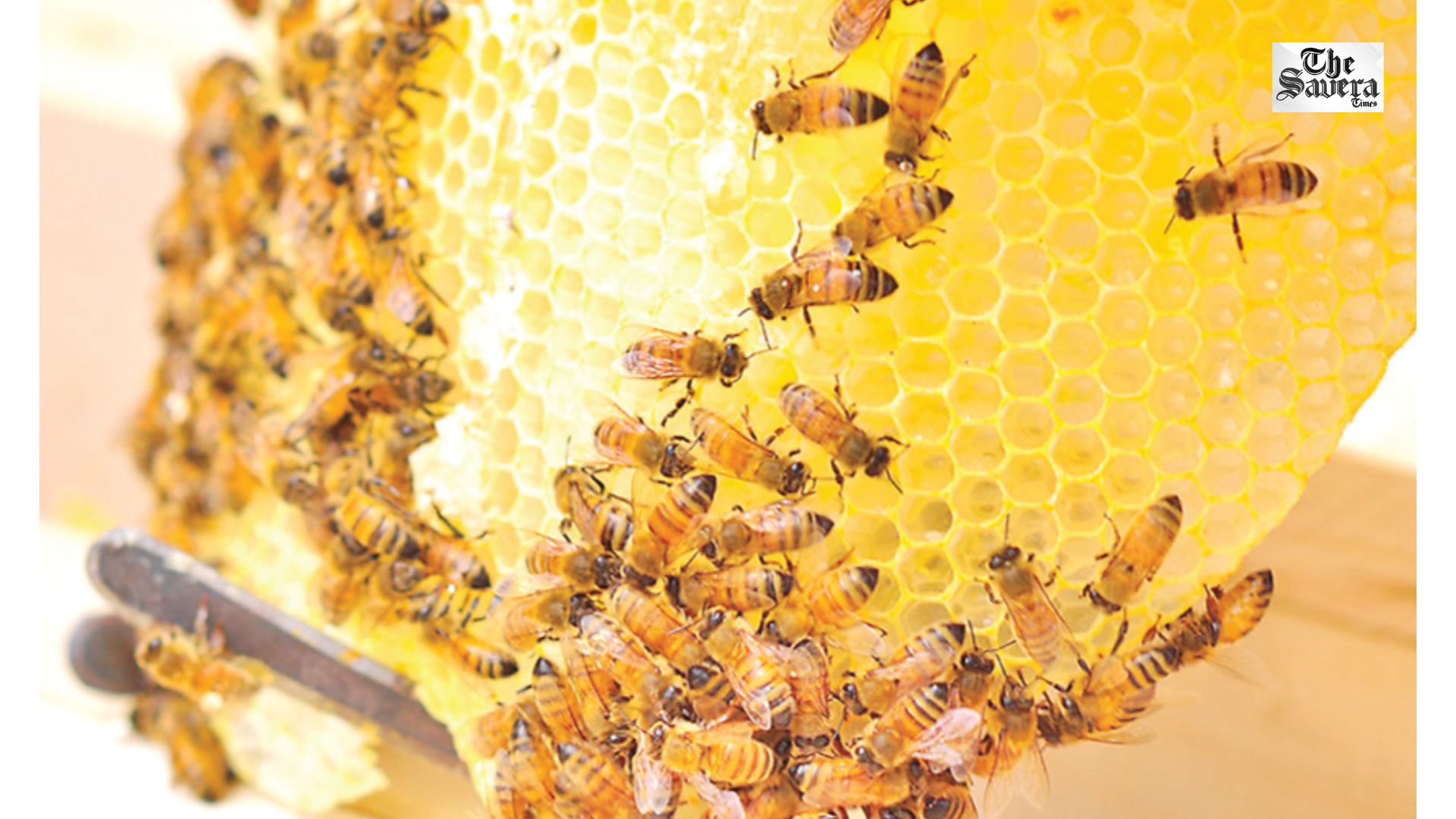
A season of erratic swings has hit beekeepers across Kashmir, with some reporting honey production losses of up to 90%. The decline is linked to disrupted flowering, cold spells during the bloom season, pesticide use and the stress of seasonal migration. They say the fall in honey production has also raised concerns over pollination in Kashmir’s orchards, especially its apple-growing belts.
About 15 kilometres southeast of Srinagar, in Balhama village, 21-year-old entrepreneur Sania Zehra keeps 650 beehives in the Khonmuh hills. Known locally as the ‘Bee Queen of Kashmir’, she has been in the business for six years.
Until now, she says, beekeeping had grown steadily enough to feel like a stable livelihood. This year, however, her yield fell from 300 buckets of honey to just 30. Zehra said she had not seen such a steep fall in production since she began keeping bees on the same hillside. The hives remained, and the bees were alive, but there was little honey.
For a young entrepreneur who had built a name in the trade, the loss is not only financial. It has also raised questions about the future of beekeeping in the valley.
About 40 kilometres south of Srinagar, in Pulwama district, brothers Abid Ali and Sher Ali have faced a similar setback. The two migrated with their hives to Rajasthan in December and then to Pathankot in Punjab in March, before returning to Kashmir in late April — a route they have followed for years to keep their colonies alive through winter.
”We have more than 200 hives. Every year we get around 200 buckets of honey, but this year we could collect just 40,” Abid Ali said.
The decline is notable because the brothers live in a horticultural belt of Pulwama, where flowers usually bloom in greater numbers and variety than in Balhama. Abid Ali said the family’s business depends largely on Kashmir’s acacia honey, which fetches a higher price than honey collected outside the valley.
”The honey we extract outside Kashmir is not of good quality. That sells for Rs 500 per kg,” he said. ”Our main business depends on Kashmir, particularly acacia honey, which ranges from Rs 1,000 to Rs 1,200 per kg.”
Entomologist Shabir Ahmad said the scale of the decline was significant. Kashmir has 2,120 registered beekeepers, of whom nearly 90 per cent migrate to warmer parts of India every winter. The valley produces more than 1,200 metric tonnes of honey annually, he said.
Ahmad said final production figures for the current season would only be calculated in March 2027. But he said the acacia season, a key source of Kashmir’s honey, had been badly disrupted this year. ”We witnessed almost a 90 per cent drop in honey this year, which is huge,” he said.
The April-May season is critical for acacia, known locally as kikar. The species, _Robinia pseudoacacia_, commonly known as black locust, was introduced in Kashmir in 1919.
”Most of the honey we extract comes from these trees. This year, unseasonal rains disrupted acacia flowering, and that is the reason April-May honey production dropped significantly,” Ahmad said.
Some honey was collected from the upper reaches of Ganderbal and Kangan, where acacia flowering began later, but he said the output was minimal.
The fall in production may have been caused by a combination of factors. Noor-ul-Islam, agriculture extension officer at the District Agriculture Office in Pulwama, said many farmers across the valley had reported lower honey production this year.
He said erratic weather during the peak bloom months of March, April and May weakened bee activity and washed nectar off flowers. Cold spells reduced movement by bees, while higher-than-normal temperatures at other points shortened the life of blossoms and reduced nectar secretion.
He also cited the widespread use of harmful pesticides, which he said had affected bee activity and increased honeybee mortality.
Mohammad Anees-ul-Mehmood, a Kashmir-based environmentalist, said nectar availability is highly sensitive to temperature. Sudden shifts between warm spells and cold days and nights during April and May can reduce nectar secretion, limit bee activity and affect pollination during the critical flowering period, he said.
This could affect not only honey production but also fruit set — the process by which pollinated flowers develop into fruit — in apples and other temperate crops.
New Delhi: The Delhi High Court has refused to grant regular bail to a 26-year-old man accused of...

Ayodhya: The SIT’s voluminous chargesheet in the Ram Temple donation theft case against eight accused cites CCTV recordings...

New Delhi: The Supreme Court has upheld the Bombay High Court’s view that offering ‘Dua’ (prayer) for electoral...

New Delhi: The National Investigation Agency (NIA) has arrested two more accused in connection with the Improvised Explosive...

Patna: The Bihar Congress staged a protest march in Patna on Friday against Chief Election Commissioner Gyanesh Kumar...

Kabul: Pakistan’s actions have imposed a heavy human toll on Afghan civilians, with millions of refugees displaced, tens...
Aries: The day will be auspicious...