Last Updated: October 21, 2026
Last Updated: October 21, 2026





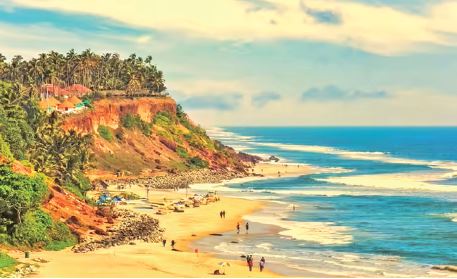
On a monsoon morning, the sandstone cliffs of Varkala shimmer under subdued light, their rust-red faces marked by centuries of salt and rain. Below, the Arabian Sea lashes the cliff base while coconut palms sway above. Pilgrims descend barefoot to the Janardana Swamy temple beach, and fishermen prepare their nets for the day.
UNESCO has placed Varkala Cliff on its tentative list of World Heritage Sites, recognising both its natural and cultural significance. Unlike Kerala’s otherwise flat coastline, Varkala is the only place where cliffs rise directly from the sea. The formation, called Sivagiri Thuruthu, belongs to the Mio-Pliocene age and preserves laterite and sedimentary layers containing fossils and evidence of ancient climates. Coastal geologists note that the cliff’s scientific value makes it fragile, with laterite prone to crumbling under pressure. Monsoons, construction and climate-driven sea surges have already caused landslides and cracks, threatening structures at the edge.
The cliff is also a spiritual hub. The Janardana Swamy temple, over two millennia old, anchors the southern end, and nearby Sivagiri Mutt, founded by social reformer Sree Narayana Guru, draws thousands of pilgrims annually. Locals view the cliffs as a guide and protector for fishing communities.
Tourism has expanded over the past three decades, bringing guesthouses, cafés, and yoga centres. While this has boosted income and employment, unregulated growth has led to sewage leaks, waste accumulation, and unauthorised buildings. Local activists warn that unchecked tourism and development could destabilise the cliff further, endangering both residents and visitors.
Fisherfolk report declining catches and rising costs, while climate threats such as stronger monsoons, sea-level rise, and extreme floods in 2018 and 2019 have already damaged parts of the laterite layers. Experts say the cliff faces unprecedented stress from human activity combined with climate change.
Despite state recognition, governance challenges persist. Coordination between local authorities, planners, and geologists is limited, and proposals for a geo-park or heritage zone remain stalled. Some NGOs and schools are promoting awareness through field trips and eco-friendly practices, but officials have yet to define carrying capacities or enforce construction regulations.
For Varkala, the challenge is clear: balancing tourism, local livelihoods, cultural significance, and climate resilience. Preservation will require strict regulation, community engagement, and adaptation to environmental threats. The UNESCO listing is only a first step; how the cliff is managed in the coming years will determine whether it endures as a geological and cultural treasure or becomes a cautionary example of mismanaged heritage.
Good Evening Viewers! Catch up on the day's biggest stories with The Savera Times Evening Bulletin. Get the...

Congress leaders continued their protest outside the Jaipur Police Commissionerate on Tuesday, demanding the registration of a zero...
On the auspicious occasion of Vijayadashami, Prime Minister Narendra Modi on Tuesday called on the countrymen to unite...
A historic milestone was achieved on Tuesday in the expansion of Chhattisgarh's rail networkA historic milestone was achieved...

Model Shraddha Dubey, one of the main accused in the death of Lucknow businessman Shiv Sharma, has been...
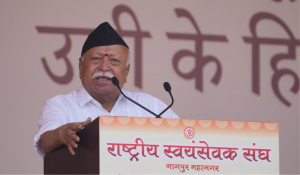
Rashtriya Swayamsevak Sangh (RSS) chief Mohan Bhagwat on Tuesday called for strengthening national unity, social harmony, indigenous practices...
Aries: The day will be auspicious...