Last Updated: October 18, 2026
Last Updated: October 18, 2026





Abhishek Vij
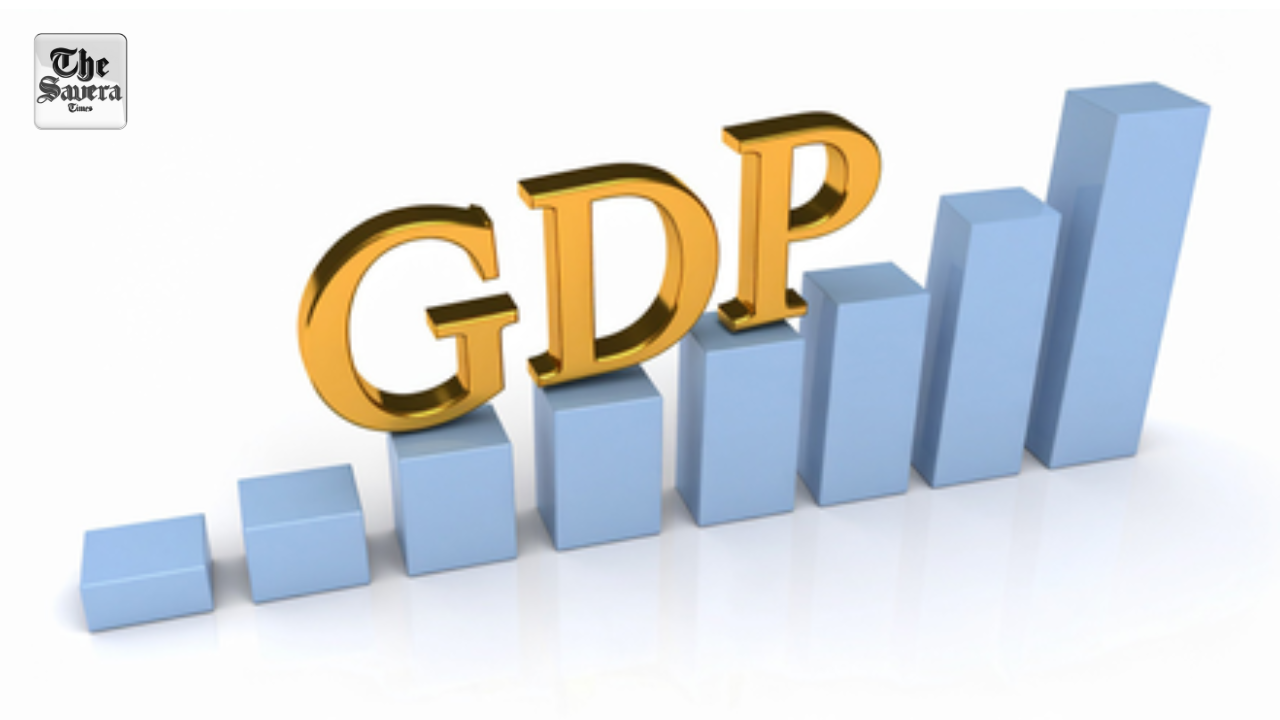
The process of measuring a country’s GDP, or Gross Domestic Product, is crucial. It reveals where we started and how far we have come. It also reveals our growth rate, where we stand compared to other countries, and how many more steps are needed to achieve our goal of becoming a developed nation. Whether it’s GDP, gross domestic product, or inflation, all are measured by indices.
Indices have a universe, which the selectors select without any prior knowledge. These indices are usually based on sample surveys, and the results are based on our universe. Currently, the data obtained based on the universe familiar with the current index are very encouraging. First, our country’s growth rate exceeds the growth rate of almost all countries in the world. Second, we are continuously progressing. 11 years ago, we were nowhere in the world’s index. Within 11 years, we first became the fifth largest economic power, and then the fourth. It is predicted that in a year or so, India will become the third largest economic power, and the government predicts that in 2047, when we celebrate the centenary of our independence, our country may become the leading economic power, surpassing the United States and China, the world’s first and second largest economic powers. However, recently, an attempt has been made to change the definition of this standard of economic performance, namely, Gross Domestic Product. The Technical Advisory Group of the Ministry of Statistics and Programme Implementation in India has decided to include knowledge within the framework of the GDP universe.
This means that, in addition to measuring GDP, the ambitious GDKP will also be launched, and an attempt will be made to measure India’s civilizational knowledge. This is a very well-thought-out approach, because as far as India’s knowledge and cultural development is concerned, we are not inferior to any other country, but are ahead of it. Modi says, “The world calls us Gurudev, and now we will once again become the world’s Gurudev in 2047.” He is absolutely right. If we include our civilizational knowledge and cultural consciousness in this assessment, we are unmatched. As we expand the knowledge economy, our Indian economy is expected to grow rapidly.
Currently, India is the world’s fourth-largest economy, surpassing Japan’s $4.5 trillion economy. R. Balasubrahmanyam, Chairman of the Technical Advisory Group, stated that while such attempts to define India have not been successful to date, by classifying India’s knowledge assets, the depth and cultural richness of the country’s civilization will also be taken into account. The note states that India’s knowledge economy cannot be viewed from a Western perspective. India is great, India is unique. Why is its rich civilization and cultural tradition, which began with Harappa and Mohenjo-daro and continues to this day, not being acknowledged? If this were acknowledged, India would automatically rise to the top. Yes, it is certainly believed that while taking cognizance of the past, one should not forget the present and should not lose sight of future goals.
Vasudev Uike and his wife, Sunita, died after a speeding car hit their motorcycle in Pandhurna, Madhya Pradesh....

Greater Noida: The deaths of five members of a family whose bodies were found inside their home in...

Chandigarh: Union Home Minister Amit Shah will visit Punjab on October 20 and meet families affected by drug...
New Delhi: Praveen Khandelwal, BJP MP from Chandni Chowk and Confederation of All India Traders (CAIT) Secretary General,...
Patna: Bharatiya Janata Party (BJP) National President Nitin Nabin on Sunday announced the cancellation of all public programmes...
Hyderabad: A female student died, and at least 16 others were injured when a lighting truss collapsed during...

Aries: The day will be auspicious...