Last Updated: October 24, 2026
Last Updated: October 24, 2026





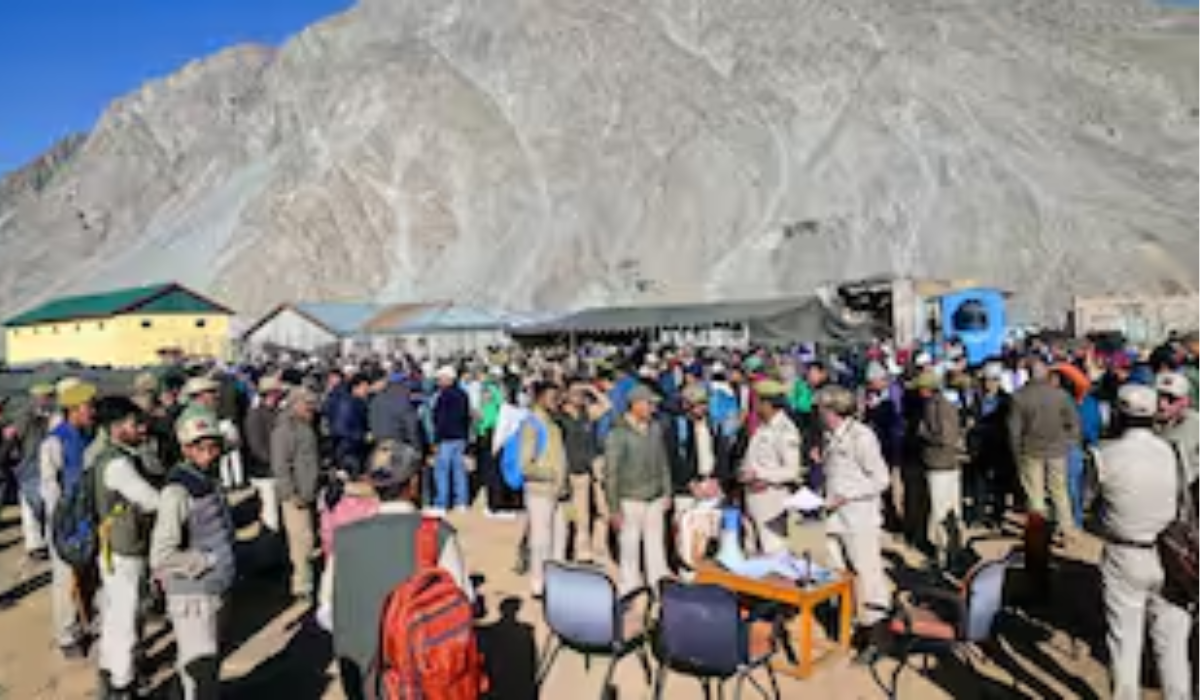
Leh: The Union Territory of Ladakh is set for a significant administrative overhaul with the creation of five new districts — Zanskar, Drass, Sham, Nubra, and Changthang.
This decision, announced by the Ministry of Home Affairs (MHA) in August 2024, will increase the total number of districts in Ladakh from two (Leh and Kargil) to seven, bringing governance closer to remote and far-flung areas.
Union Home Minister Amit Shah described the move as a historic step aligned with Prime Minister Narendra Modi’s vision for a developed and prosperous Ladakh.
Amit Shah welcomes Move
In a post on X (formerly Twitter), Shah stated that the new districts would help deliver government benefits and welfare schemes directly to the doorsteps of residents by strengthening administration across the region’s challenging terrain.
Vinai Kumar Saxena, Lieutenant Governor (LG) of the Union Territory of Ladakh, tweets, “A historic day for Ladakh. I have approved the notification for the creation of five new districts in Ladakh, fulfilling the aspirations and long pending demand of the people of Ladakh. With… pic.twitter.com/uNHaHfrKla
— ANI (@ANI) April 27, 2026
Prime Minister Modi echoed the sentiment, noting that the new districts — Zanskar, Drass, Sham, Nubra, and Changthang — would receive more focused attention, improving access to services and opportunities for local communities. He congratulated the people of Ladakh on this development.
Why New Districts?
Ladakh, one of India’s largest and least populated Union Territories, spans vast mountainous and high-altitude areas with unique geographical and climatic challenges. Previously limited to Leh and Kargil districts, the existing administrative setup often made it difficult to effectively implement schemes and provide services in remote border regions.
The creation of these districts is expected to:
Lieutenant Governor of Ladakh, Kavinder Gupta, has highlighted that the new districts will empower far-flung and border areas, ensuring administrative justice and holistic development while respecting the region’s unique cultural and ecological identity.
Steps are underway to establish necessary infrastructure, human resources, and additional administrative units (including tehsils, niabats, and patwar halqas).
Distribution of New Districts
The Ladakh Autonomous Hill Development Council (LAHDC) is expected to continue functioning, with the new structure providing a clearer administrative framework without disrupting existing local bodies.
The announcement has been largely welcomed as the fulfilment of a long-standing demand. Climate activist Sonam Wangchuk and several local groups have expressed gratitude to the government. However, some organisations, including the Leh Apex Body and Kargil Democratic Alliance, have indicated they will continue their broader push for statehood and inclusion under the Sixth Schedule of the Constitution.
As of late 2025, the administration has been working on operationalising the districts, with formal notifications, headquarters decisions, and financial approvals awaited.
Plans suggest the new structure could become fully functional in the coming years, potentially by 2028 in some projections.
New Delhi: Congress Parliamentary Party (CPP) Chairperson Sonia Gandhi has shared a video on social media recalling how...

Jaipur: Three people were killed and 18 others injured when a Traveller van carrying devotees from Maharashtra rammed...

New Delhi: India and Uzbekistan discussed strengthening bilateral cooperation across various sectors, including counter-terrorism, the Ministry of External...
Mumbai: Katherine Schwarzenegger has shared a string of pictures of her husband and actor Chris Pratt sleeping, calling...

New Delhi: Prime Minister Narendra Modi extended warm greetings to the personnel of the Indo-Tibetan Border Police (ITBP)...
Mumbai: The macroeconomic environment remains challenging, with crude oil emerging as a key source of uncertainty for domestic...
Aries: The day will be auspicious...