Last Updated: October 23, 2026
Last Updated: October 23, 2026





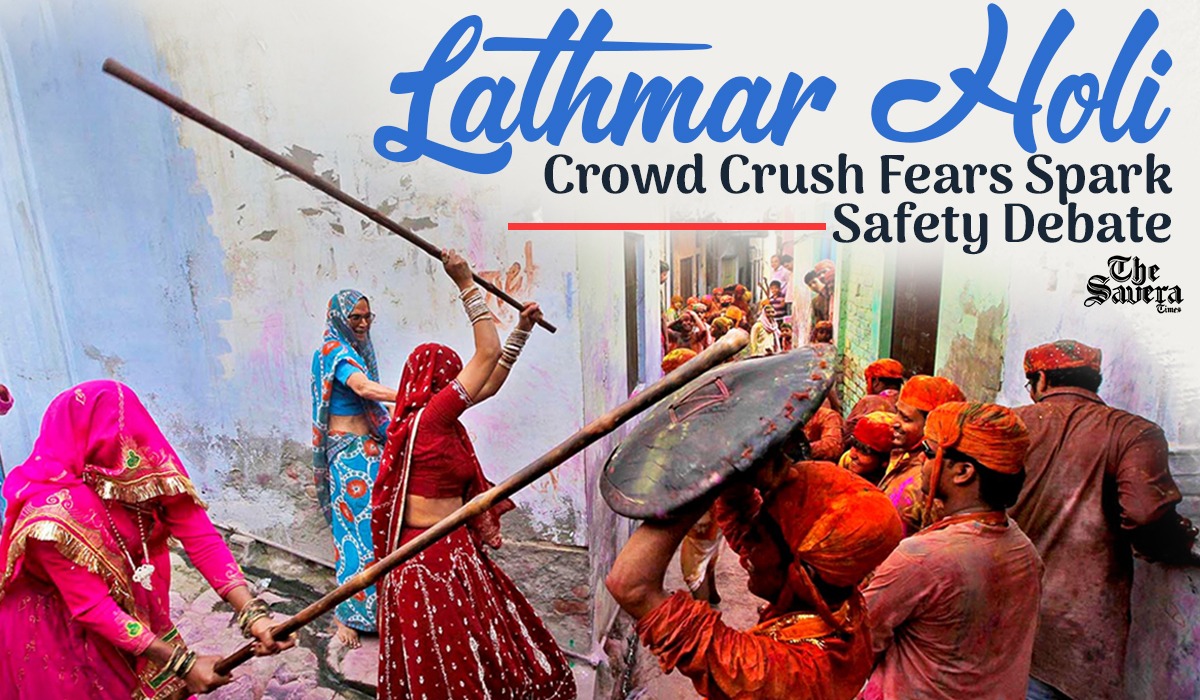
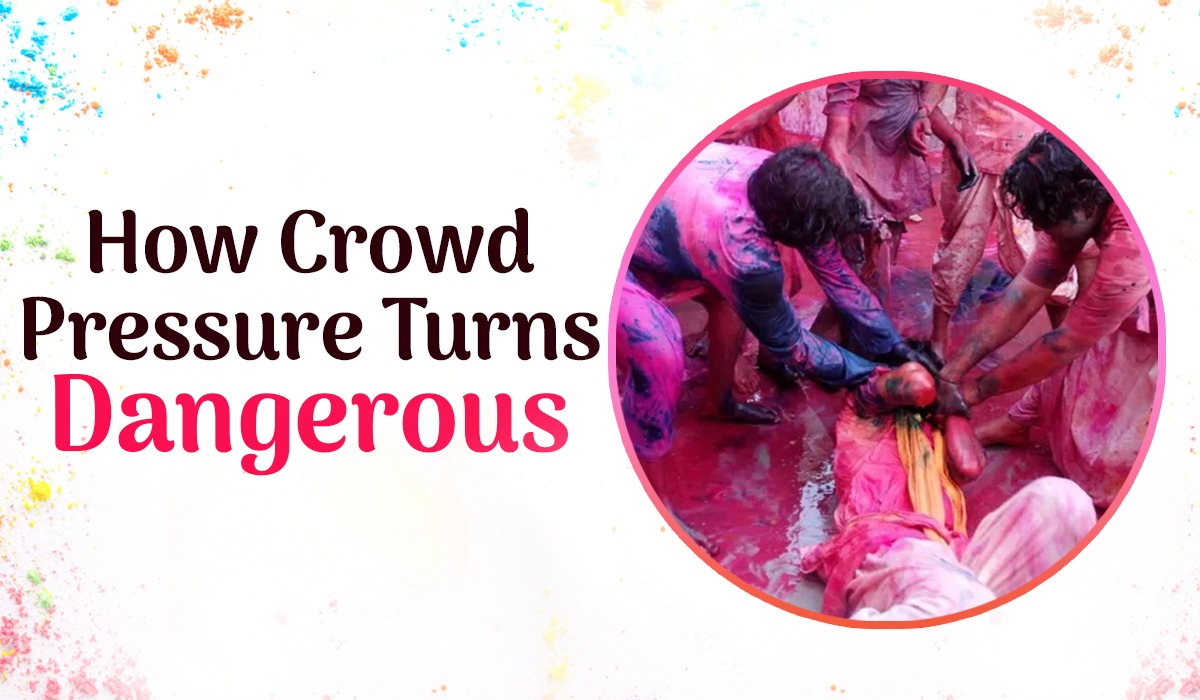
Days before Holi, a viral video from the famous Lathmar Holi celebrations in Mathura district has sparked widespread concern over crowd safety. The footage, reportedly from the Barsana-Nandgaon festivities, shows extremely dense crowds packed into narrow temple lanes and entry points prompting fears of a potential “crowd crush” situation.
While no official confirmation of casualties has emerged in connection with the viral clip, the visuals alone have triggered a broader conversation on the risks associated with large religious and cultural gatherings.
Lathmar Holi is a centuries-old tradition celebrated primarily in Barsana and Nandgaon in Uttar Pradesh’s Mathura region. Rooted in folklore linked to Lord Krishna and Radha, the celebration features women playfully striking men with sticks (lathis), while men attempt to shield themselves.
The event attracts thousands of devotees, tourists, photographers and content creators every year. Celebrations take place days before the main Holi festival, leading to massive footfall in small temple towns not structurally designed for modern crowd volumes.

The circulating clips show:
The density seen in the video resembles conditions that safety experts classify as high-risk. Crowd science suggests that when density exceeds 5–6 people per square metre, individuals lose the ability to move independently increasing the danger of accidental falls, suffocation or crush injuries.
Even without panic, such situations can turn hazardous within seconds.
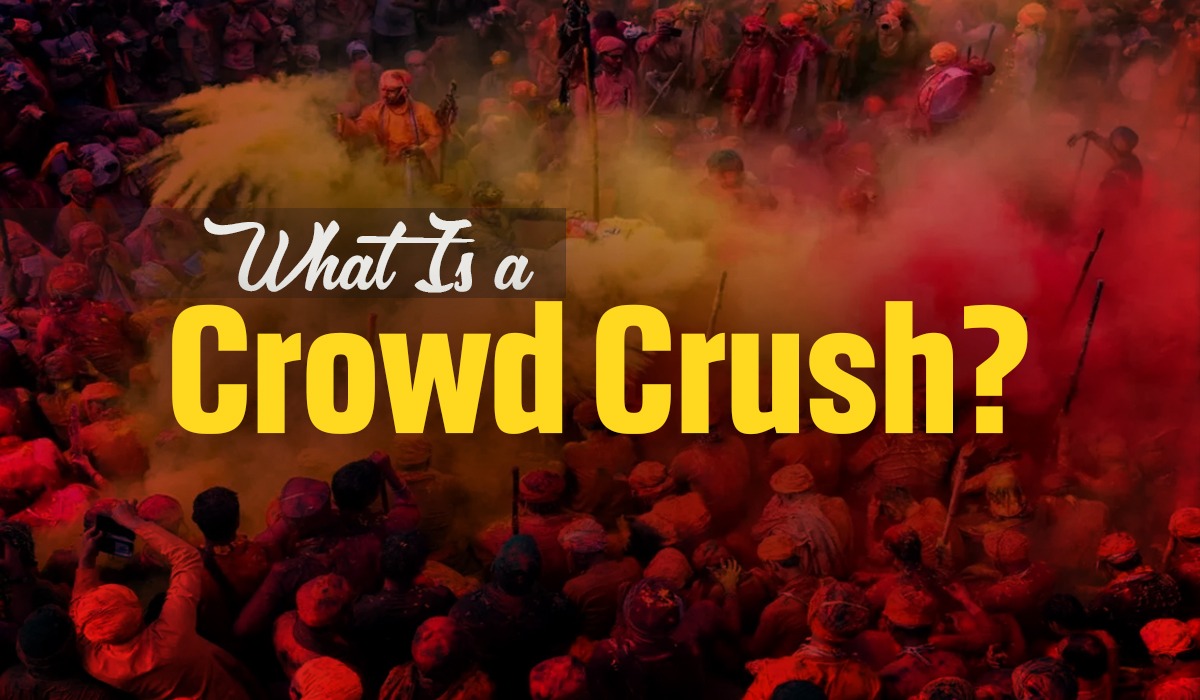
A crowd crush differs from a stampede. It does not always involve people running. Instead, it occurs when:
In many historical cases globally, fatalities have occurred not due to chaos but because people were unable to breathe amid compression.
Religious gatherings, music festivals and sporting events have all seen such tragedies in the past often due to poor crowd flow management or sudden surges.
Safety professionals recommend avoiding:
Mass gatherings become more unpredictable when:
Even experienced attendees can misjudge danger because crowds feel celebratory, not threatening.
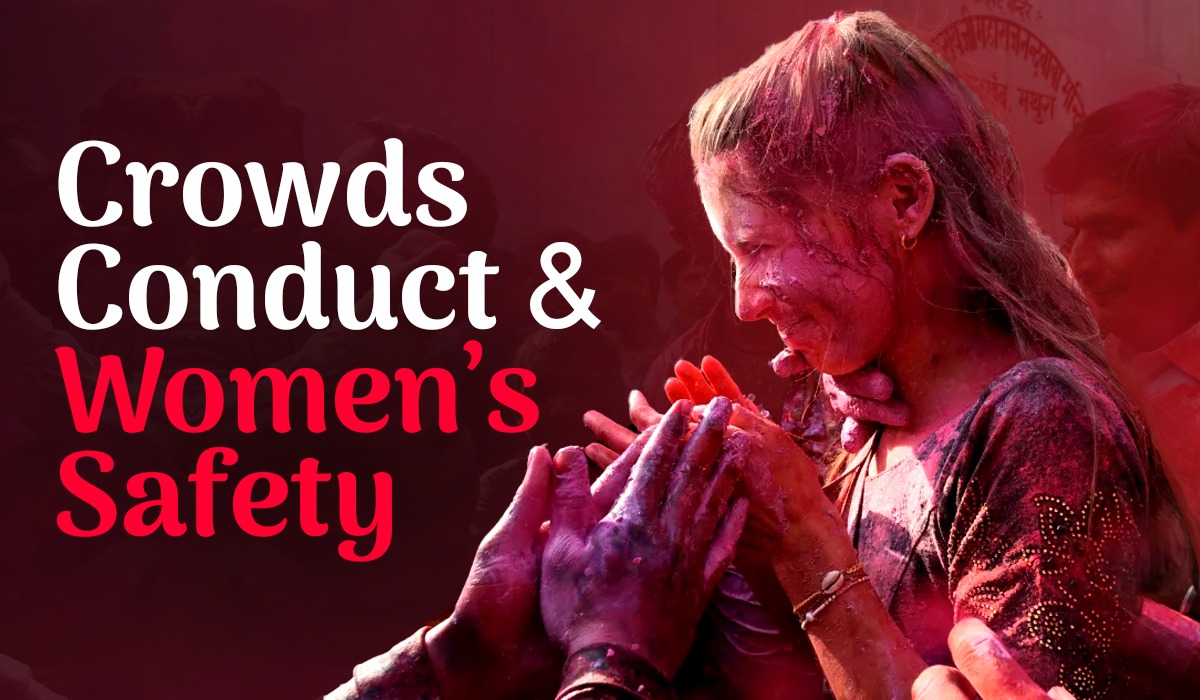
Holi events in the Braj region have previously triggered debate around women’s safety. Viral videos in recent years showed instances of inappropriate behaviour in dense crowds.
While Lathmar Holi remains culturally significant, critics argue that festival enthusiasm should not override personal safety or boundaries.
Large crowds make it difficult to monitor misconduct, further strengthening arguments for controlled attendance.
India and other countries have witnessed tragic outcomes during religious or celebratory gatherings due to:
Authorities now increasingly deploy drones, CCTV and barricade systems. However, even advanced measures cannot fully eliminate risk when crowd numbers exceed safe capacity.
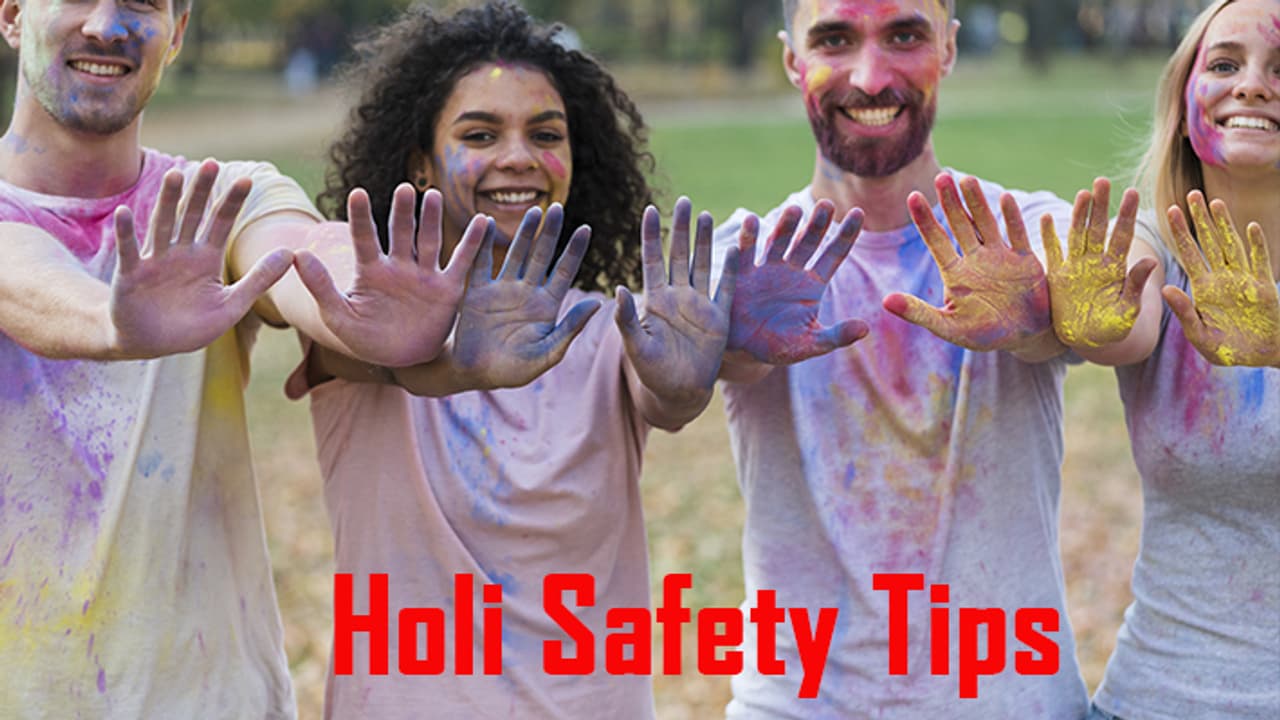
If attending Lathmar Holi or similar events:
Most importantly, trust instinct if a space feels unsafe, step away.
Lathmar Holi remains one of India’s most vibrant and iconic pre-Holi traditions. The viral video has not confirmed a disaster, but it has revived important questions about crowd safety in the age of social media-driven tourism.
Celebration and caution must go hand in hand. As Holi approaches, experts stress that joy should never come at the cost of safety.
A powerful explosion erupted after firecrackers stored in a house in Alampur village, Siwan district, Bihar, on Friday

A Delhi court on Friday sent social media influencer Amir Shokeen to one-day judicial custody in connection with...
The Delhi High Court on Friday dismissed All India Students' Association (AISA) President Neha Bora's plea challenging the...

India's Ministry of External Affairs (MEA) on Friday clarified the government's position on the alleged ongoing face-off with...

Om Prakash Mathur was sworn in as the 29th Governor of Kerala at Lok Bhavan in Thiruvananthapuram on...
Good Evening Viewers! Stay updated with The Savera Times Evening Bulletin for the latest news from Punjab, India...

Aries: The day will be auspicious...