Last Updated: November 22, 2026
Last Updated: November 22, 2026





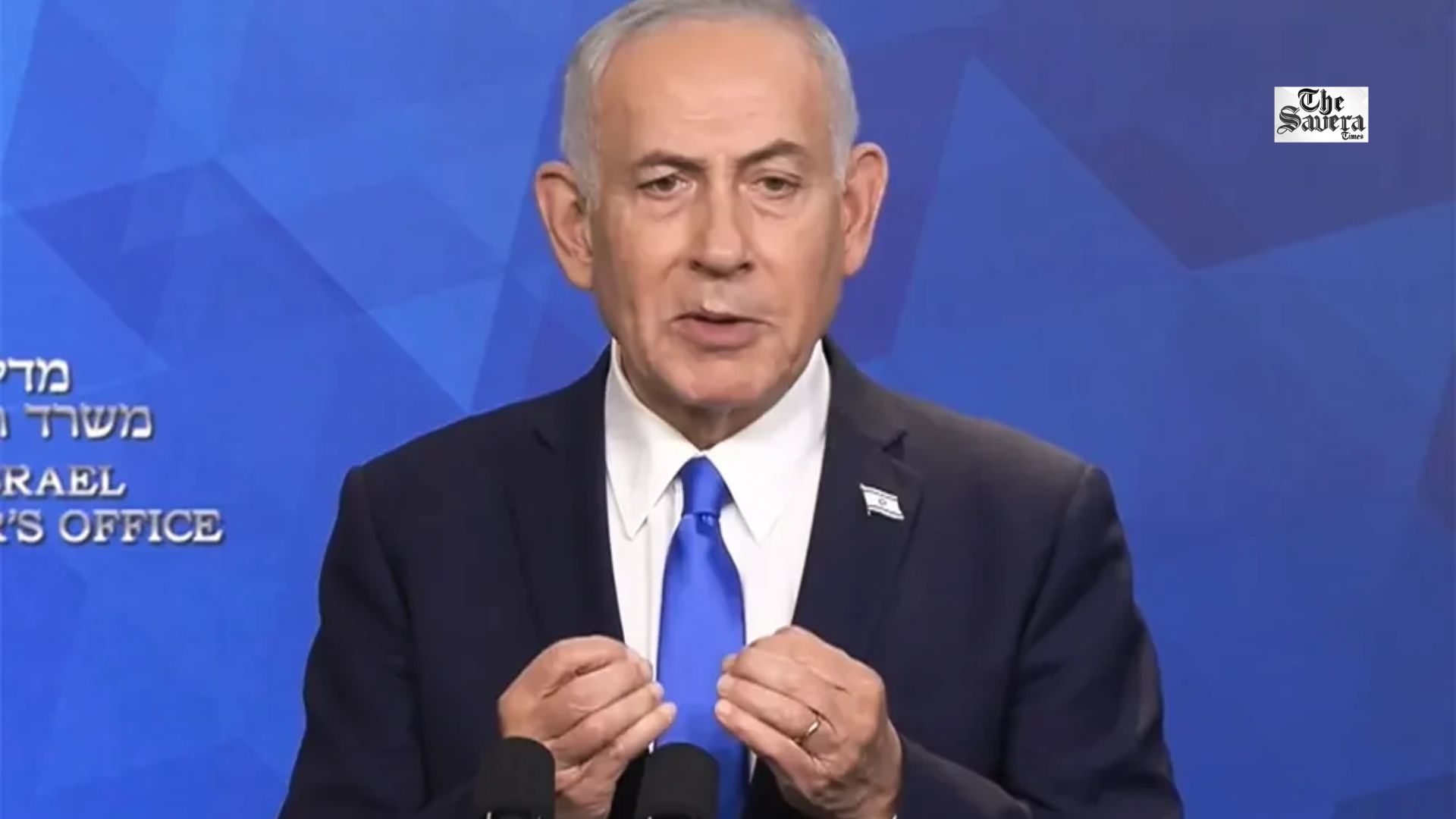
Jerusalem: Israeli Prime Minister Benjamin Netanyahu’s Likud party has laid down a series of conditions for joining a possible national unity government, including a commitment to retain Israeli security zones established during the war in Gaza, Lebanon and Syria.
The demands were outlined in an official Likud position paper after Gadi Eisenkot’s Yashar party invited Likud on Saturday to begin intensive coalition negotiations aimed at forming a broad national unity government.
Yashar said its negotiating team would “turn over every stone”, pursue bold initiatives and work towards a breakthrough in forming a new government.
Likud Rejects Palestinian State, Seeks Agreement on Military Service
Apart from retaining the security zones, Likud’s proposed guidelines include recognising Israel as the nation-state of the Jewish people and rejecting the establishment of a Palestinian state.
The party has also called for an agreement on the status of ultra-Orthodox Jewish students regarding compulsory military service.
Netanyahu’s Party Opposes State Inquiry Into October 7 Attack
Another major point of disagreement concerns the proposed establishment of a state commission of inquiry into the October 7, 2023, Hamas attack on Israel.
Likud has reportedly made its participation in a national unity government conditional on an agreement not to establish such a commission.
Opposition parties have been demanding an independent state inquiry into the attack, while Netanyahu’s coalition has opposed the proposal, arguing that such a commission would not be objective.
According to Israeli public broadcaster Kan, the issue is expected to be raised during a meeting between the leaders of the parties scheduled for Sunday.
Likud has indicated that major disagreements, including the proposed inquiry, should be addressed during the coalition negotiations.
Eisenkot Gets Deadline to Form Government
Gadi Eisenkot, a former Israeli military chief, has until December 6 to form a government. The country’s president can grant him an extension of up to two weeks.
In the October 27 election, parties opposed to Netanyahu secured 67 seats in the 120-member parliament. However, the majority includes 19 seats held by Arab parties, whose support some potential coalition partners of Eisenkot have rejected.
The differences over the Palestinian state, military service and the October 7 attack inquiry are expected to remain key challenges in the proposed unity government negotiations.
Nepal Prime Minister Balendra Shah begins his first state visit to India on Sunday. He will meet PM...
Saudi airstrikes reportedly hit Yemen's Hodeidah amid escalating cross-border attacks, as the Houthis claimed 71 strikes across eight...
London: Two incidents involving outbound tankers struck by unidentified projectiles were reported near Khasab, Oman, while transiting the...

At least 41 people were reportedly killed in airstrikes attributed to Saudi Arabia across Yemen, according to Houthi-run...
The FBI has placed gangster Goldy Brar on its Ten Most Wanted Fugitives list, offering up to $1...

A 6.7-magnitude earthquake jolted central Peru early Saturday, with tremors felt in capital Lima. The US Tsunami Warning...

Aries: The day will be auspicious...