Last Updated: September 24, 2026
Last Updated: September 24, 2026





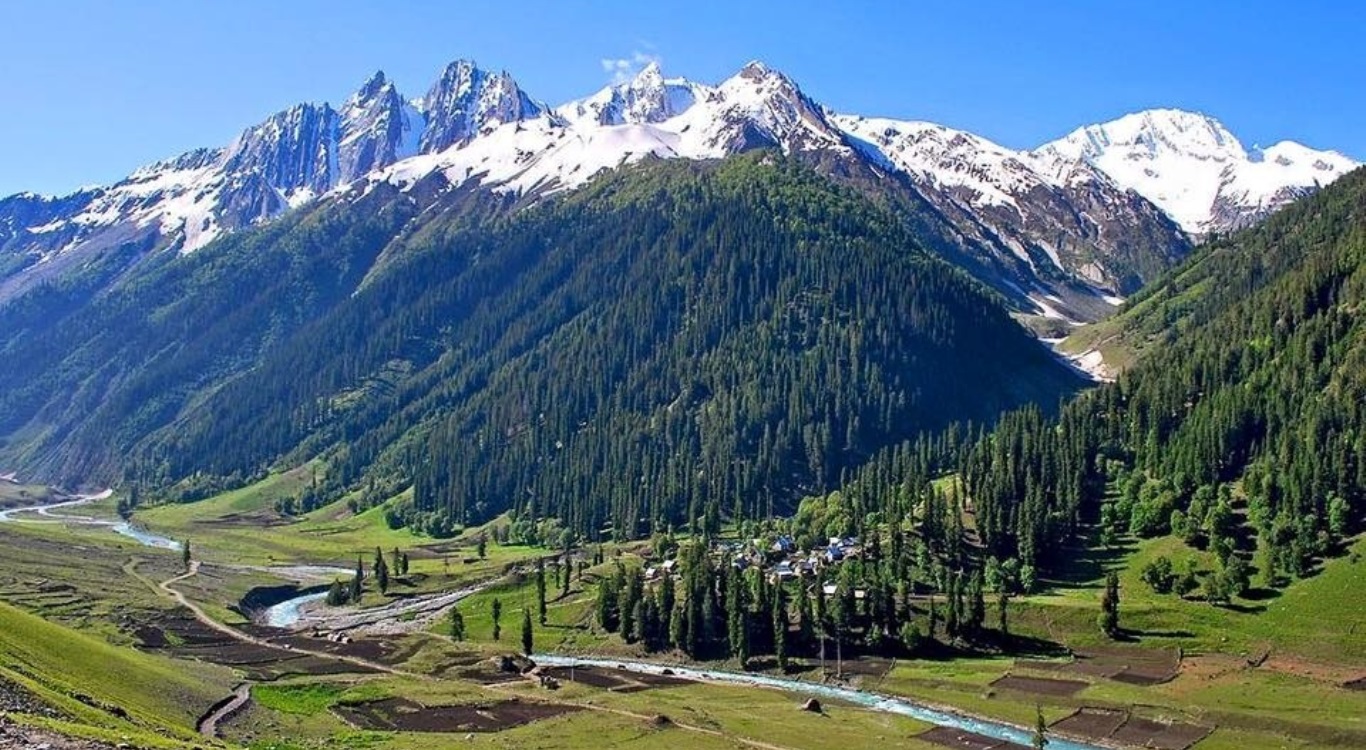
History often remembers a single day that changes the course of generations. For Jammu and Kashmir, July 13, 1931, was one such day. The firing outside Srinagar Central Jail was not merely an unfortunate incident in which 22 protesters lost their lives. It marked the beginning of a psychological, political and social divide that gradually transformed the character of Kashmir. The consequences of that day extended far beyond the Valley, influencing the politics of the princely state, shaping the events leading to Partition, and ultimately becoming part of a larger geopolitical contest that continues to influence South Asia even today.
The tragedy should therefore neither be viewed solely as a democratic uprising against an autocratic ruler nor purely as a communal confrontation. It represented the moment when existing grievances evolved into competing political identities, leaving scars that successive generations have struggled to heal.
Before 1931, Jammu and Kashmir was ruled by Maharaja Hari Singh under the Dogra monarchy. The state faced genuine economic and administrative challenges. The Muslim-majority population complained of inadequate representation in government services, heavy taxation and limited opportunities in administration. The Great Depression had also severely affected the Valley’s silk and shawl industries, increasing unemployment and economic hardship. These grievances were real and demanded reforms.
At the same time, Kashmiri Pandits, though numerically small, occupied significant positions in the civil administration because of higher literacy levels developed over generations. They were equally concerned about protecting their place in government employment and preserving the State Subject protections introduced in 1927.
Kashmiriyat remained the dominant social identity. Kashmiri Pandits were influential in administration not because of political patronage but because they had invested in education for centuries. They contributed to scholarship, philosophy, Sanskrit learning, Persian administration and later modern civil services across India and Central Asia. Their role in governance formed part of Kashmir’s civilisational heritage rather than being merely an outcome of Dogra rule.
Thus, by 1931, Kashmir had already developed social fault lines, but they had not yet become an irreversible communal divide.
The immediate trigger came after the arrest of Abdul Qadeer, whose speech openly challenged the authority of the Maharaja. During his trial inside Srinagar Central Jail, thousands gathered outside demanding access to the proceedings. As tensions escalated, clashes broke out between the crowd and the state authorities. The Governor ordered the police to open fire, resulting in the deaths of 22 protesters.
The firing shocked the entire state. What followed proved equally significant. Communal violence spread in parts of Srinagar, with attacks on Hindu-owned shops and properties and loss of lives on both sides. The atmosphere of shared cultural coexistence that had long defined Kashmiriyat suffered its first major political rupture.
This transformed public memory of the day. For many Muslims, it became the beginning of a struggle for political rights and representative government. For many Kashmiri Pandits, the subsequent violence created a lasting sense of insecurity and vulnerability. Two entirely different historical memories emerged from the same event, and both continued to shape Kashmir’s politics for decades.
The events of July 1931 also transformed Kashmir’s political landscape. Sheikh Mohammad Abdullah emerged as the Valley’s most influential political leader. The formation of the All Jammu and Kashmir Muslim Conference in 1932 provided organised political expression to Muslim aspirations. Later, in 1939, Sheikh Abdullah broadened its vision by converting it into the National Conference, seeking to build a secular political movement.
Despite this ideological shift, the emotional memories created in 1931 remained powerful. Political mobilisation increasingly drew upon religious identity, making it difficult to restore the earlier social harmony completely.
The internal divisions within Jammu and Kashmir did not develop in isolation. They unfolded at a time when the British Empire viewed the northern frontiers of the princely state as strategically vital in the context of the Great Game with the Soviet Union and control over Middle Eastern oil routes.
Gilgit occupied exceptional importance because it overlooked routes connecting Central Asia, Afghanistan, China and the Indian subcontinent. Maharaja Hari Singh had resisted direct British control over this frontier. However, following the political instability of 1931, the British gained greater leverage over the state. In 1935, the Maharaja leased the Gilgit Agency to the British administration, enabling them to strengthen their strategic position along the northern frontier.
Many historians view this lease primarily as an outcome of British imperial strategic interests. However, the political instability after 1931 weakened the Maharaja’s negotiating position and indirectly facilitated British objectives. While interpretations differ, there is broad agreement that the unrest increased British influence over the state’s strategic affairs.
The legacy of 1931 extended into the dramatic events of 1947. By then, political identities within Jammu and Kashmir had become deeply polarised. The British withdrawal from India coincided with competing national aspirations, communal tensions and strategic calculations involving the northern frontiers, setting the stage for one of the most enduring and complex disputes in the region’s modern history.
Stay updated with The Savera Times Evening Wrap, featuring the top news, breaking headlines and latest developments from...

Veteran actor Mushtaq Khan, best known for his memorable roles in Welcome, Gadar and other Hindi films, has...

The Supreme Court has prescribed safeguards for POCSO cases involving matrimonial and custody disputes, including arrest procedures, expert...
BJP spokesperson Sudhanshu Trivedi criticised Rahul Gandhi over his remarks on the Election Commission and SIR, while questioning...
Six people have been arrested in Indore after police seized more than 55 grams of MD drugs, with...
Sahil Wakode’s parents were detained in Bhandup while travelling to IIT Bombay for a planned protest. Their lawyer...
Aries: The day will be auspicious...