Last Updated: October 21, 2026
Last Updated: October 21, 2026





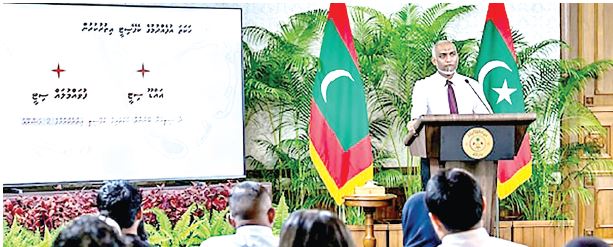
At a time when South Asia has seen three countries in four years convulsed by youth-led upheavals over democracy and governance, quiet speculation is growing over whether the Maldives could be next. The island nation, India’s closest neighbour in the Indian Ocean, has witnessed similar anxieties before, but so far its political establishment has held firm.
The Maldives was among the earliest in the region to embrace a pro-democracy movement, leading to a new constitution, multi-party elections, and the rise of Mohamed Nasheed after three decades of Maumoon Abdul Gayoom’s rule. Today, the country hosts five former presidents, a fact often projected as democratic resilience, even if practical politics suggest otherwise. Unlike Sri Lanka, where the government of President Anura Kumara Dissanayake has moved against former leaders by cutting privileges, Maldives President Mohamed Muizzu has largely spared his predecessors. The exception is Abdulla Yameen, Muizzu’s former mentor, still disqualified from politics due to pending court cases.
Yet, Muizzu has steadily tightened control. A new media law aimed at curbing press freedoms and his government’s suspension of three Supreme Court justices just before a hearing on the controversial anti-defection law have raised questions about institutional checks. With the People’s National Congress (PNC) holding a commanding majority in the 93-seat Parliament, the risk of internal dissent seems to worry Muizzu more than external criticism.
The economic mainstay of the Maldives, its resort tourism industry, has been unsettled by a poorly implemented “dollar deposit scheme” that required resorts to place part of their foreign exchange earnings with the central bank. While tourism arrivals have rebounded, overall economic sentiment remains uneasy, and the scheme has only sharpened tensions between government and industry.
Despite murmurs of discontent, political opposition has struggled to mobilise.
The Maldivian Democratic Party (MDP), once the face of democracy struggles, has failed to energise cadres or mount significant protests. Attempts at demonstrations in Male attracted poor turnouts, and no momentum has built in the islands. Many ordinary Maldivians, especially those who lived through the first wave of democratic fervour, appear weary of street agitation. For Gen Z, however, frustrations are mounting. Youth unemployment is stubbornly high, worsened by an influx of immigrant labour from Bangladesh, India, and Sri Lanka. Many Maldivian youth, educated up to A-Levels during the tourism boom years, hold aspirations out of step with the job market. With a fifth of the population comprising foreign workers, locals often reject available jobs as “menial.”
The resulting mismatch has created an undercurrent of discontent, though not yet the spark for mass mobilisation seen in Sri Lanka in 2022, Bangladesh in 2024, or Nepal in 2025. The economy remains at the centre of popular concerns. The volatility of food prices and the open-market dollar rate weigh heavily on households. After failed attempts to source staples from Turkey during disruptions in Red Sea shipping, Muizzu acknowledged India as a more reliable partner.
Recently, 23 additional food items were added to state imports to ease pressure on the middle and lower classes, reinforcing India’s role as a key economic partner. Yet, Muizzu continues to send mixed diplomatic signals. At the Shanghai Cooperation Organisation summit in China, he secured fresh agreements with Beijing, including a reiteration of China’s earlier pledge to protect Maldives’ sovereignty. The language, echoing the Abdulla Yameen era, was widely interpreted as a veiled reference to India’s role in the Indian Ocean.
US President Donald Trump says Washington and New Delhi are close to a trade agreement that will differ...
Iran has ruled out transferring its enriched uranium stockpile outside the country, with security official Mohsen Rezaei reiterating...
Donald Trump has urged Volodymyr Zelensky to pursue a peace deal with Russia, warning that Ukraine could face...
Pakistan, battling insurgencies at home and tensions along multiple borders, is too overstretched to offer meaningful military support...
The World Bank Group has launched its first comprehensive digital strategy, placing artificial intelligence, affordable internet access and...
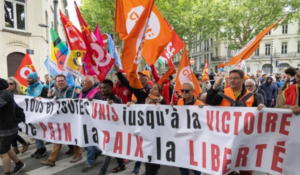
Fifty-four organisations and movements associated with France's October protests, along with their wider networks of supporters and international...
Aries: The day will be auspicious...