Last Updated: October 1, 2026
Last Updated: October 1, 2026





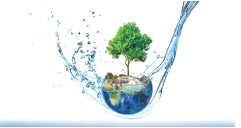
Water remains one of India’s most decisive resources, shaping public health, food security, and economic development. Yet our dependence on the monsoon, coupled with rising demand and uneven distribution, has pushed the country towards a point where every drop must count. If India treats water management not simply as an environmental issue but as a strategic priority, the same challenge can become an opportunity for long-term resilience.
Although the planet holds vast amounts of water, only 2.5% is freshwater, and most of that is locked in glaciers and ice sheets. India receives nearly 4% of the world’s total precipitation, but ranks 133 globally in per-capita availability, underscoring how population pressure and regional variations strain the supply. Much of the scarcity in drought-prone regions like Rajasthan stems not from the absence of water in the country overall, but from its unequal distribution across seasons and geography.
Population growth, urbanisation and rising demand for food grains have all intensified the pressure on water resources. Agriculture alone consumes the largest share of both surface and groundwater as farmers expand irrigated areas to meet food demand. Meanwhile, industrialisation and city-based lifestyles have led to extraction of groundwater on a scale that is difficult to replenish. Pollution from industrial waste, sewage and chemical-intensive agriculture adds another layer of stress, creating situations in which water is available but unsafe to use.
Despite the challenges, India has the tools and cultural experience to turn the tide. Historically, communities built remarkable water conservation systems suited to the climate—from tankas in Rajasthan, capable of storing rainwater for months, to bamboo drip irrigation in Meghalaya, which delivers water efficiently to plantation crops. Rooftop rainwater harvesting is widely practised in cities like Shillong, demonstrating that traditional knowledge, when adapted to modern life, can significantly reduce dependence on groundwater.Multi-purpose river valley projects such as Bhakra–Nangal and Hirakud have helped support irrigation, electricity generation, flood control and navigation. However, large dams also need to be balanced with environmental and social considerations.
Prime Minister Narendra Modi on Thursday hailed Captain Smit Machchhar, the Indian pilot of Flydubai flight FZ1073, who...

The Central Government has cut export levies on diesel and aviation turbine fuel (ATF) for the second consecutive...
India is increasingly aligning its development agenda with climate action, integrating renewable energy, energy efficiency and green industrial...

– Abhishek Vij While the National Statistical Office’s data promises a better position for the country globally, it...
The Savera Times Evening Wrap brings you the top India and world news, covering major developments across politics,...

Pakistan-based LeT terrorist Mohammad Asif alias Hashim Moosa, wanted in the Pahalgam terror attack case, was killed in...

Aries: The day will be auspicious...