Last Updated: October 15, 2026
Last Updated: October 15, 2026





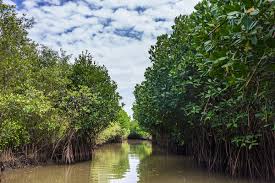
Global plastic pollution has widespread impact on marine life and mangrove ecosystems are showing signs of distress. New research in a coastal village of Tamil Nadu detected contamination in aquatic species, indicating the magnitude of the problem.
Pichavaram is a small coastal village in the Cuddalore district of Tamil Nadu, located between the Vellar and Coleroon estuaries along the Bay of Bengal. The Pichavaram mangrove forest, one of India’s largest mangrove ecosystems and a designated Ramsar site, spreads across a complex network of tidal channels, mudflats and dense vegetation. This biotope supports remarkable biodiversity, including around 177 species of resident and migratory birds, and sustains local fishing communities who depend on its waters for livelihood.
Recent research by Bharathidasan University, published in the journal Chemosphere, found significant seasonal microplastic contamination in Pichavaram’s aquatic species. Microplastics, defined as plastic particles smaller than five millimetres, originate from the breakdown of larger plastic waste or from synthetic textiles, packaging and fishing gear.
The monsoon season recorded the highest levels, largely due to runoff from nearby settlements. Species such as Liza tade showed notable particle ingestion, and shellfish including Scylla serrata and Portunus sanguinolentus, were also affected.
A substantial proportion of particles were below one millimetre, with blue fibres dominant. Common polymers included polypropylene, polyethylene and PET, confirming that contamination is systemic and widespread.
Ecologically, the mangroves form a vital buffer between land and sea. They protect inland settlements from cyclones, storm surges and tidal flooding. Their importance became especially clear during the 2004 Indian Ocean tsunami, when areas shielded by dense mangrove cover experienced comparatively less damage. Mangroves are more than forests; they are living coastal defenses
Singapore: Two Singapore-registered container vessels were reportedly struck by unknown projectiles while transiting the Strait of Hormuz on...

Shimla: The Himachal Pradesh government has constituted a four-member commission to examine the reorganisation of administrative units in...

New Delhi: The Supreme Court on Wednesday listed for November 17 the appeal filed by self-styled godman Asaram...

Ranchi: Doctors in Jharkhand launched a protest on Wednesday over a slew of demands concerning their safety and...

Greater Noida: Police and Anti-Narcotics Team in Uttar Pradesh’s Greater Noida have seized ‘ganja’ worth Rs 1 crore...

New Delhi: The Enforcement Directorate (ED) has attached assets worth Rs 2,032.81 crore belonging to Reliance Power Ltd...
