Last Updated: October 14, 2026
Last Updated: October 14, 2026





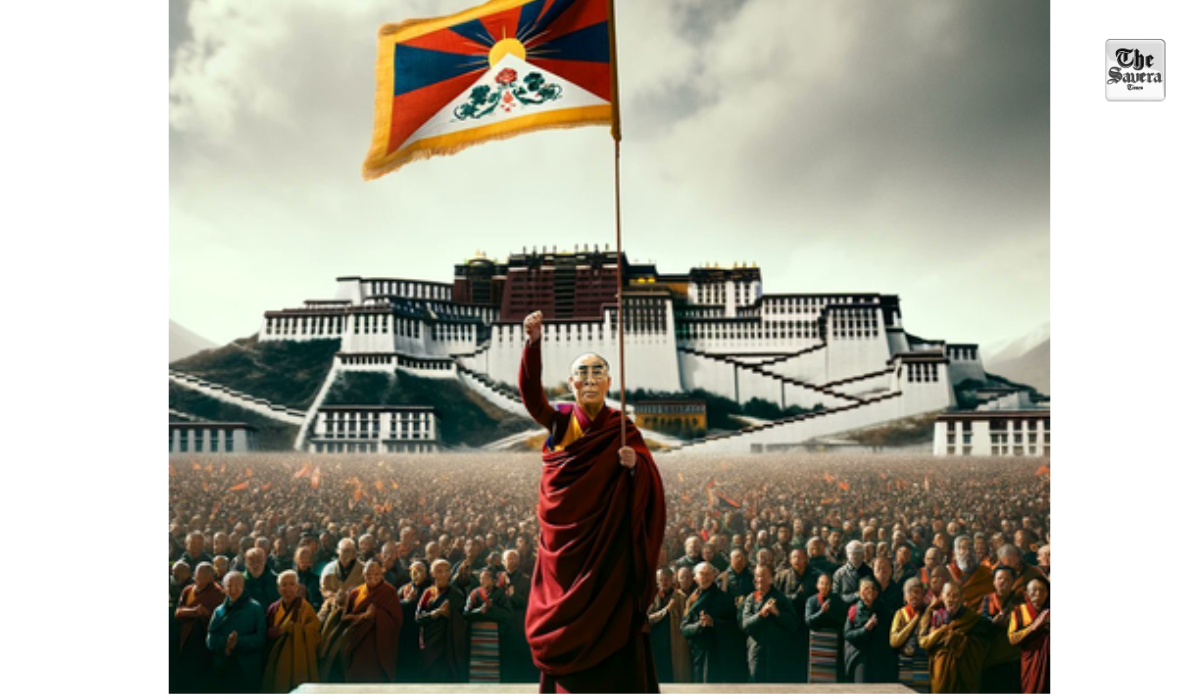
Taipei: Around 300 people participated in an annual march in Taipei to mark the 1959 Tibetan uprising, with organisers warning that China’s “expansion of authoritarian rule will not stop in just one place,” local media reported.
Tibetan leaders highlight global concerns
Chairman of the Tibet Religious Foundation and Tibetan spiritual leader Kelsang Gyaltsen Bawa said, “Tibet’s story is also a reminder to the world, especially Taiwan,” the Central News Agency reported.
“The expansion of authoritarian rule will not stop in just one place,” he said, adding that China’s influence has already reached Uyghur region, Southern Mongolia, Hong Kong and other regions of the world through “transnational repression, united front infiltration and long-arm jurisdiction.”
Tibetan Uprising Day commemorated
Kelsang Gyaltsen Bawa termed it important to mark Tibetan Uprising Day in Taiwan so that calls from the island nation to back Tibet’s dignity and democracy are heard in the world. He mentioned that Tibetan Uprising Day falls on March 10 and commemorates the day in 1959 when around 10,000 Tibetans gathered in Lhasa to hold a protest against the stringent control of China.
According to the Human Rights Network for Tibet and Taiwan, the authorities brutally suppressed the uprising, resulting in the exile of Dalai Lama and forcing around 150,000 Tibetans to move overseas, CNA reported.
Taiwan officials express support
Yeh Ta-hua, a commissioner at Taiwan National Human Rights Commission, said Taiwanese in the past 67 years have witnessed how Tibetans had “fearlessly resisted” the “brutal rule” of Chinese authorities while protecting their freedom and faith.
He said supporting Tibet implies supporting democracy and freedom of Tibet, adding that the people of Taiwan should support Tibetans in protecting the “autonomy of religious reincarnation and resisting transnational repression.”
Students reflect on identity and culture
Speaking to CNA, university student Jacky Ling, who was part of the protest, said that people of Taiwan could learn about identity from Tibetans, who he said were firmly identifying themselves as Tibetan and safeguarding their own religion, language and clothing.
“In matters of national identity, if you do not have a clear sense of who you are, it becomes very easy for outside voices to define you, and you end up becoming whatever they say you are,” he said, referring to Beijing’s efforts to reshape how people of Taiwan see themselves.
India’s yogasana and mallakhamb performances drew international appreciation at the BRICS Traditional and Indigenous Demonstration Games in Ahmedabad....

A few weeks after their separation, actress Akriti Agarwal and Indian cricketer Prithvi Shaw are back together. Akriti...

Sri Lanka has announced a 15-member squad for the two-Test series against Pakistan in November. Kusal Mendis has...

India's 17-year-old Maaya Rajeshwaran Revathi wins singles and doubles titles at the W35 Lagos tournament in Nigeria. After...

Cricket legend Sachin Tendulkar on Sunday welcomed Indian women's cricket team captain Smriti Mandhana to the UNICEF India...

Indian Army athletes achieved their best-ever performance at the Asian Games 2026, winning a total of 20 medals....

Aries: The day will be auspicious...