Last Updated: October 17, 2026
Last Updated: October 17, 2026





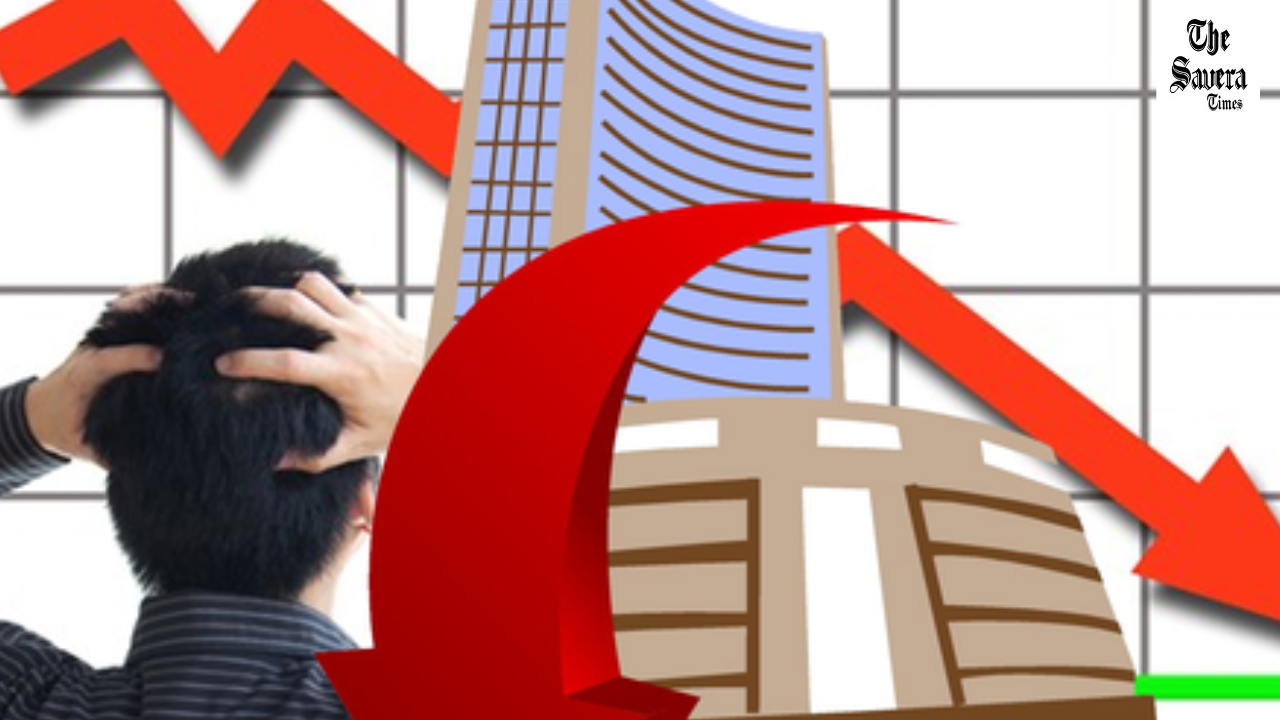
India’s equity markets witnessed a sharp decline last week, with seven of the country’s top-valued firms collectively losing around ₹1.75 lakh crore in market capitalisation. The decline reflects growing volatility in the stock market amid global uncertainties and investor caution.
The losses were largely driven by heavy selling pressure in key sectors such as banking, energy, and IT, dragging benchmark indices lower during the week.
Among the worst-hit companies, Reliance Industries emerged as the biggest laggard, with its market valuation dropping by nearly ₹89,720 crore. Reliance Industries remained the most valued company despite the sharp fall, but the decline significantly impacted overall market sentiment.
The fall in Reliance shares was partly linked to policy changes and broader market weakness, which weighed heavily on investor confidence.
Banking giants were among the major contributors to the market cap erosion. HDFC Bank saw its valuation decline by over ₹37,000 crore, while State Bank of India lost around ₹35,000 crore in market value.
Similarly, ICICI Bank also witnessed a decline in its valuation, reflecting weakness in the financial sector.
Analysts note that banking stocks have been particularly sensitive to global cues, foreign investor outflows, and interest rate concerns.
Apart from energy and banking stocks, other prominent companies also recorded losses. Bharti Airtel, Hindustan Unilever, and Tata Consultancy Services all saw declines in their market capitalisation during the week.
The widespread losses across sectors indicate a broad-based sell-off rather than company-specific issues.
Experts attribute the downturn to a mix of global and domestic factors. Ongoing geopolitical tensions, including conflicts in the Middle East, have affected investor sentiment and triggered volatility in global markets.
Additionally, rising crude oil prices, foreign institutional investor (FII) outflows, and concerns over inflation have contributed to the bearish trend.
Although the market showed signs of recovery during the middle of the week due to hopes of easing geopolitical tensions, the gains were short-lived. Renewed selling pressure towards the end of the week wiped out earlier gains, leading to an overall decline in market capitalisation.
This pattern reflects the fragile nature of current market conditions, where sentiment can shift rapidly.
Despite the overall downturn, a few companies managed to post gains. Firms like Larsen & Toubro, Bajaj Finance, and Infosys saw an increase in their market valuations, partially offsetting the losses in the top 10 pack.
However, these gains were not sufficient to counter the broader market weakness.
Market analysts suggest that volatility may persist in the near term due to global uncertainties and macroeconomic concerns. Investors are likely to remain cautious, focusing on economic data, geopolitical developments, and central bank policies.
The sharp ₹1.75 lakh crore erosion in market value highlights the sensitivity of Indian equities to global trends and underscores the need for careful investment strategies in uncertain times.
Read The Savera Times Evening Bulletin for the top India and world news, latest breaking headlines, major developments...

New Delhi: India and Vietnam on Friday reviewed their cooperation across key areas, including economic security, maritime engagements,...

New Delhi: The Union Ministry of Home Affairs (MHA) has sought detailed reports from the Punjab government on...

New Delhi: All India Students’ Association (AISA) National President Neha Bora was detained by the Delhi Police on...

New Delhi: The Directorate of Enforcement (ED) has provisionally attached assets and proceeds of crime worth Rs 136.44...
Mumbai: Jindal Saw on Friday reported a steep decline in its earnings for the second quarter of FY27,...
Aries: The day will be auspicious...