Last Updated: October 21, 2026
Last Updated: October 21, 2026





By: Dr Tanu jain
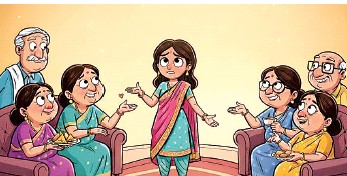
It’s a familiar scene at many Indian gatherings — an evening filled with laughter, the aroma of tea and samosas, and conversations that soon drift, almost inevitably, to one subject: marriage. Parents lean forward with hopeful curiosity, uncles and aunties exchange glances, and the inevitable question comes — “So, when are you planning to settle down?”
For the young, it’s both an expected and uncomfortable moment. Some smile politely, some dodge the question with humor, and others, silently, wonder — “Do I even want to?”
What was once a natural milestone in life has now become a matter of deep personal debate. The institution of marriage, as old as civilization itself, seems to stand today at a curious crossroads — both cherished and challenged, celebrated and questioned.
From the earliest human societies, marriage has been more than a private choice; it has been a cornerstone of social life. Ancient Indian texts treated it as a sacred samskara — a rite of passage meant to balance the four aims of life: dharma (duty), artha (prosperity), kama (desire), and moksha (liberation). The Rig Veda blessed couples with the wish “Saha dharmam charatu” — “May you walk together in the path of righteousness.” It wasn’t just about two people living together; it was about two souls supporting each other in their journey toward truth and fulfillment.
But somewhere between tradition and transformation, the meaning of marriage began to shift. The modern world — with its pace, pressures, and promises — has made people rethink what togetherness really means. Individualism, emotional independence, career goals, and the growing pursuit of spiritual peace have all redefined the idea of commitment. For some, marriage remains a sanctuary of affection and belonging; for others, it feels like an outdated social demand, one that may compromise freedom and personal growth.
Sociologists offer different lenses to understand this evolution. The functionalist view, from thinkers like Durkheim and Parsons, sees marriage as the stabilizing force of society — the foundation upon which order, reproduction, and moral values rest. A healthy marriage, they argued, helps both individuals and communities to flourish, offering emotional and social security that keeps societies cohesive. When these bonds weaken, they believed, society risks instability and isolation.
The conflict perspective, on the other hand, reminds us that marriage has not always been equal. Drawing on the ideas of Karl Marx and Friedrich Engels, many thinkers see marriage as a mirror of economic and gender inequalities. Historically, it regulated property, inheritance, and women’s roles, turning love into a structure of power. Even today, invisible hierarchies persist — in expectations about domestic labor, career sacrifices, and emotional roles. Feminist thinkers call for a transformation from hierarchy to partnership — where marriage is not a cage of dependence, but a collaboration of equals.
The symbolic interactionist approach takes us to the heart of the home — to the kitchen conversations, shared silences, and everyday negotiations between partners. It reminds us that marriage is not a fixed institution but a living relationship, constantly shaped by how two people interpret love, respect, and responsibility. The success of a marriage often depends less on rituals or laws and more on how couples communicate and construct shared meanings in their daily lives.
Today, the world around us is filled with contrasts. Technology connects us instantly, yet loneliness has become a silent epidemic. The idea of finding “the one” now involves swipes and algorithms, yet the longing for genuine connection remains deeply human. Many young people prefer solitude or spiritual companionship over social conformity. Yet society still tends to view singlehood with pity or suspicion, as if completeness can only come in pairs.
Perhaps it’s time to look at the question differently. Whether one chooses marriage or a solitary path, peace and fulfillment come from within. The Upanishads say, “He who sees all beings in the Self, and the Self in all beings, never turns away from It.” True union, then, is not merely between husband and wife, but between the self and the universal rhythm of existence.
In the end, marriage should not be a compromise or an escape — it should be a conscious choice, made with awareness and authenticity. For some, that choice may mean walking hand in hand with another soul; for others, it may mean walking alone toward the same truth. Both journeys are sacred if they arise from sincerity and peace.
So, when someone asks at that social evening, “When will you marry?” — maybe the answer lies not in a date or a decision, but in a deeper question: “When will I truly meet myself?”
(The writer is Chief executive officer
Bareilly cantonment board
Ministry of defence)
Pakistan's Defense Minister Khawaja Asif has questioned alleged plans by senior government officials to permanently settle abroad. He...
The Baloch Liberation Army (BLA) has claimed responsibility for carrying out 34 operations between October 9 and 20...

Russian President Vladimir Putin said on Wednesday that Russia's first tanker carrying 40,000 tons of diesel fuel will...

Ten people were killed and 44 others injured in a horrific road accident in Pakistan's Punjab province. The...

North Korean leader Kim Jong-un's influential sister, Kim Yo-jong, and a military marshal inspected fortification work along the...

New Delhi: US Secretary of State Marco Rubio has assured India that America’s relations with any country in...

Aries: The day will be auspicious...