Last Updated: October 11, 2026
Last Updated: October 11, 2026





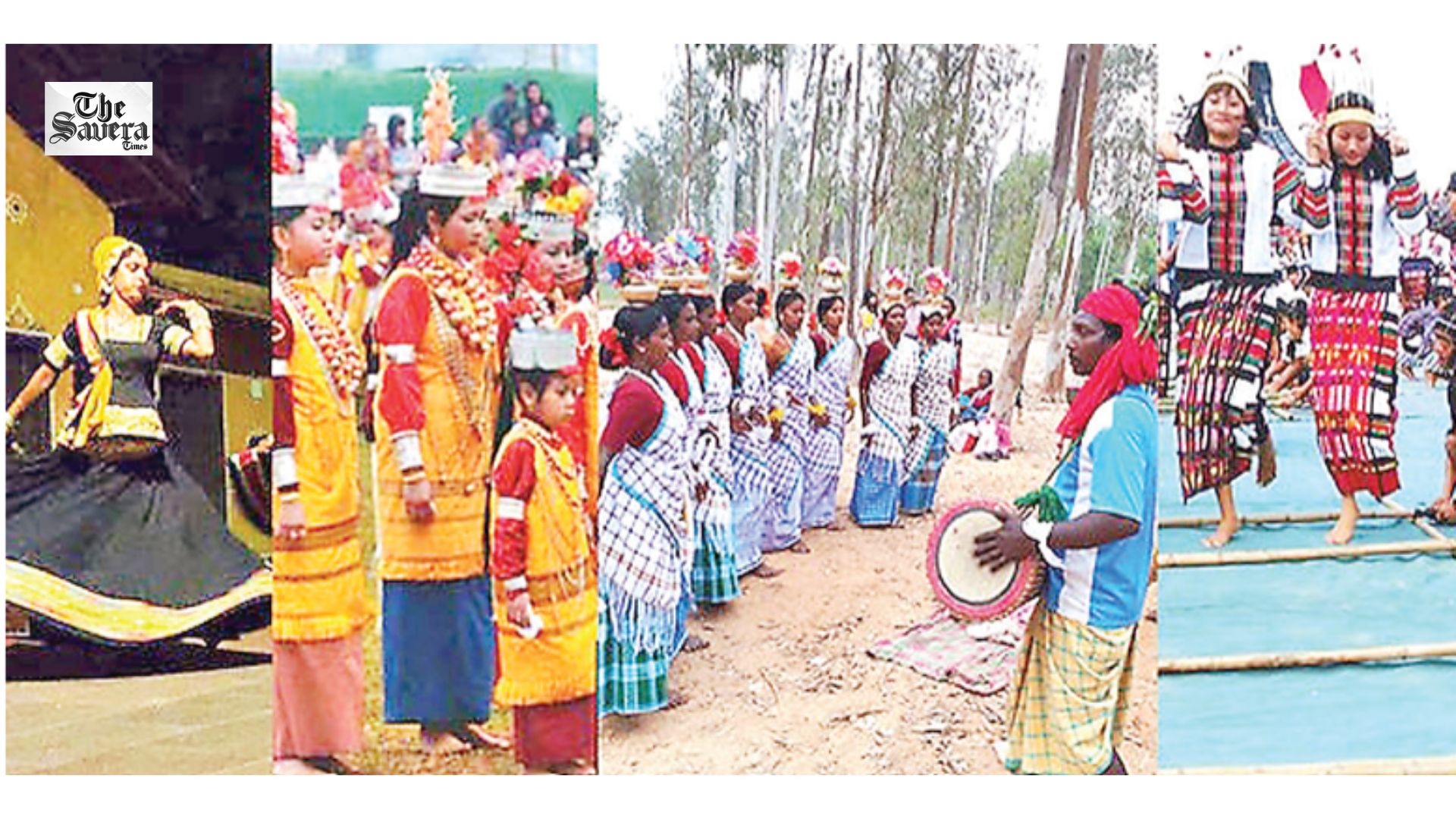
When Prime Minister NarendraModi and President DroupadiMurmu offered prayers at the SanthaliJaher and Ho Jahera sacred groves in Odisha’s Mayurbhanj district on June 20, it was more than a ceremonial visit. While development projects and official announcements dominated the headlines, the deeper significance of the occasion lay elsewhere. The visit represented a rare and powerful recognition of India’s Adivasi heritage at the highest level of the Republic.
For decades, discussions around Adivasi communities in India have largely revolved around welfare schemes, poverty alleviation, displacement, or security concerns. Whether in policy circles or public discourse, tribal communities have often been viewed through the prism of development deficits. What has frequently remained overlooked is their role as custodians of some of the oldest living cultural and ecological traditions in the country.
The events at Pahadpur offered an opportunity to correct that imbalance. For the Santhal and Ho communities, the JaherSthal is not merely a place of worship. It is the spiritual heart of community life. These sacred groves are spaces where faith, nature, tradition and collective memory coexist. Protected over generations, they embody a worldview that sees forests not as resources to be exploited but as living entities deserving respect and reverence.
Long before environmental sustainability became a global concern, Adivasi communities across India practised it as a way of life. Their relationship with nature was rooted in responsibility rather than extraction. Festivals such as Baha, Sohrai and Mage Parab are deeply connected to these sacred spaces, reflecting a cultural ethos that places harmony with nature at the centre of social life. In that context, the joint visit by the President and the Prime Minister assumes profound significance.
It was not simply an official stop during a government programme. It was among the highest forms of recognition ever accorded to Santhal and Ho spiritual traditions in independent India. The symbolism becomes even more meaningful because President DroupadiMurmu herself belongs to the Santhal community. Her journey from the tribal heartland of Mayurbhanj to RashtrapatiBhavan has become an inspiring story of aspiration, representation and social mobility. Her presence alongside the Prime Minister at these sacred sites transformed the occasion into a moment of national acknowledgement of Adivasi identity and heritage.
The visit also reflects a broader shift in the way the Indian state engages with tribal communities. In recent years, government initiatives concerning Adivasi communities have increasingly combined development with cultural recognition. The declaration of BhagwanBirsaMunda’s birth anniversary as Janjatiya Gaurav Divas, the establishment of museums dedicated to tribal freedom fighters, the expansion of Eklavya Model Residential Schools, and the PM JANMAN initiative for Particularly Vulnerable Tribal Groups represent efforts to bring Adivasi history and aspirations into the national mainstream. Equally significant has been the growing recognition of tribal leaders and icons.
The posthumous conferment of the Padma Bhushan on Dishom Guru Shri Shibu Soren is another example of a broader national acknowledgement of contributions made by tribal leaders to India’s democratic and social evolution.
This evolving approach carries particular relevance in regions that have historically witnessed Left-Wing Extremism. Experience has shown that sustainable peace cannot be achieved through security measures alone. Development, representation, cultural respect and community participation are equally important. As connectivity, education, healthcare and governance have improved in many tribal regions, there has been a gradual shift away from viewing these areas solely through the lens of conflict. Mayurbhanj therefore represents something larger than a single visit. It signals a transition in national thinking-from seeing Adivasi communities primarily as beneficiaries of welfare to recognising them as inheritors of ancient knowledge systems and custodians of invaluable cultural traditions.
Critics may argue that symbolism alone cannot address longstanding socio-economic challenges. That is true. Yet symbols matter in a diverse democracy. They shape collective memory, influence public consciousness and determine whose stories become part of the national narrative. For too long, Adivasi faith traditions and cultural practices have occupied the margins of mainstream discourse. The images from Mayurbhanj suggest that they are finally moving closer to the centre. India’s civilisational identity has never been singular.
It has been shaped by countless communities, languages, traditions and belief systems that together form the country’s cultural mosaic. RecognisingAdivasi sacred spaces as part of this shared heritage does not merely honour one section of society. It enriches the very idea of India. The true significance of Mayurbhanj lies not in the projects inaugurated or the speeches delivered. It lies in the message conveyed by the country’s highest constitutional offices: that Adivasi heritage is not peripheral to India’s story-it is an integral and foundational part of it.
Jaipur: The Anti-Narcotics Task Force (ANTF) of Rajasthan Police has arrested wanted drug smuggler Sohanlal, alias Sonu, carrying...

Imagine a foreign national standing among Indian citizens at a political protest, raising questions about the government or...

Aizawl: The Assam Rifles, in coordination with other law enforcement agencies, seized methamphetamine tablets and foreign-made cigarettes worth...

Kolkata: A Returning Officer (RO), acting on behalf of the Election Commission of India (ECI), has lodged a...
New Delhi: The Delhi BJP Mahila Morcha staged a protest on Saturday to demand the expulsion from Congress...
Sanaa: Saudi warplanes launched fresh airstrikes on Houthi-held areas in northwestern Yemen on Saturday as fighting intensified between...