Last Updated: October 21, 2026
Last Updated: October 21, 2026





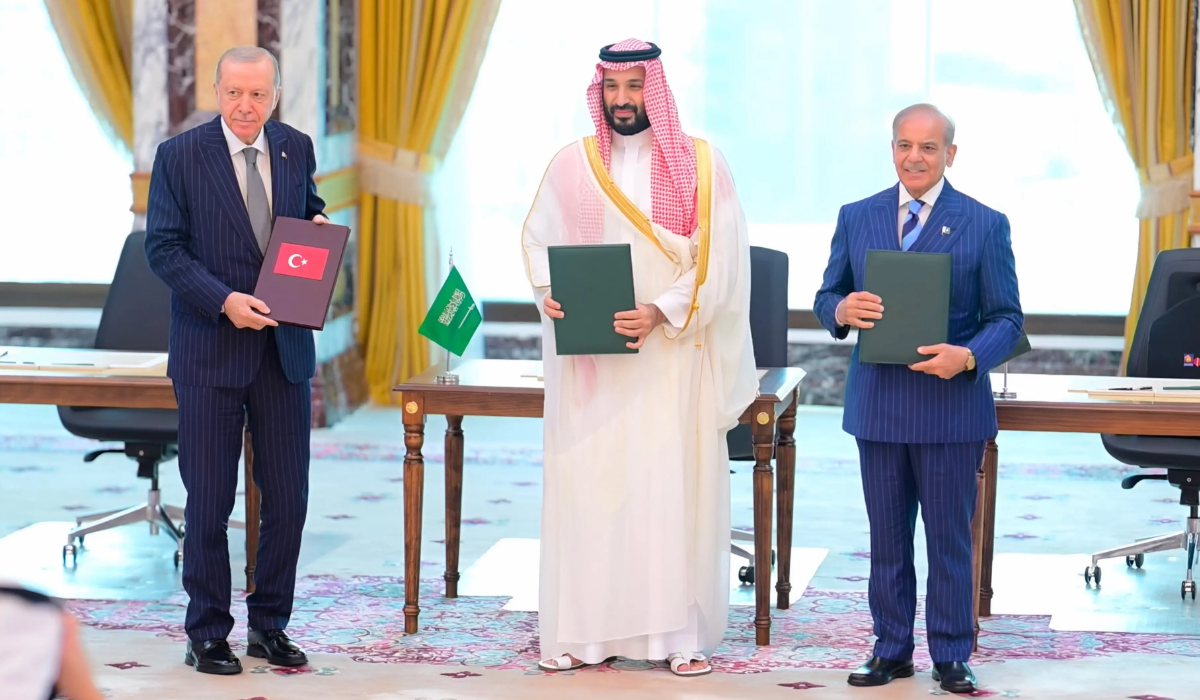
Pakistan, battling insurgencies at home and tensions along multiple borders, is too overstretched to offer meaningful military support to Saudi Arabia under the Mecca Pact. The deadly Houthi strikes on Riyadh’s international airport on October 10 and 11, which killed 12 people and injured around 300, came just days after Saudi Arabia, Turkey and Pakistan activated the pact on October 5, underlining that it had done little to deter the Houthis. The pact’s most acute capacity problem lies in Pakistan. Islamabad must contain the Tehrike-Taliban Pakistan insurgency in Khyber Pakhtunkhwa and Baloch separatist violence while guarding a contested frontier with Afghanistan and maintaining forces opposite India. It pointed to Pakistan’s airstrikes inside Afghanistan on October 1 amid recurring border clashes, and the imposition of emergency rule in Khyber Pakhtunkhwa on October 11, adding that the frontier with India remains a contingency Pakistani military planners cannot ignore. This threat landscape will create serious bandwidth issues for Pakistan’s military in the immediate to near term, further limiting Islamabad’s support for Riyadh. Though Islamabad has denied Western media reports that its troops are deployed in governmentheld areas of Yemen, the death of a Pakistani driver in a Houthi drone strike in Marib has raised questions over whether Islamabad has taken on a direct combat role alongside Saudi-backed Yemeni forces, it noted. Neither country should be dismissed as a partner, and neither should be treated as an unlimited strategic reserve for a war with no clear end date. Arguing that Ankara and Islamabad are unwilling and probably unable to hit Houthi infrastructure, the report urged Washington to step up military support to Riyadh and Yemen’s internationally recognised government through targeting support, aerial refuelling, air and missile defence and counter-drone capabilities, without plunging into an open-ended bombing campaign. The Mecca partners can share the burden, but they cannot yet carry it alone. No longer limited to private briefing rooms, Iranian misgivings about Pakistan’s mediation have now emerged in the public record and the language used in Tehran is sharper than anything Western analysts have been willing to publish. Iranian lawmaker Ahmad Naderi wrote that Pakistan’s entry with Saudi Arabia against the people of Yemen implies that Islamabad cannot be labelled as a mediator.
The World Bank Group has launched its first comprehensive digital strategy, placing artificial intelligence, affordable internet access and...

Fifty-four organisations and movements associated with France's October protests, along with their wider networks of supporters and international...
In the aftermath of the Indian agencies cracking down heavily on Indian influencers who were promoting pro-Pakistan content,...

Nearly 100 new cases of dengue have been reported in Pakistan's Khyber Pakhtunkhwa province in the last 24...

Following violent protests and looting in France, the government has decided to impose new curfews in different areas...

North Korea on Tuesday strongly criticized the ongoing joint military exercises between South Korea and the United States,...
Aries: The day will be auspicious...