Last Updated: October 21, 2026
Last Updated: October 21, 2026





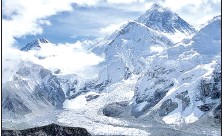
The Himalayas, often called the “Third Pole,” store the largest reserve of ice outside the Arctic and Antarctic. For decades, this vast cryosphere has quietly sustained rivers that millions in South Asia depend on. Today, that stability is cracking. Accelerated glacial melting is no longer a distant climate warning—it is a present-day water emergency unfolding across North India.
Scientific studies show Himalayan glaciers are melting at nearly double the rate recorded at the start of the century. Rising temperatures, erratic snowfall, and prolonged heatwaves have disrupted the natural balance that once allowed glaciers to accumulate snow in winter and release meltwater gradually in summer. Instead, rapid melting is causing sudden surges followed by long dry spells, destabilizing river systems like the Indus, Jhelum, Chenab, and Ganga.
In Kashmir, the impact is already visible. The Jhelum river, lifeline of the Valley, has recorded abnormally low water levels in recent years even during peak summer. Wetlands that once acted as natural sponges—absorbing excess water and releasing it slowly—have shrunk drastically due to encroachment and neglect. With glaciers retreating and wetlands disappearing, the Valley faces a paradox of floods and droughts within the same year.
This pattern is not unique to Kashmir. Himachal Pradesh and Uttarakhand have witnessed repeated glacial lake outburst floods (GLOFs), washing away bridges, roads, and villages. These disasters are often described as “natural,” but experts argue they are climate-induced events intensified by human activity. Unregulated hydropower projects, deforestation, and aggressive road construction have weakened fragile mountain slopes, amplifying the damage when disasters strike.
Downstream, the consequences are equally severe. Punjab and Haryana—India’s agricultural heartland—depend on Himalayan rivers for irrigation. Declining river flows threaten food security at a time when groundwater reserves are already over-exploited. As surface water becomes unreliable, farmers dig deeper borewells, pushing aquifers closer to collapse.
Despite the warning signs, policy responses remain fragmented. Climate adaptation plans often focus on urban flooding or heatwaves, while mountain-specific strategies receive limited attention. Glacial monitoring stations are few, and early-warning systems for GLOFs are still inadequate. Local communities, who are the first to experience these changes, are rarely included in planning processes.
The crisis also carries geopolitical implications. Rivers originating in the Himalayas flow across international borders, making water security a shared concern for India, Pakistan, Nepal, and Bangladesh. As flows become unpredictable, existing water-sharing agreements face new stress. Climate change is quietly becoming a security issue, though it is rarely acknowledged as such in official discourse.
Addressing this silent emergency requires more than disaster response. Protecting high-altitude ecosystems, restoring wetlands, regulating construction in fragile zones, and investing in climate-resilient water management are critical. Equally important is shifting the narrative—from seeing glaciers as distant ice masses to recognizing them as active systems sustaining everyday life.
Good Evening Viewers! Catch up on the day's biggest stories with The Savera Times Evening Bulletin. Get the...

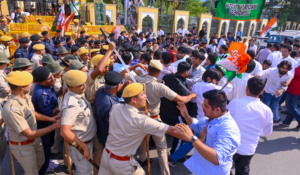
Congress leaders continued their protest outside the Jaipur Police Commissionerate on Tuesday, demanding the registration of a zero...
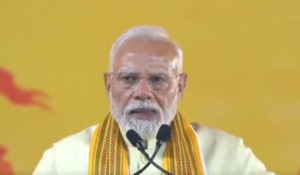
On the auspicious occasion of Vijayadashami, Prime Minister Narendra Modi on Tuesday called on the countrymen to unite...
A historic milestone was achieved on Tuesday in the expansion of Chhattisgarh's rail networkA historic milestone was achieved...

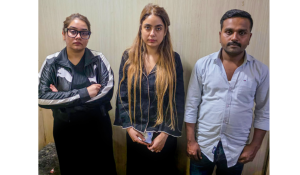
Model Shraddha Dubey, one of the main accused in the death of Lucknow businessman Shiv Sharma, has been...
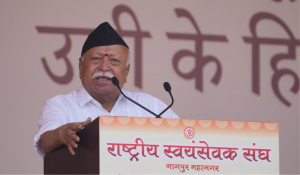
Rashtriya Swayamsevak Sangh (RSS) chief Mohan Bhagwat on Tuesday called for strengthening national unity, social harmony, indigenous practices...
Aries: The day will be auspicious...