Last Updated: October 21, 2026
Last Updated: October 21, 2026






After months of financial distress caused by overleveraging of borrowers, India’s microfinance sector is showing signs of revival, with banks expected to play a leading role in its recovery, according to a report released by HSBC Research on Wednesday.
The report highlighted that the sector experienced an upswing in February, marked by improved loan collections and higher disbursements. This positive shift has strengthened sentiment in the microfinance industry, indicating a potential turnaround in 2025. However, some challenges remain, particularly in regulatory areas and borrower repayment behavior. One of the key indicators of recovery in the sector is the increase in “X bucket” collection efficiency across most states, which reached between 98.5% and 99.5% in February.
The term “X bucket” refers to borrower accounts that had no overdue payments at the end of the previous month. The collection efficiency measures the percentage of equated monthly installments (EMIs) collected from these accounts during a given month, in comparison to the total EMIs due. The improved collection efficiency indicates that more borrowers are repaying their loans on time, which is crucial for stabilizing microfinance institutions (MFIs).
The report also noted a decline in high employee attrition rates, which had been a growing concern in the microfinance sector over the past year. Better collection efficiency has helped MFIs retain employees, as improving financial health has allowed institutions to offer more stability and better incentives to their workforce. Despite these positive trends, MFIs in Karnataka faced significant operational challenges in February due to government intervention. The state government introduced a proposed bill that seeks to exempt borrowers from repaying loans, including interest, borrowed from unlicensed and unregistered MFIs.
This ordinance disrupted microfinance operations, as it led to uncertainty over repayments and impacted the financial planning of MFIs operating in the state.
HSBC Research noted that individual microfinance institutions have been actively working to minimize the impact of this disruption by stabilizing their operations. However, policy uncertainty continues to pose a risk to the sector’s recovery. Looking ahead, the report predicts that credit costs for MFIs will decline in the April-June quarter due to improving asset quality.
Good Evening Viewers! Catch up on the day's biggest stories with The Savera Times Evening Bulletin. Get the...

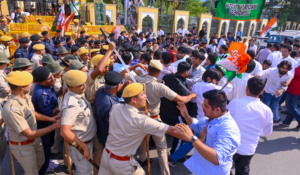
Congress leaders continued their protest outside the Jaipur Police Commissionerate on Tuesday, demanding the registration of a zero...
On the auspicious occasion of Vijayadashami, Prime Minister Narendra Modi on Tuesday called on the countrymen to unite...
A historic milestone was achieved on Tuesday in the expansion of Chhattisgarh's rail networkA historic milestone was achieved...

Model Shraddha Dubey, one of the main accused in the death of Lucknow businessman Shiv Sharma, has been...

Rashtriya Swayamsevak Sangh (RSS) chief Mohan Bhagwat on Tuesday called for strengthening national unity, social harmony, indigenous practices...
Aries: The day will be auspicious...