Last Updated: October 21, 2026
Last Updated: October 21, 2026





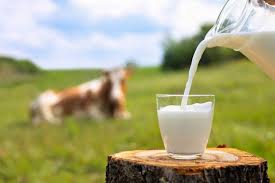
A recent study has found out some interesting revelation. More than a third of India’s cattle rearers do not sell milk — the primary objective associated with bovine rearing — but instead prioritise non-market uses such as dung, draught power and income from selling animals. This was what recently disclosed by the Council on Energy, Environment and Water (CEEW) after it conducted a survey.
The study estimated that about 38% of cattle rearers, or nearly 30 million households, do not sell milk. While 31 per cent of them still see family milk consumption as a motivation to rear bovine animals, the rest — around 5.6 million households — rear bovines entirely for purposes unrelated to milk consumption or sale. This share rose sharply in certain states, touching about 15 per cent in West Bengal and Maharashtra.
According to the study, Cattle and Community in a Changing Climate, in Jharkhand, as many as 71% of rearers do not prioritise milk sales, while the figure exceeds 50% in West Bengal and Himachal Pradesh.
Milk supports over 80 million livelihoods and contributes 5% to India’s gross domestic product. Existing dairy policies remain largely geared towards increasing milk productivity and output, often overlooking multiple non-market roles cattle play in rural livelihoods.
The findings underlined that cattle rearing in India operates as a complex livelihood system, rather than a milk-centric economic activity, particularly in the context of climate stress and smallholder farming systems.
The study is based on a survey of over 7,300 cattle-rearing households across 15 states, representing 91% of India’s bovine population (including cows, buffaloes, bulls and bullocks). Overall, in nine of the 15 states, less than half of cattle rearers cited milk sales as their primary motivation for rearing.
Most of these households typically owned 1-2 indigenous cattle, indicating the relatively critical role of indigenous cattle for non-market uses, such as household nutrition, dung and draught power, especially within integrated farming systems, the study noted
We are very proud that at present India is the number one country in the world by surpassing...
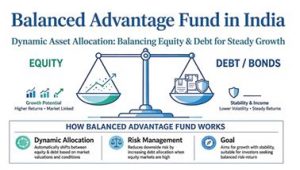
Every investor wants the wealth-creating power of equity and the reassuring stability of debt. Balanced Advantage Funds attempt...
Tourism is a major source of government revenue in our country. There are different types of tourism. Scenic...
Good Evening Viewers! Catch up on the day's biggest stories with The Savera Times Evening Bulletin. Get the...

Congress leaders continued their protest outside the Jaipur Police Commissionerate on Tuesday, demanding the registration of a zero...
On the auspicious occasion of Vijayadashami, Prime Minister Narendra Modi on Tuesday called on the countrymen to unite...
Aries: The day will be auspicious...