Last Updated: October 8, 2026
Last Updated: October 8, 2026





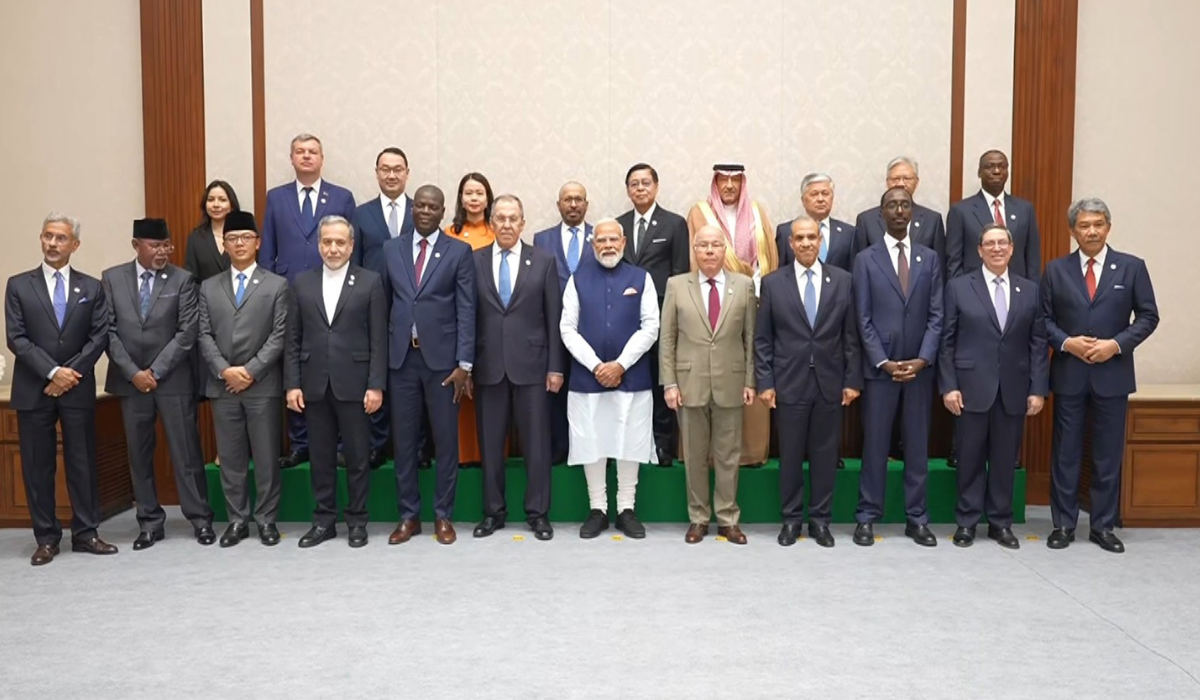
India’s steady stewardship during the recent BRICS Foreign Ministers’ Meeting in New Delhi offers a compelling model for how nations should respond in an era defined by a familiar superpower dynamic. Amid the evolving geopolitical landscape, great powers such as the US and China maintain direct, highlevel diplomatic engagement with one another, often tolerating, encouraging or even fueling conflicts and rivalries among smaller and middle powers.
Rather than retreating in frustration or seeking premature unity, India’s approach is one of pragmatic realism —remain constructively engaged in the forum, skillfully manage the resulting contradictions and crises, extract whatever practical gains are realistically available, and maintain the clear-eyed discipline not to pretend that the bloc can yet speak with one coherent voice on volatile security issues.
The May 14–15 BRICS meeting, chaired by India, concluded without a joint statement for the first time in the bloc’s history. Instead, a chair’s statement and outcome document were released, acknowledging “differing views among some members”, amid sharp divisions between Iran and the United Arab Emirates (UAE) that made consensus impossible. As the deadlock unfolded in New Delhi, China’s top leadership was simultaneously engaged with the US in Beijing, while the Chinese Foreign Minister remained absent from the BRICS meeting to host the US delegation.
This left India to manage the fallout of a predictable regional crisis within BRICS, one that followed the 2024 expansion strongly championed by China, which admitted both Iran and the UAE as full members despite their longstanding rivalries and Iran’s conflicts with most Arab League states. The 2024 expansion had largely served “Beijing’s strategic calculus” more than the “collective cohesion of the group”. The report added that Iran’s entry in the grouping, despite its longrunning proxy conflicts with most Arab League states and the new Gulf members, was a “calculated risk that prioritised Chinese leverage over bloc harmony”. While BRICS grappled with internal divisions partly introduced by China, Beijing continued to keep channels open with US President Donald Trump, underscoring its “superpower” tendency to compartmentalise relationships
New Delhi: Prime Minister Narendra Modi welcomed policymakers, maritime leaders, and experts from around the world to the...
New Delhi: The outlook for onion availability has strengthened considerably with robust market arrivals and the commencement of...
New Delhi: The Delhi High Court on Wednesday permitted a senior director of Vivo Mobile India to travel...
New Delhi: INDIA bloc leaders, including Leader of Opposition in the Lok Sabha Rahul Gandhi and Congress MP...

Varanasi: Uttar Pradesh Chief Minister Yogi Adityanath on Wednesday said that the state has undergone a major transformation...

Chandigarh: The Punjab Vigilance Bureau (VB) during its ongoing drive against corruption in the state, the Punjab Vigilance...

Aries: The day will be auspicious...