Last Updated: October 11, 2026
Last Updated: October 11, 2026





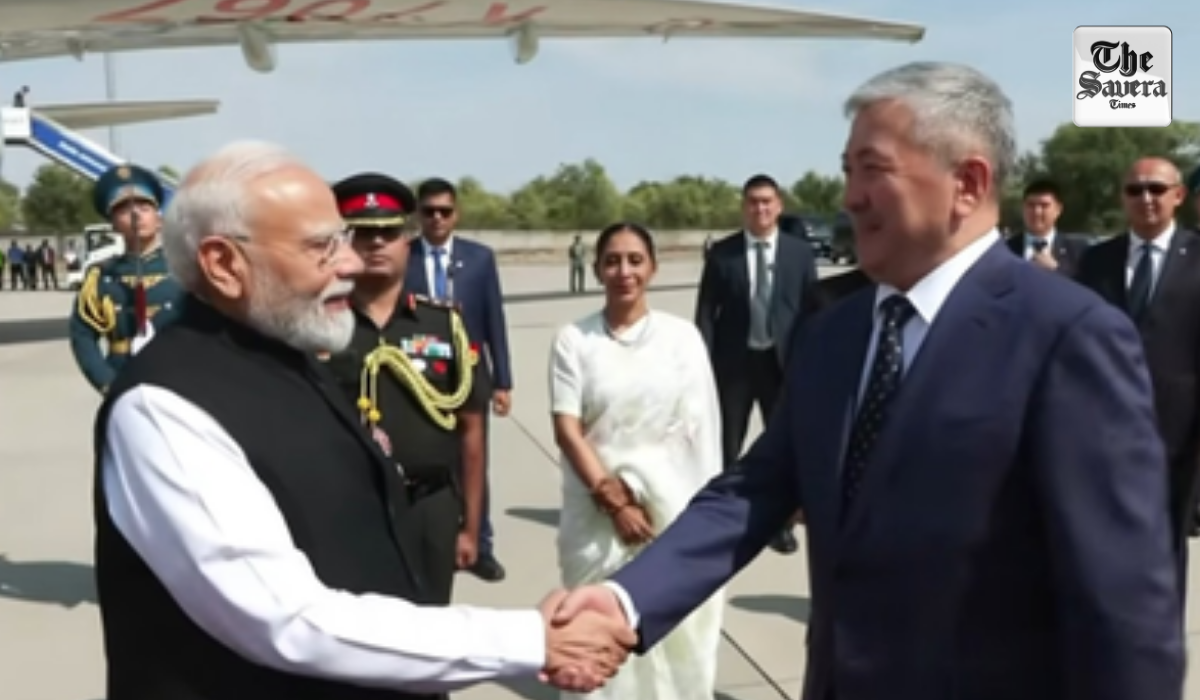
Prime Minister Narendra Modi’s August 29–30 visit to Tashkent has elevated India-Uzbekistan relationship from a strategic partnership to a Comprehensive Strategic Partnership. The 11 agreements signed during the visit enable India to build strategic options across a region too often treated as a blank space between Russia, China and Afghanistan. The architecture of the agreements links the hard power of uranium and minerals, the practical power of trade routes and digital payments, and the durable power of skills, culture and institutions. They also agreed to a working group on non-tariff and investment barriers, time-bound exploration of a preferential-trade agreement, and a business summit. These are the unglamorous devices that determine whether memoranda become factories, contracts and jobs. It also highlights that the target to increase bilateral trade between the two countries from, $1.3 billion to more than $5 billion by 2030, is backed by solid steps that include the creation of a foreign-ministersled mechanism to coordinate and oversee implementation. Besides, investor-grievance mechanisms, regulatory discussions and possible mutual-recognition arrangements to deal with any obstacles will help implementing the agreements. A trade target without these details is a slogan; with them, it becomes a testable development strategy. The United States should recognize the distinction, especially when it urges partners to build resilient, diversified networks. It highlights that the most strategically important commitments concern geology, mining, nuclear energy and critical minerals. India and Uzbekistan intend to pursue joint exploration, mining, processing, value-added production and recycling, while encouraging Indian firms to develop Uzbek deposits. The two sides also advanced a long-term framework for Uzbek uranium supplies to India for civil nuclear cooperation. This assumes significance as these minerals and processed materials are required to make electric vehicles, grids, electronics, defence hardware, solar power units. Securing deposits matters, but processing capacity, contractual reliability, environmental standards and recycling matter as much. The joint statement’s emphasis on integrated value chains is therefore more mature than a race to lock up raw materials. Uranium adds a second layer as Uzbekistan produced 7,000 tonnes in 2025, and its government says identified reserves reached 139,000 tonnes. For India, which sees nuclear power as part of its energy transition, a durable arrangement diversifies a critical input. For Uzbekistan, selling more than ore and partnering on industrial capability supports its push to capture more value at home. Agreements cannot erase commercial, safety or market risks; they can reduce the vulnerability of relying on too few suppliers. Notably, Prime Minister Narendra Modi reiterated India’s stance that all conflicts should be resolved through dialogue and diplomacy, and not through war. Addressing the 26th Meeting of the Council of Heads of State of the Shanghai Cooperation Organisation (SCO) in Kyrgyzstan’s Bishkek, he said that the conflict in West Asia is not confined to that region and impacts the energy security, maritime trade and supply chains of the whole world. In today’s interconnected world, the scope of security has expanded even further. The crisis in West Asia has shown that conflict in one region is not confined to that region. It impacts the entire world’s energy security, maritime trade, and supply chains. Countries in the Global South bear the brunt of this. Therefore, India has been calling for the resolution of all tensions and wars through dialogue and diplomacy, not on the battlefield,” he said. Modi flagged drug trafficking as a serious threat to the young generation and regional security. He welcomed the centres being established within the SCO to address challenges like security threats, organised crime, information security, and narcotics as a “positive step” and called for making them effective instruments of practical coordination and timely action. On connectivity, he expressed India’s support for efforts to connect markets, facilitate trade and create new pathways for development. He further stressed that terrorism continues to pose a serious challenge to humanity and called for dismantling the entire ecosystem of terrorist financing, recruitment, radicalisation, and safe havens. He asserted that there can be no room for double standards on terrorism. The Prime Minister said that India has been and will continue to contribute to the development and humanitarian assistance of the people of Afghanistan. He outlined three main pillars of India’s approach to SCO – Security, Connectivity and Opportunity.
Pakistan’s religious minorities continued to face violence, discrimination and persecution throughout 2025, with blasphemy accusations and minority women...
Bangladesh is facing acute environmental and public health risks from rising pesticide and chemical fertiliser use. Chemical fertiliser...
India’s cheetah story has entered a new phase. After the species disappeared from the country in the 1950s,...

Jaipur: The Anti-Narcotics Task Force (ANTF) of Rajasthan Police has arrested wanted drug smuggler Sohanlal, alias Sonu, carrying...

Imagine a foreign national standing among Indian citizens at a political protest, raising questions about the government or...

Aizawl: The Assam Rifles, in coordination with other law enforcement agencies, seized methamphetamine tablets and foreign-made cigarettes worth...
Aries: The day will be auspicious...