Last Updated: October 21, 2026
Last Updated: October 21, 2026





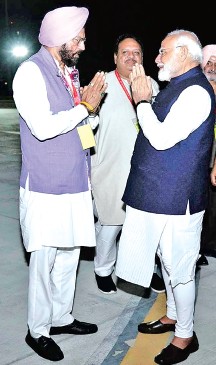
Rana Gurmit Singh Sodhi
Senior BJP Leader, Former
Punjab Minister
The Punjab Assembly’s recent special session ended with a predictable resolution, denouncing the Viksit Bharat – Guarantee for Rozgar and Ajeevika Mission (Gramin), or VB-G RAM G, as “anti-poor” and “anti-federal”. The speeches were loud and the intent political. But for the people of rural Punjab — especially families still drying the damp walls of flood-hit homes — this debate is about something far simpler: whether work can once again bring dignity and stability.I have seen that yearning up close in Ferozepur, the region I have been closely associated with throughout my political journey and which I contested in the 2024 Lok Sabha elections. In just two years, Punjab has faced two devastating monsoon floods. In 2023, overflowing rivers damaged more than 30,000 homes and 2.4 lakh hectares of farmland.
In 2025, when the Sutlej, Beas, Ravi and Ghaggar breached their banks again, over 1,400 villages across 13 districts were submerged, displacing tens of thousands. Ferozepur was among the worst-hit districts on both occasions. Families rebuilt their homes and hopes with borrowed money and unpaid labour. One farmer near Mallanwala told me quietly, “We don’t need doles; we need work that outlasts the next flood.” That single line explains why VB-G RAM G matters.Punjab’s record under MGNREGA has been weak. In 2024-25, households received an average of just 41 days of work, compared to a national average of about 50 days. Barely three per cent of families reached the 100-day entitlement, while women’s participation stagnated below 30 per cent. Significant allocations over Rs 300 crorewent under-utilised due to weak planning and delayed execution.
Yet the same political forces that failed to use MGNREGA effectively now claim to defend the poor by opposing reform.VB-G RAM G represents a shift toward more productive rural employment. It raises the guaranteed work ceiling from 100 to 125 days and links employment to clearly defined, asset-building projects. From ponds to projects, rural labour can now be directed toward building roads, homes and solar infrastructure. Importantly, it gives states and panchayats greater flexibility not less to design works that strengthen local resilience. Flood rehabilitation, soil conservation and irrigation projects, once constrained by rigid rules, now become central to rural employment planning.For a state repeatedly battered by water, this shift is significant. After the floods of 2023 and 2025, Punjab must rebuild smarter, not just faster. Under the new framework, rural labour can be formally deployed for drainage restoration, embankment strengthening, culvert construction and canal desilting activities that were earlier slowed by administrative bottlenecks. Better coordination across departments can ensure that post-disaster rehabilitation becomes quicker, localised and more transparent.Beyond flood control, VB-G RAM G aligns employment with Punjab’s longer-term ecological repair. In the Malwa region, workers can construct check dams, recharge wells and contour bunds to restore groundwater and reduce soil erosion. The state can align solar irrigation and tree plantation programmes with rural job creation, generating green employment while improving sustainability. Rural housing and drinking-water projects under PM Awas Yojana (Gramin) and the Jal Jeevan Mission can provide steady work for semi-skilled youth and women. Raised rural roads and small bridges in flood-prone belts such as Ropar, Ferozepur and Hoshiarpur can improve market access and safety.
These are not temporary relief measures; they are durable assets that Punjab’s villages urgently need.The principal beneficiaries of this reform can be Punjab’s Dalits — especially Mazhabi Sikhs and other Dalit and backward communities who form the backbone of the rural wage economy. Around 73 per cent of Punjab’s Dalit population lives in villages and is largely landless; barely three per cent own farmland. Studies show that Scheduled Caste households in rural Punjab earn, on average, 2.5 times less than non-SC households. Smaller surveys place their annual household incomes below Rs 1 lakh, compared to Rs 2–3 lakh for other rural families. For rural women labourers, per-capita income averages just Rs 16,584 a year. These figures reflect persistent exclusion, often reinforced by local patronage structures.
VB-G RAM G seeks to change that equation. Digital job allocation, direct benefit transfers and real-time project tracking can reduce dependence on intermediaries and local gatekeeping. Work is assigned transparently, completed on-site and wages are transferred directly. It is social justice through transparency and empowerment through accountability.
Punjab’s politics, however, remains drawn to protest. Attempts to replay the emotional mobilisation of earlier agitations may generate headlines, but they do little to rebuild washed-out bridges or silt-choked fields. Rural Punjab does not need slogans shouted in its name; it needs systems that work on the ground.
The choice before the state is both moral and political. Punjab can continue managing distress through fragmented relief, or it can invest in work that builds assets, restores confidence and prepares villages for the future. VB-G RAM G is not the end of MGNREGA; it is its evolution – turning short-term relief into long-term resilience and welfare into empowerment.Punjab has always led the nation through the strength of its villages and the dignity of its labour. It must do so again by choosing reform that builds, empowers and puts Punjab first.
Brief Bio of the Author
Rana Gurmit Singh Sodhi is a senior leader of the Bharatiya Janata Party and a former minister in the Punjab government. He has represented the Ferozepur region for multiple terms and has been actively engaged with issues of rural livelihoods, agriculture, infrastructure and disaster rehabilitation. He comes from a family with deep roots in Punjab and a long tradition of public service and community leadership in the border belt. With extensive grassroots political experience, he writes on development-led reform, cooperative federalism, and building resilient rural economies aligned with Punjab’s future aspirations.
The Delhi Police on Wednesday sought a three-day extension in the judicial custody of Cockroach Janata Party (CJP)...
Following the deterioration of air quality in Delhi-NCR, the Commission for Air Quality Management (CAQM) on Wednesday implemented...
Prime Minister Narendra Modi will visit Varanasi and Kedarnath on a two-day visit on October 24 and 25....
Stay updated with the latest national, international, Punjab, political, business, crime, weather, sports and entertainment news with The...

The family of 5-year-old Fabiana Cabello in New York City, USA, is in deep shock after her death....

The Delhi High Court on Wednesday posed several questions to Cockroach Janata Party (CJP) leaders Sourav Das and...
Aries: The day will be auspicious...