Last Updated: October 22, 2026
Last Updated: October 22, 2026





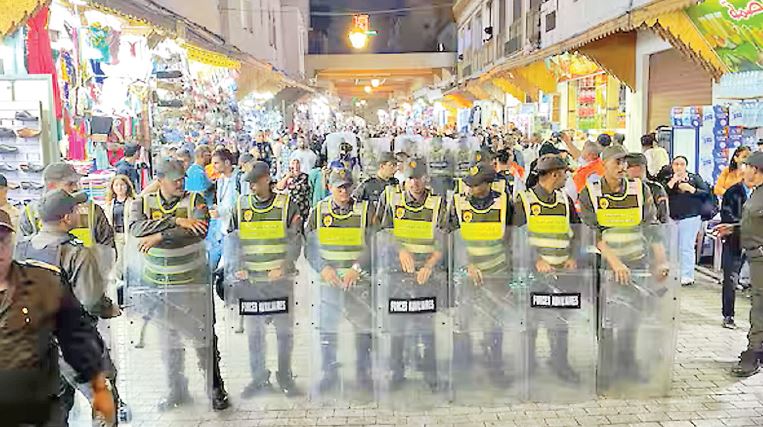
Morocco has been rocked by a wave of youth-led protests since September 27, when demonstrations organised online by a loose network calling itself GenZ 212 spread rapidly from one city to another. What began as calls for better health care and education has escalated into some of the largest and most volatile unrest the country has seen in years, with towns from Rabat and Casablanca to Agadir, Oujda, Tangier and Marrakech reporting mass gatherings, clashes and property damage.
The movement’s most severe outbreak occurred on Wednesday night in Lqliaa, near Agadir, where protesters attempted to storm a gendarmerie facility. Local authorities said demonstrators were armed with knives, set fire to part of the building and a vehicle, and attempted to seize weapons. Security forces first used tear gas and, when that failed to disperse the crowd, opened fire in what officials described as self-defence. Two people were killed and several others injured in the confrontation, marking the first fatalities since the protests began.
Elsewhere in the Agadir region, unrest included vandalism and arson. In Sidi Bibi masked youths burned the commune headquarters and blocked a major road. In Biougra a bank was looted and shops were damaged. Taroudant saw cars set alight and businesses attacked. Violence was reported outside the south as well. In Salé, near Rabat, witnesses said groups attacked banks, torched police vehicles and clashed with security forces in densely populated neighbourhoods. In Tangier youths threw stones at police, and in Marrakech a police station was set on fire.
GenZ 212 is deliberately opaque. The name refers to Morocco’s international telephone code, and the group operates without clear leadership or ties to established political organisations. Organisers rely heavily on social media and gaming platforms, notably TikTok, Instagram and Discord, where tactics are shared and grievances aired. In a single week the movement’s Discord membership reportedly rose from about 3,000 to more than 130,000, underscoring the speed of its spread. Participants often use anime avatars and gamer handles, a symbolic anonymity that sets GenZ 212 apart from the country’s earlier February 20 Movement of 2011, which involved identifiable leftist activists and Islamist groups.
Many protesters are young and inexperienced. Videos circulated online show some demonstrators crying as they were detained, others taking selfies while in custody. Yet the core demands remain consistent: improved public services, better access to health care and education, and more job opportunities. In a statement shared online, GenZ 212 said, “The right to health, education and a dignified life is not an empty slogan but a serious demand.” Organisers have urged followers to avoid violence and to direct their grievances at the government rather than security personnel.
Economic and social grievances underpin the unrest. Official figures cited by protesters point to national unemployment at 12.8 per cent and youth unemployment at 35.8 per cent, with nearly 20 per cent of university graduates unable to find work. Protesters have highlighted deficiencies in hospitals and schools, including shortages of staff, equipment and infrastructure. A specific trigger cited during demonstrations was the death of eight pregnant women at a public hospital in Agadir, which protesters describe as emblematic of a collapsed health system. Many demonstrators have questioned large public outlays on preparations for the 2030 FIFA World Cup, chanting slogans such as “Health before football” and “Stadiums are here, but where are the hospitals?”
The government response has combined cautionary statements with forceful arrests. The Interior Ministry said it would uphold the right to peaceful assembly but warned that unauthorised gatherings would meet “rigorous and firm” action. By Thursday the ministry reported 409 detentions, with 193 people facing trial, mostly on bail. Charges brought against some detainees include arson, looting and attacks on security forces. Officials reported that 263 members of the security forces and 23 civilians were injured in clashes. The ministry said 142 police and gendarmerie vehicles were damaged and 20 privately owned cars were destroyed.
Authorities insist security interventions were proportionate. An unnamed security expert cited by state media described the measures as “balanced,” saying most protests were dispersed peacefully and that force was used against those committing acts of vandalism or violence. Rights groups, however, have expressed concern about arrests and the treatment of minors. The Moroccan Association for Human Rights reported that at least 37 protesters arrested in Oujda on September 29 included six underage participants slated to appear in court. Amnesty International’s regional office urged Moroccan authorities to engage with the youth’s “legitimate demands” and to avoid excessive force.
The protests have resonated beyond street demonstrations. Athletes, musicians and social media influencers have voiced support. Moroccan goalkeeper Yassine Bounou and rapper El Grande Toto publicly expressed solidarity with the movement. Football ultras announced boycotts of upcoming national team matches, and GenZ 212 urged a boycott of the Africa Cup of Nations in December as a form of protest against government spending priorities.
Politically, the unrest presents a significant challenge for Prime Minister Aziz Akhannouch and the governing coalition. Demonstrators in Casablanca, Oujda and Taza have called for his resignation and for an end to corruption. Parliament is expected to hold discussions on healthcare and hospital reform as pressure mounts on the government to show concrete steps. Officials have pointed to structural problems inherited from past administrations, but that argument has done little to quell public anger.
The GenZ 212 protests are rapid, diffuse and leaderless. Their speed and breadth reflect a generation wired to organise online and dissatisfied with long-standing shortcomings in public services and job prospects. Whether the movement will translate into sustained political pressure or a broader civic realignment remains unclear. For now it has forced a national reckoning over priorities and expenditure at a moment when Morocco is preparing for one of the world’s most visible sporting events. The coming days are likely to shape whether the unrest can be channelled into dialogue and reform or whether further clashes will deepen the crisis.
Pakistan's Defense Minister Khawaja Asif has questioned alleged plans by senior government officials to permanently settle abroad. He...
The Baloch Liberation Army (BLA) has claimed responsibility for carrying out 34 operations between October 9 and 20...
Russian President Vladimir Putin said on Wednesday that Russia's first tanker carrying 40,000 tons of diesel fuel will...
Ten people were killed and 44 others injured in a horrific road accident in Pakistan's Punjab province. The...
North Korean leader Kim Jong-un's influential sister, Kim Yo-jong, and a military marshal inspected fortification work along the...
New Delhi: US Secretary of State Marco Rubio has assured India that America’s relations with any country in...
Aries: The day will be auspicious...