Last Updated: November 4, 2026
Last Updated: November 4, 2026





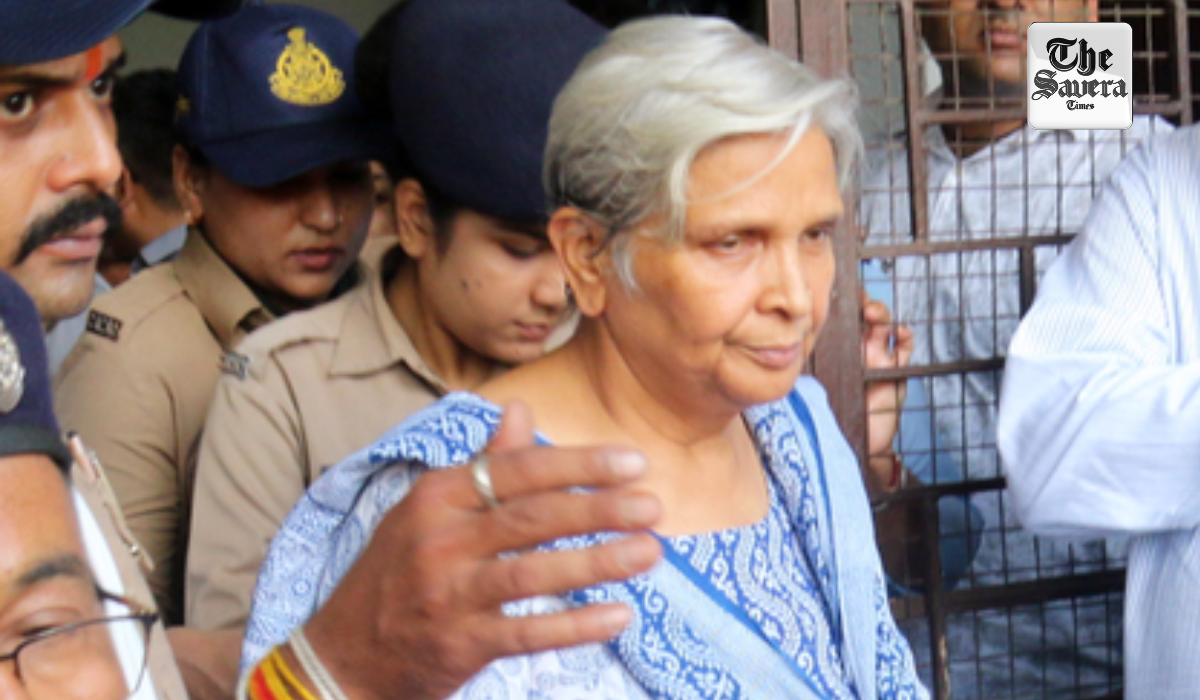
Bhopal: The Madhya Pradesh High Court on Wednesday rejected the bail application of Giribala Singh, a former District and Sessions Judge from Bhopal, who is facing charges in connection with the suspicious death of her daughter-in-law, model Twisha Sharma.
A single-judge bench of Justice Ajay Kumar Nirankari held that a thorough investigation into the accused’s role and the allegations of mental harassment remains necessary.
In its order, the court observed that the available evidence and the fact that the probe is still underway justify the denial of bail. The bench noted that a detailed examination of the deceased’s WhatsApp messages, CCTV footage and the circumstances leading up to the incident is essential.
Reports on data extracted from the deceased’s iPhone and the authenticity of the CCTV recordings are still pending.
Twisha Sharma died by suicide by hanging at her residence on May 12. Police registered a case against both her mother-in-law, Giribala Singh, and her husband, Samarth Singh.
The Bhopal District Court had initially granted bail to Giribala Singh on May 14. That order was later challenged in the High Court, which cancelled the bail and transferred the investigation to the Central Bureau of Investigation. The CBI subsequently arrested both the mother-in-law and the son.
After the District Court rejected a fresh bail plea, Giribala Singh approached the High Court again. Her counsel argued that she is a retired judicial officer, advanced in age and suffering from medical ailments. She has already spent five months in judicial custody.
Counsel for the applicant argued that she is 64 years old, has no “mens rea,” cooperated with the investigation and that mere allegations of harassment are insufficient for abetment of suicide.
The defence further contended that the CBI has not filed a chargesheet against her under the Dowry Prohibition Act due to lack of evidence, and that there is no direct evidence linking her to the crime. She maintains her innocence.
The CBI and the State Government strongly opposed the application. They submitted that the petitioner had failed to cooperate with the investigation, did not appear before the local police despite notices for recording her statement, and had allegedly attempted to destroy evidence.
The agencies warned that granting bail could allow her to influence witnesses and evidence. The court had reserved its order on October 26 after hearing both sides. The Court noted that extraction of data from the deceased’s iPhone is still awaited and may throw up further material or identify additional witnesses.
The DVR footage from the residence has been sent to the CFSL, New Delhi, to verify its continuity and authenticity; the report is pending. If any tampering is detected, further investigation would be required.
Material on record also shows that after the incident the applicant allegedly contacted certain influential persons, which too needs examination.
Rejecting the plea of absence of “mens rea”, Justice Ajay Kumar Nirankari observed, “Having regard to the WhatsApp conversations exchanged by the deceased with her family members immediately before the incident, the CCTV footage collected during investigation, the circumstances in which the deceased was found and the material relating to the subsequent conduct of the accused persons, this Court is of the view that the allegations and the respective roles of the accused persons require further investigation and careful examination during trial. At this stage, the contention regarding absence of ‘mens rea’ cannot be considered in isolation from the other circumstances emerging from the case diary.”
The Court finally held, “Considering the overall facts and circumstances of the case, the nature and gravity of the allegations, the material collected during investigation… and particularly the fact that further investigation under Section 193(9) of the BNSS is still in progress and important forensic reports and digital extraction reports are awaited, this Court is not inclined to enlarge the applicant on bail at this stage.”
In the final ruling, Justice Nirankari emphasised that the gravity of the offence, the material on record and the ongoing nature of the investigation warranted rejection of the bail plea.
New Delhi: Union Commerce and Industry Minister Piyush Goyal on Wednesday inaugurated Vanijya Bhawan and Udyog Bhawan in...
Mumbai: Foreign airlines operating from Mumbai’s Chhatrapati Shivaji Maharaj International Airport have recommended moving some international flights to...
Bengaluru: Karnataka Transport Minister Byrathi Suresh on Wednesday announced an increase in ticket fares of all four state-run...
New Delhi/Bhopal: The Supreme Court on Wednesday directed the Madhya Pradesh Assembly Speaker to decide within two months...
Washington: US President Donald Trump congratulated Democrats on capturing both chambers of Congress but blamed Republican losses on...
New Delhi: The Office of the Chief Labour Commissioner (Central) [CLC(C)] under the Ministry of Labour and Employment...
Aries: The day will be auspicious...