Last Updated: October 23, 2026
Last Updated: October 23, 2026





The Pahalgam terrorist attack and Operation Sindoor have naturally given Bharat a clearer understanding of its friends and enemies. After facing deceit from the United States and Turkey, India began seeking new partnerships with nations such as Russia and Israel. Meanwhile, the American tariff war also gave India a reason to strengthen ties with Russia and China.
Through these new initiatives, India has now found another important ally in Talibanruled Afghanistan. During its earlier regime, the Taliban was close to Pakistan, which had fully supported the 1999 plane hijacking that freed terrorists like Masood Azhar from Indian custody. However, the current Taliban government, having learnt from its earlier mistakes, is moving towards building trade and diplomatic relations with countries like India instead of losing power again. The Taliban is now openly opposing Pakistan’s interference in Afghan affairs.
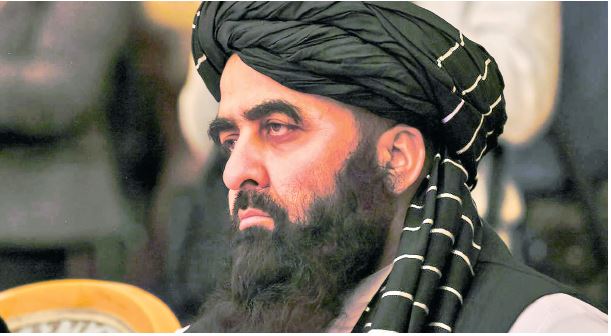
Because of the shared interests of both India and Afghanistan, the visit of the Taliban’s Foreign Minister Amir Khan Muttaqi to India and his meeting with External Affairs Minister S. Jaishankar have drawn the attention of experts who recognise the strategic significance of the Sapta Sindhu region. According to them, Muttaqi’s visit not only symbolises India’s growing goodwill with the Taliban but also reflects the Taliban’s determination to prevent Afghanistan from becoming an extension of the Pakistani army.
Background of Muttaqi’s Visit India’s present foreign policy is functioning on multiple levels. On one hand, British Prime Minister Keir Starmer, a NATO member leader, is holding talks in New Delhi with Prime Minister Narendra Modi on several agreements. On the other, External Affairs Minister Jaishankar has established contact with the Taliban’s Amir Khan Muttaqi. For Muttaqi too, travelling abroad had remained a challenge since the 9/11 attacks because of United Nations sanctions that barred him from international visits. It is worth noting that these two-decade-old restrictions were lifted only after Pakistan was appointed as the chair of the Taliban Sanctions Committee and Russia, the deputy-chair of the committee. Once the ban was lifted, Muttaqi visited Russia, where countries such as China, India, Russia, Iran, and Pakistan jointly condemned Donald Trump’s threat to reoccupy the Bagram military base near Kabul. After his Russia trip, Muttaqi landed directly in New Delhi on October 9. The Ministry of External Affairs welcomed him warmly, stating that discussions would focus on trade and mutual security.
India–Afghanistan Relations After the Taliban’s Return To understand the significance of this visit, it is important to revisit India–Taliban relations after the Taliban regained power in Kabul in 2021. Out of concern for minorities and women, India had suspended its diplomatic presence in Afghanistan despite its heavy investments there. However, India continued providing essential medical supplies, vaccines, and other humanitarian aid during the global crisis following the second wave of COVID-19. Simultaneously, maintaining a strong diplomatic stance, India did not recognise the Taliban as the legitimate government of Afghanistan.
Later, without granting formal recognition, New Delhi established a technical mission in Kabul to oversee humanitarian assistance. Gradually, this technical mission also helped revive trade relations. Balancing global circumstances with its national interests, India’s handling of the Taliban makes Muttaqi’s visit unsurprising. India had already sensed both American pressure and emerging conflicts with Pakistan. Consequently, in March 2024, senior Indian official J.P. Singh met Muttaqi in Kabul, followed by another meeting in December 2024 with Taliban Defence Minister Mohammad Yaqoob Mujahid. These developments show that New Delhi has maintained contact with the Taliban for strategic reasons over a long period.
After the Pahalgam attack too, Muttaqi and Jaishankar held telephonic talks in which Muttaqi condemned the incident. Around the same time, India also agreed to gradually allow the Taliban administration to manage Afghan consulates in Delhi, Mumbai, and Hyderabad.
These steps indicate that New Delhi is unwilling to repeat the mistake of trusting the untrue humanitarian claims of dominant powers like the United States. Despite being a religiously fanatic organisation, the Taliban now prefers strategic cooperation with an independent country like India rather than maintaining ties with a pawn-like state like Pakistan in mere name of Islam. Muttaqi’s visit is expected not only to strengthen the weakened India–Afghanistan trade after the Pahalgam attack but also to counter both America’s exploitative policies and Pakistan’s terror-driven approach.
Amir Khan Muttaqi: Once an enemy, now admires India Amir Khan Muttaqi was born in Afghanistan in 1971. His family moved to Pakistan during the Soviet–Afghan war, where he studied in the Darul Uloom Haqqania madrasa, like many other refugees. Two things are noteworthy here: first, that Darul Uloom has its roots in India’s Deobandi Sunni Islamic tradition; and second, that most hardline jihadist and Taliban leaders who fought against the Soviet forces were educated in Pakistan’s Deobandi madrasas. Muttaqi himself is known to have been an “active jihadist” in Afghanistan’s Helmand province during that war. He also served as a Taliban representative in countries such as Uzbekistan, Turkmenistan, and Saudi Arabia. An interesting connection emerges here.
The possibility of Muttaqi meeting India’s National Security Advisor Ajit Doval revived memories of the 1999 Indian Airlines hijacking. At that time, the Taliban had played a key role in facilitating the release of three top terrorists, including Jaish-eMohammed chief Masood Azhar, in exchange for Indian and foreign hostages after the hijacked plane landed in Kandahar. Both Ajit Doval, representing the Indian negotiating team, and Muttaqi, then DirectorGeneral of Taliban Information, were part of that meeting.
This situation represents poetic justice — the same Taliban, which once encouraged terrorists against India, is now seeking recognition and trade cooperation from the same “non-Islamic” nation because of its own political and economic challenges.
The India–Afghanistan Policy Emerging from Muttaqi’s Visit Through diplomatic foresight, New Delhi has set aside the bitter past of the Taliban and Muttaqi. Jaishankar openly welcomed Muttaqi and termed the visit a step forward in India–Afghanistan friendship. Although Jaishankar discussed several Indian projects and development commitments in Afghanistan, his focus remained on India’s security interests. India also delivered a strategic message by donating 20 ambulances, MRI and CT scan machines, and providing assistance during the recent earthquake through UN programmes. Jaishankar strongly criticised Pakistan for forcefully expelling Afghan refugees and spoke about joint initiatives in water management and irrigation. He also appreciated the Taliban’s invitation to Indian companies for mining Afghanistan’s natural resources.
While such projects strengthen developmental ties between the two nations, they also increase Pakistan’s strategic concerns, especially after India’s decision to put the Indus Waters Treaty on hold. Recognising the importance of cricket diplomacy, Jaishankar also spoke of promoting Afghan cricket. Finally, he underlined the shared need to fight terrorism. Although discussing counterterrorism with the Taliban may not appear logical, given Pakistan’s persistent hostility, New Delhi’s emphasis on practical strategy over moral positions seems a more pragmatic approach. Moreover, Jaishankar announced that India’s technical mission in Kabul would now be recognised as an embassy — a step seen as maintaining extensive engagement with the Taliban without granting it official recognition. Responding to Jaishankar, Amir Khan Muttaqi highlighted the historical and cultural ties between India and Afghanistan, which scholars identify as a major element of the ancient Saptasindhu civilisation. He expressed gratitude for India’s humanitarian and developmental assistance over the past 44 years and stated that the Taliban government considers India a close friend. This statement indicates a clear shift — the Taliban distancing itself from the U.S.– Pakistan nexus, and moving closer to a reliable nation like India for its own political stability.
Muttaqi described NATO’s presence in Afghanistan as an “American occupation” and pledged that Afghan soil would never be used against any other country. In his press conference, he even warned global powers against exploiting Afghanistan and asserted that the country’s progress was essential for peace in the Saptasindhu region. He further remarked that if Pakistan believes it can manipulate Afghanistan, it should recall the fates of the British, Soviet, American, and NATO powers in Afghanistan. Muttaqi also appealed to New Delhi and Islamabad to revive trade through the Wagah border.
However, his press conference drew controversy for inviting only men. Criticised for its anti-women policies, the Taliban faced renewed condemnation. Attempting damage control, Muttaqi soon held another conference, inviting women after visiting Deoband, and diplomatically claimed that women’s education was not forbidden in Islam — though human rights activists remain sceptical about this claim.
A New Geopolitical Alignment in the Making Muttaqi’s visit to India has already faced several controversies and questions — such as excluding women from the press conference, visiting Deoband, and concerns about the rights of women and minorities in Afghanistan. The Taliban also displayed a painting of the Bamiyan Buddha during the presser which was ironically destroyed by the Taliban itself, followed by statements about women’s rights, which many considered insincere. Despite being known as a sectarian fanatic force, the Taliban now appears to be learning the language of culture and diplomacy.
On the other hand, challenges like seeking international recognition, managing relations with Pakistan, and engaging with human rights advocates continue to stand before the Taliban.For India too, moral questions from intellectual circles about engaging with a fanaticand illegitimate group, and strategic concerns about using the Taliban to counter Pakistan, remain complex. The Taliban’s attacks on Gurdwaras and Mandirs in Afghanistan also raise ethical issues for New Delhi. Yet, despite these challenges, Muttaqi’s visit points towards a broader geopolitical realignment.
Cultural and political scholars have long discussed the need of a multilateral federation in the Saptasindhu region, similar to the European Union, based on shared cultural ties. In that direction, Muttaqi’s visit may well mark a turning point for reemerging a dialogue on possibility of such a regional cooperation
The Indian Army on Friday rejected claims on social media that the Army had taken action against the...
Abdul Majid Hakim Elahi, Iran's Supreme Leader's representative and senior diplomat, said on Friday that the US has...
New York, USA: The New York City Council has passed a law to ban horse-drawn carriages, naming the...

Washington: US President Donald Trump suggested that further military action against Iran remained possible, while acknowledging that the...
Lhasa: Sixteen people were killed and 32 others injured after a 7.0-magnitude earthquake struck Tibet on Thursday, according...
More than two weeks after the Yemeni government launched a major offensive against the Houthi group, front lines...
Aries: The day will be auspicious...