Last Updated: October 24, 2026
Last Updated: October 24, 2026





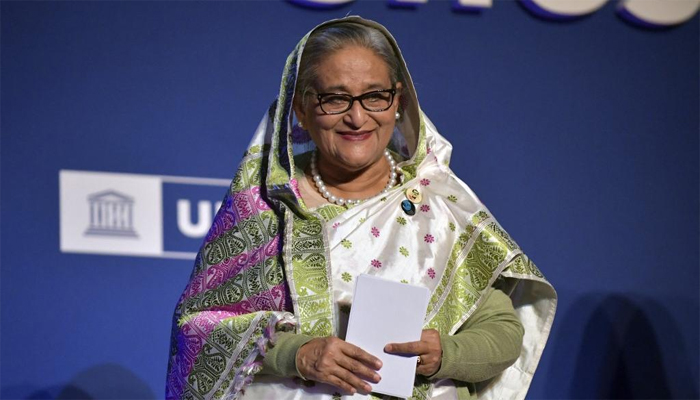
Along rumoured locker linked to former Bangladesh Prime Minister Sheikh Hasina has been discovered and sealed by revenue officials, intensifying scrutiny of her financial dealings. Acting on confidential intelligence, the Central Intelligence Unit of the National Board of Revenue (NBR) sealed locker number 128 on Wednesday morning at Pubali Bank’s Motijheel branch in Dhaka. The locker is located inside the Army Kalyan Bhavan and is registered in Hasina’s name.
T h e d i s c o v e r y h a s triggered widespread public speculation about its contents, with debates raging across social media over whether it holds cash, gold jewelry, or crucial documents. Officials, however, confirmed that the locker remains inaccessible because Hasina still possesses one of the two keys required to open it. Alongside the locker, investigators also identified two bank accounts at the same branch under Hasina’s name.
One contains a fixed deposit receipt of 12 lakh taka (about Rs 8.7 lakh), while the other holds deposits worth 44 lakh taka (about Rs 31.9 lakh). Together, the accounts amount to assets worth 56 lakh taka, which have now been frozen. Authorities said any withdrawals from these accounts are prohibited as the tax department continues its investigation. According to reports in Bangladeshi media, the seizure is part of a broader probe into alleged tax evasion by the former Prime Minister, who fled the country last year following a mass studentled uprising.
Revenue o�cials have not disclosed whether the locker contains valuables or sensitive papers, though sources indicated these possibilities are under consideration. The NBR’s move has sparked political reactions. Supporters of the interim government have hailed it as a strong step in a campaign against corruption, while loyalists o f H a s i n a’s Aw a m i League, now banned, have denounced it as politically motivated persecution. The development comes nearly a year after Sheikh Hasina’s dramatic ouster from office.
Protests had begun over controversial rules limiting merit-based civil service jobs, but quickly expanded into a nationwide movement against her government. By July last year, clashes between security forces and demonstrators left hundreds dead, most of them students. Under mounting pressure, Hasina resigned and fled to India. In her absence, an u n e l e c t e d i n t e r i m government led by Nobel laureate Muhammad Yunus took charge, promising reforms, restored order, and eventual elections. Since then, Bangladesh has remained in political flux, with parties battling over election schedules and the country grappling with unrest.
The interim a d m i n i s t r a t i o n h a s attempted to dismantle Hasina’s political and financial networks as part of its anti-graft campaign. Officials argue that such actions are essential to cleanse the political system of entrenched corruption. Yet critics contend that some of the government’s methods resemble political targeting. Rights groups have warned that arbitrary arrests and custodial deaths of Hasina’s supporters raise questions about due process. The Awami League has claimed that more than two dozen of its members have died in custody since Hasina’s removal. Many of her supporters remain underground to avoid detention, while the party itself is barred from participating in political activity.
At the same time, the Yunus-led government faces challenges from the Bangladesh Nationalist Party (BNP), led by former Prime Minister Khaleda Zia. The BNP has demanded elections by the end of this year or early next year, but Yunus has suggested April as a possible timeframe, sparking tensions with opposition forces. M e a n w h i l e , r i g h t s organizations report mixed outcomes under the interim leadership. Some practices associated with Hasina’s rule, such as enforced disappearances, appear to have ended. However, abuses against ethnic and religious minorities persist in parts of the country, and civil liberties remain fragile. Human Rights Watch noted in a statement on July 30 that the interim government “is falling short in implementing its challenging human rights agenda.” The group said the persistence of violence against vulnerable communities, combined with political arrests, has cast doubt on Yunus’s pledges of reform. The symbolic impact of the latest seizure is significant.
The interim government declared August 5 a public holiday to commemorate Hasina’s removal, underscoring its effort to distance itself from the legacy of her administration. The locker discovery adds to that narrative, fueling debates about accountability, corruption, and political vendettas in Bangladesh. What lies inside Sheikh Hasina’s sealed locker remains unknown, but the speculation reflects wider anxieties in a nation still grappling with the fallout of last year’s upheaval. For the interim government, the case serves as both a test of its commitment to transparency and a reminder of the divisive legacy of the former Prime Minister.
Washington: US President Donald Trump has acknowledged that the war with Iran has driven up oil prices and...
Washington: US President Donald Trump has announced a new labelling initiative to identify American-produced seafood, seeking to give...
Kinshasa: A major clinical trial to evaluate vaccines against the Bundibugyo Ebola virus began Friday in the eastern...
Washington: US President Donald Trump has warned that American forces could launch another round of military strikes against...
The Indian Army on Friday rejected claims on social media that the Army had taken action against the...
Abdul Majid Hakim Elahi, Iran's Supreme Leader's representative and senior diplomat, said on Friday that the US has...
Aries: The day will be auspicious...