Last Updated: October 9, 2026
Last Updated: October 9, 2026





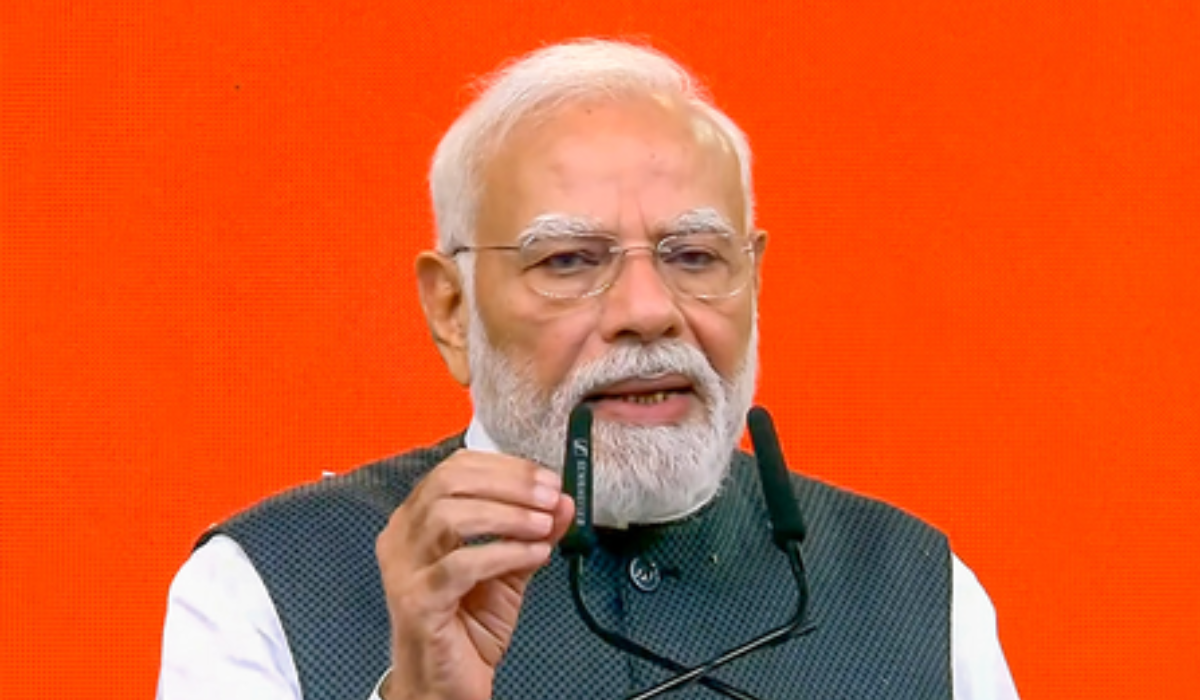
Narendra Modi assumed office as the Chief Minister of Gujarat on October 7, 2001. In 2014, he expanded the scope of his administrative service by becoming the Prime Minister of India. To mark the completion of 25 years of Modi’s administrative service, celebrations commemorating these 25 years of service to the nation will be held across various parts of the country starting October 7. It is undoubtedly an unprecedented achievement for a leader to first serve as a state Chief Minister and subsequently secure a third term as the country’s Prime Minister. Even today, Modi enjoys immense popularity across the entire nation, spanning from the Hindi heartland and Western India to every other region. Despite having crossed the age of 75, there has been no talk of his retirement. Yesterday, on Wednesday, after offering prayers at a temple in the morning, Modi participated in celebrations held in New Delhi and other locations. At a time when the opposition is mobilizing against him—and amidst ongoing protests at Jantar Mantar demanding the resignation of Chief Election Commissioner Gyanesh Kumar—it is noteworthy that Modi remains engrossed in his work, undeterred by fatigue or trouble. On October 7 itself, Modi coined a new slogan regarding his goals: “1947 Developed Nation – We Will Do It.” Undoubtedly, the ‘Modi Era’ has ushered in a transformation; the country’s global standing has risen, India’s counsel is increasingly valued in international affairs, and the heads of state of two major global powers—the USA and Russia— count Prime Minister Narendra Modi as a close friend. Critics might argue that the country has derived no tangible benefit from these friendships: Trump threatens to impose a 100% tariff on India for purchasing oil from Russia, while Russia, despite valuing India’s peace initiatives, remains unwilling to halt the war in Ukraine. However, it would be unfair to dismiss Modi’s contributions to Indian politics and public service as insignificant. He has played a pivotal role in transforming the face of the nation and modernizing it. The fact that we proudly acknowledge India’s leadership in the digital sphere today is a direct result of the ‘Modi era.’ The spirited hoisting of the national flag at Kashmir’s Lal Chowk and the firm crackdown on terrorists are testaments to the courage of the Modi government. Modi asserts that ‘Jan Shakti’ (people’s power) is his strength and hard work is his life-force; a deep-seated resolve to achieve his goals drives the conviction that “we will do it”—meaning India is destined to become a developed nation by 2047, with its flag flying high from earth to space. He is keen to repeat his victory in the 2029 general elections, while the opposition is actively trying to counter him. An objective assessment reveals that the reason behind the BJP’s repeated victories is the formidable political and organizational machinery built through Modi’s efforts—a system the opposition struggles to match. The BJP possesses a strong cadre, the organizational might of the RSS, and a clear ideological foundation; Modi skillfully leverages this by shaping the national discourse around it in every election to secure victory. No matter how much rivals join hands, they will not gain decisive power until they unite to create a genuine alternative force. Say what one may, there is no doubt that Modi is currently one of the most popular leaders in the world.
The Pentagon instructed US Central Command several days ago to complete preparations for resuming major combat operations in...
The India-EU trade deal constitutes the first major bilateral trade agreement between two of the world’s largest economic...
The Reserve Bank announces its monetary policy every two months based on the recommendations of the Monetary Policy...
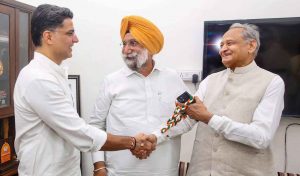
In Rajasthan politics, a smile can sometimes say more than a speech and sometimes hide more than it...
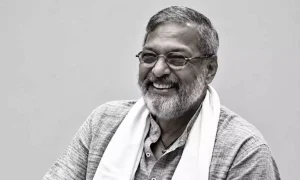
Vishwanath “Nana” Patekar, one of Indian cinema’s most formidable actors, a titan of acting and a dedicated social...
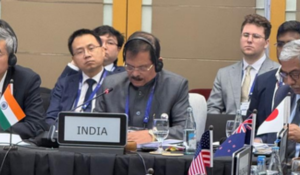
India on Thursday welcomed the ASEAN Plan of Action for Energy Cooperation 2026–2030 and assured the bloc of...
Aries: The day will be auspicious...