Last Updated: October 21, 2026
Last Updated: October 21, 2026





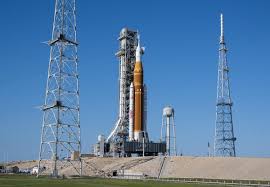
NASA launched the Artemis II mission on April 1, 2026 (at 3:54 AM on April 2, Indian Standard Time). This marks the first mission since Apollo in 1972 in which humans are undertaking such a long-duration spaceflight. On April 3—the day after tomorrow—the four astronauts aboard Artemis II will depart Earth’s orbit and head toward the Moon. This entire NASA mission is scheduled to last 10 days.
As part of this mission, a massive SLS rocket was launched from NASA’s Kennedy Space Center in Florida, carrying the Orion spacecraft. The crew for this mission—considered one of NASA’s most challenging endeavors—consists of four individuals: one woman and three men. They are Wiseman, NASA’s Victor Glover and Christina Koch, and Jeremy Hansen of the Canadian Space Agency.
Christina already holds the record for the longest single spaceflight. All four astronauts will complete a single loop around the Moon. As it travels 5,000 miles (8,000 kilometers) beyond the Moon, Orion will reach its farthest distance from Earth. This will also surpass the distance record previously set by Apollo 13. Thus, the Artemis astronauts will become the most distant travelers in history. After emerging from behind the Moon, the crew will return to Earth on the tenth day of the mission—specifically, nine days, one hour, and 46 minutes after liftoff. The crew of the Artemis II mission may get to witness regions of the lunar far side that have never been seen before.
During the closest approach of this flyby—which will last approximately six hours—the Moon will appear to be the size of a basketball. NASA’s new Administrator, Jared Isaacman, has included smartphones in the mission to capture inspiring images. Much like the Apollo missions, the Artemis mission will also culminate in a spectacular splashdown in the Pacific Ocean. Both the U.S. space agency, NASA, and India’s ISRO have consistently achieved new milestones in space exploration. It is anticipated that the Artemis II mission will prove invaluable for future lunar missions and astronauts.
Good Evening Viewers! Catch up on the day's biggest stories with The Savera Times Evening Bulletin. Get the...

Congress leaders continued their protest outside the Jaipur Police Commissionerate on Tuesday, demanding the registration of a zero...

On the auspicious occasion of Vijayadashami, Prime Minister Narendra Modi on Tuesday called on the countrymen to unite...
A historic milestone was achieved on Tuesday in the expansion of Chhattisgarh's rail networkA historic milestone was achieved...

Model Shraddha Dubey, one of the main accused in the death of Lucknow businessman Shiv Sharma, has been...

Rashtriya Swayamsevak Sangh (RSS) chief Mohan Bhagwat on Tuesday called for strengthening national unity, social harmony, indigenous practices...
Aries: The day will be auspicious...