Last Updated: October 23, 2026
Last Updated: October 23, 2026





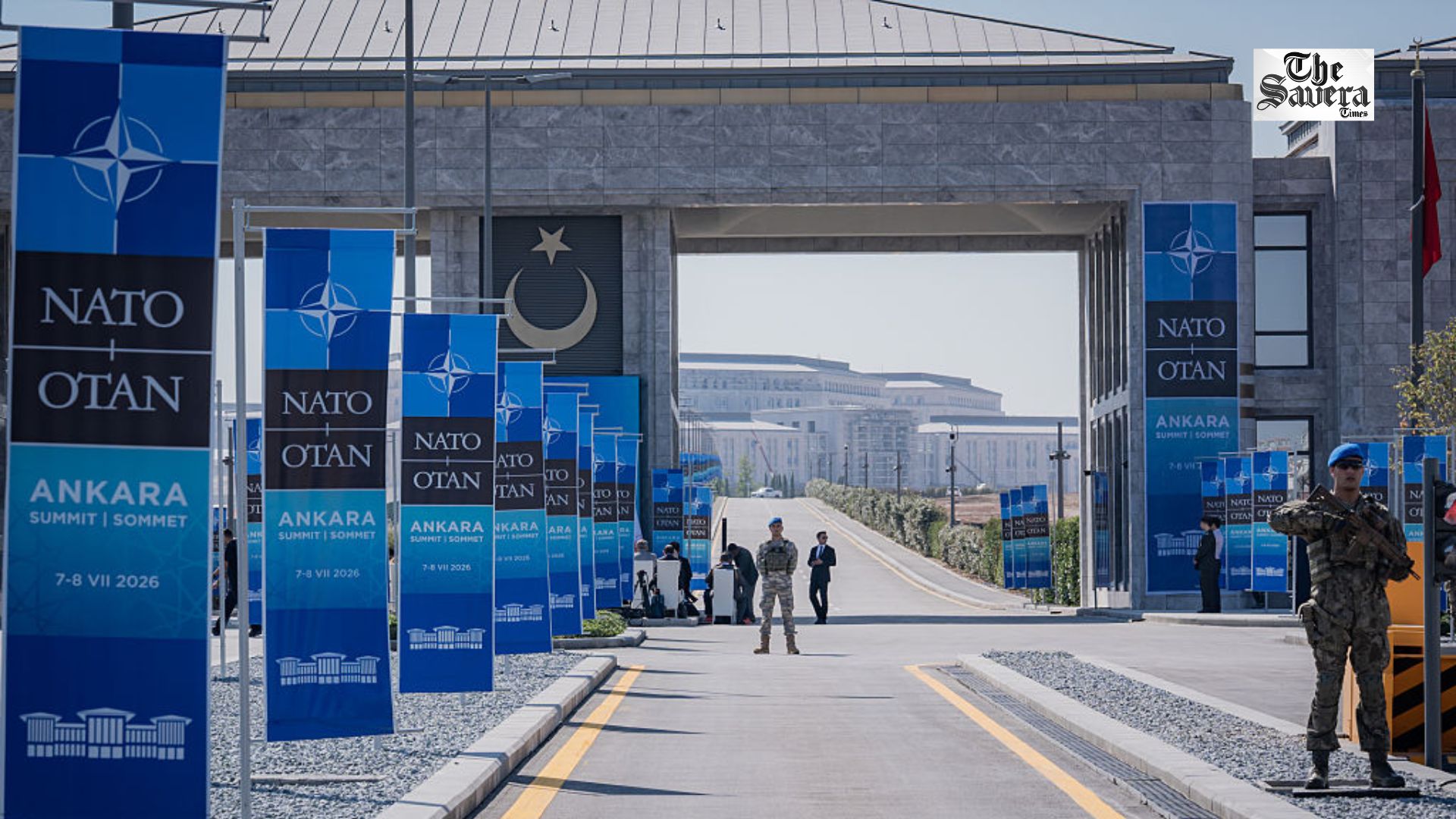
Ankara: NATO leaders are set to gather in Ankara this week amid growing disagreements over defence spending, strategic priorities, and the alliance’s long-term direction. The summit, scheduled for Tuesday and Wednesday, comes as member nations struggle to present a united front on key security and geopolitical issues.
Defence Spending and Iran Policy Dominate Agenda
One of the central issues expected to dominate discussions is the implementation of the agreement reached at last year’s NATO Summit in The Hague, where member states committed to increasing defence-related spending to 5 per cent of GDP by 2035.
The target is considered a key element of US President Donald Trump’s vision for “NATO 3.0”, which seeks to shift greater responsibility for Europe’s conventional defence to European allies. Trump has repeatedly warned that Washington could reconsider its security commitments if member nations fail to raise military expenditure.
The summit also follows recent US and Israeli military strikes against Iran that began in late February. Although several NATO allies backed Washington’s objective of preventing Iran from obtaining nuclear weapons, none agreed to participate directly in the military operation.
The reluctance of European allies to deploy warships to support efforts in the Strait of Hormuz drew criticism from Trump, who accused them of relying on US security guarantees while avoiding military risks, according to Xinhua news agency.
Analysts believe many European governments viewed the Iran conflict primarily through the lens of regional stability rather than alliance solidarity.
Oytun Orhan, a senior researcher at Ankara’s Center for Middle Eastern Studies, said direct military involvement could have exposed European countries to retaliation, disrupted energy supplies and increased migration pressures at a time of significant domestic challenges.
Foreign policy analyst Serkan Demirtas added that experiences in Iraq, Afghanistan and Libya have made many European governments more cautious about joining military operations without broad international legitimacy and clearly defined objectives.
Economic Challenges and Public Opposition
Despite agreeing to the 2035 defence spending target, analysts remain doubtful that every NATO member will be able to meet the goal.
Analyst Unal said several European governments accepted the target mainly to avoid direct confrontation with Washington, noting that committing to a long-term goal was politically easier than openly opposing the United States.
He argued that slow economic growth, rising public debt and ageing populations could make implementation difficult, while domestic priorities such as healthcare, education and social welfare continue to outweigh demands for higher military spending.
Public skepticism towards NATO has also intensified ahead of the summit.
Anti-NATO demonstrations were held in Ankara, Istanbul and Izmir, where protesters described the alliance as an “imperialist war organization” and accused it of diverting resources away from public welfare.
Demonstrators carried banners reading “NATO wants war, workers want peace,” “Budget for the people, not for NATO,” and “No to NATO, no to war.” Similar protests were also reported in the Netherlands and Spain during 2025 and 2026.
In Istanbul, workers, civilians and political activists participated in large rallies calling for NATO’s dissolution and opposing increased military expenditure.
Defence Deals Expected at Summit
The Ankara summit is also expected to announce several major defence procurement agreements, many of which are likely to benefit US defence manufacturers.
Unal noted that American defence companies naturally gain when NATO allies purchase alliance-compatible military equipment and said Washington continues to wield significant influence over NATO’s strategic direction.
Baris Doster, a scholar at Istanbul-based Marmara University, said the growing anti-NATO protests reflect wider concerns over the domestic impact of rising militarisation.
He argued that NATO extends beyond a traditional security alliance, describing it as an organisation shaped by broader economic, political and ideological interests under US leadership.
New York, USA: The New York City Council has passed a law to ban horse-drawn carriages, naming the...

Washington: US President Donald Trump suggested that further military action against Iran remained possible, while acknowledging that the...
Lhasa: Sixteen people were killed and 32 others injured after a 7.0-magnitude earthquake struck Tibet on Thursday, according...

More than two weeks after the Yemeni government launched a major offensive against the Houthi group, front lines...

Singapore’s iconic skyline is disappearing behind a thick blanket of haze. Air pollution has reached such alarming levels...

Pakistan believed that the Taliban’s return to power in Afghanistan would become strategic leverage in the region. However,...
Aries: The day will be auspicious...