Last Updated: October 18, 2026
Last Updated: October 18, 2026





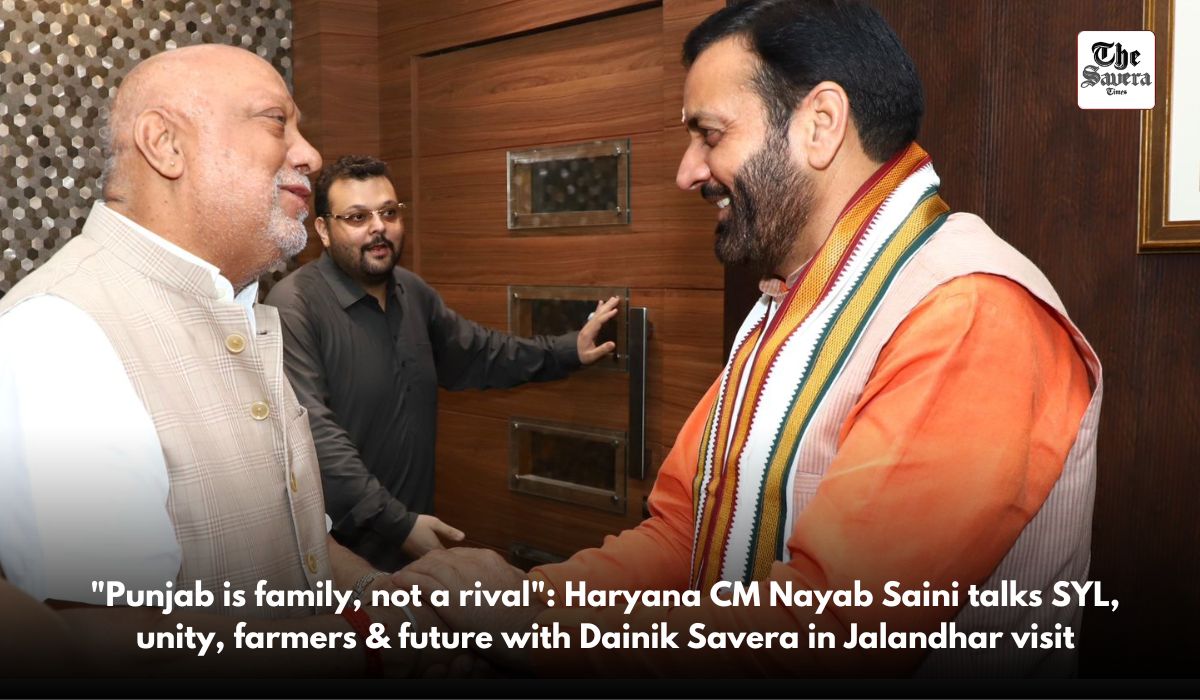
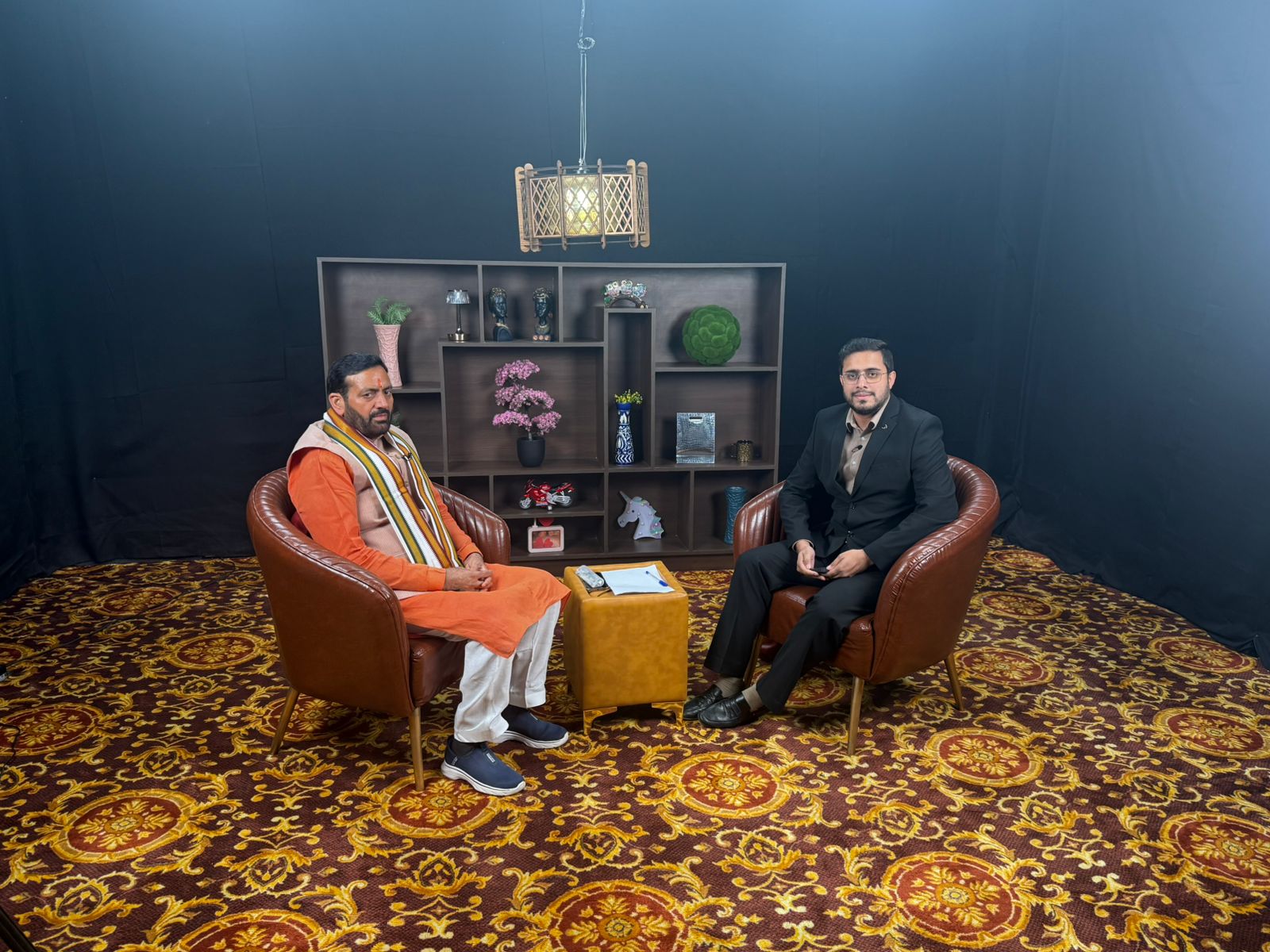
Jalandhar, July 11: Punjab’s neighbouring state, Haryana Chief Minister Nayab Singh Saini visited Dainik Savera Bhawan yesterday, where he discussed in detail the recent meeting of the Chief Ministers of Punjab and Haryana with Union Jal Shakti Minister CR Patil on the Sutlej-Yamuna Link (SYL) canal issue.
Q: Your presence has brought a sense of positivity and after the meeting, almost everyone said that the discussions were meaningful and productive. Could you tell us what exactly transpired in that meeting?
A: “From the very beginning, I’ve always said—Punjab is our family, our home. It is not separate from us. Even today, we live under the same roof, speak the same dialect, and share the same cultural roots.
It’s not a case of ‘us’ and ‘them’. When Punjab is family, there should be no room for disputes between us,” said Haryana Chief Minister Nayab Singh Saini, reflecting on the recent highlevel SYL meeting held in Delhi.” He added, “Just a few days ago, Prime Minister Narendra Modi made a strong statement after Pakistan shed innocent blood on Indian soil—he made it clear that blood and water cannot flow together.
As a result, the (Indus Water) treaty with Pakistan over river waters was revoked. The water from the Chenab when redirected to India, Punjab will receive its share, and so will Haryana. Farmers in both states need this water. The requirement is shared.” Saini emphasised the spirit of unity and cultural harmony.
“Our values and upbringing teach us to stay united. There’s no division between us. Before 1966, we were all part of one Punjab. Even today, we share the same roof. There’s no reason to be at odds.” On the outcome of the July 9 meeting, he said, “It was a positive and meaningful dialogue. Union representatives, Punjab representatives, and I sat together and discussed the way forward. We want to arrive at a joint solution—together, and with mutual respect.”
Q: If you could share some insight, was anything concrete decided during the meeting? While the message coming out suggested that the discussions were indeed meaningful, people are keen to know whether any clear decisions or next steps were actually agreed upon.
A: As the matter unfolds gradually, we will share the details with you in due course.
Q: Yesterday’s picture told a very different story — you and Bhagwant Mann were seen sharing a warm hug. For the past few months, relations seemed strained and differences were quite visible. Has that bitterness now come to an end?
A: Look, there was no bitterness and no conflict to begin with. As for the meeting, it was constructive, and I’m confident it will lead to meaningful outcomes.
Q: The next meeting is scheduled for August 5 — could you share with our readers how much more time you think it might take for this issue to be fully resolved?
A: We’ll share everything with you at the right time—there’s nothing to hide, and nothing unusual about it.
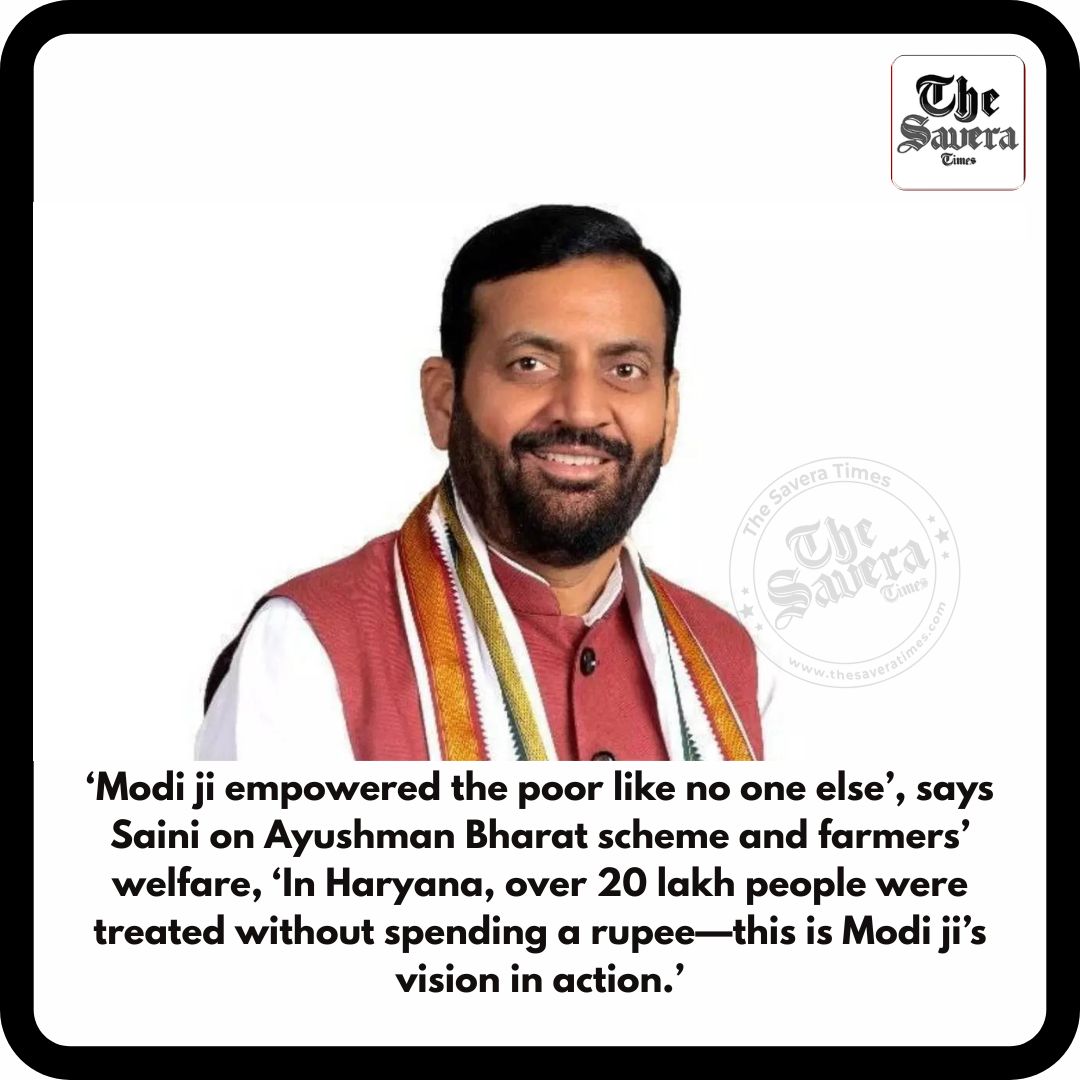
Q: Yesterday, after the meeting, Chief Minister Bhagwant Mann mentioned that he also raised the issue of BBMB, stating that Punjab’s rights are being overlooked. How do you view this matter, which has been a reason of tension between the two states?
A: Look, the Chief Minister (Bhagwant Mann) put forward his points, and rightly so. We also jointly acknowledged that this issue has been dragging on for a long time. Just like the water that used to flow into Pakistan is now being diverted to Punjab — it will benefit Punjab’s farmers, and eventually Haryana’s farmers as well.
When a resolution is reached, and that water comes in, it will obviously need to be directed somewhere. If it flows towards Haryana, our farmers will benefit. We are all working together for our country. The goal is to ensure that no one faces any difficulty and that our farmers get what they deserve. Pakistan has repeatedly inflicted terror on our soil.
Innocent people — families on pilgrimage or vacation — were gunned down mercilessly in front of their family members. In response, our Prime Minister gave a strong message by striking directly at the heart of terror on their land. He made it clear: the time has come to crush those who harbour terrorists.
We had no personal enmity with Pakistan’s people. But when terror was being nurtured on their soil, it had to be dealt with. And that’s exactly what happened. The Prime Minister made it absolutely clear — blood and water cannot flow together. That water, which once benefitted Pakistan, will now be used for our farmers, for our people. And that, ultimately, is what matters.
Q: Right now, we are sitting on the soil of Punjab—but speaking of Haryana, and especially its agriculture, based on your experience, how critical do you think water is for Haryana’s farmers? Could you shed some light on the extent and nature of that need?
A: Look, our farmers in Haryana are in real need of water—it’s a pressing requirement. A significant portion of the SYL canal, once completed, will directly benefit our agricultural land and reach our farmers’ fields.
But that doesn’t mean we are ignoring Punjab’s needs. We fully understand the importance of water, and we also acknowledge the concerns of Punjab’s farmers. It’s not about taking away their rightful share—we’re not here to claim what belongs to them. What we’re seeking what is rightfully Haryana’s, so that both states’ farmers can thrive together.
Q: That’s exactly the concern— Punjab says their share of water will decrease, and that their farmers’ rights will be taken away.
A: No, that’s not the case— because today, everyone understands the broader picture. Now, with additional water expected from the Chenab river, the overall availability will increase. And during the monsoon, when heavy rains cause flooding, where does all that excess water go? If we have proper channels and canals in place, we can redirect that water to the fields where it’s needed. We’re working to build that infrastructure now. And let me be clear—Punjab’s farmers will benefit from this system too.
Their fields will also receive water. It’s time we all understand this. Past governments may have built narratives and agendas around this issue, but such politics can’t go on forever. People are becoming aware; they won’t vote on the same emotional issues endlessly. It’s time to move forward. Let me also highlight what we’ve done in Haryana under Prime Minister Modi’s leadership over the past 11 years.
Congress leaders today claim that the condition of farmers in Haryana is poor—but who created that condition in the first place? Between 2004 and 2013–14, Congress compensated farmers only Rs 1,155 crore for crop losses. In contrast, under our government, from 2014 to now, we’ve given Rs 15,000 crore. That’s a massive difference—it shows how serious we are about securing and empowering our farmers.
We’ve also brought in systems to support vegetable growers. If they have to sell their produce below a certain minimum rate, the state government steps in to compensate them. Through this initiative, we’ve already delivered Rs 200–250 crore directly to farmers. This is real reform, not just talk.
Q: In Punjab, rising prices and the issue of MSP have become major concerns—it’s a deeply significant issue for the people and especially for the farming community.
A: In Haryana, we are procuring 100% of the farmers’ crops at MSP.
Q: When you’re purchasing crops at MSP, it does put a burden on the state’s treasury, doesn’t it?
A: Look, we’ve put a comprehensive system in place—and I’d be happy to share more about it. This system wasn’t created just for show; it was built to ensure that our farmers are empowered and not misled.
If you look closely at Haryana, you’ll see that we’ve taken concrete steps to discourage stubble burning. We provided subsidies to farmers, offered them practical alternatives and actively worked to stop stubble from being set on fire. When a farmer sells his stubble to us instead of burning it, we compensate him with Rs 1,000 per acre. Now, we’ve increased that to Rs 1,500 per acre. This way, not only does the farmer earn additional income by selling the stubble, but we also reward him with an incentive.
That’s why farmers in Haryana have largely stopped burning stubble—they’ve embraced the system. On the other hand, leaders like Kejriwal sit in Delhi and blame the farmers of Haryana for pollution, claiming their stubble smoke reaches the capital. But instead of just pointing fingers, shouldn’t they also build a system in Punjab to stop stubble burning? The real responsibility lies in creating a solution—and that’s exactly what we’ve done. That’s what governance demands.
Q: You’re coming to Punjab talking about your model— but let me ask you this: it’s already quite hot here, and every time you visit, the political temperature seems to rise even more. So why do you keep coming back here so often?
A: Look, it’s not like that. Punjab is my home—this is my family. I have deep-rooted ties here; my relatives live here. I feel proud every time I get the opportunity to visit Punjab. This land is sacred—the land of gurus and saints. They have shown us the path, given us wisdom, and we are committed to carrying their teachings forward.
Let me also tell you something important. When Prime Minister Modi introduced the Ayushman Bharat card, we implemented it at the grassroots level in Haryana. The idea was simple—no poor person should ever have to beg for money just to get medical treatment. If a medical emergency arises, they shouldn’t be forced to lose their loved ones just because they couldn’t afford healthcare.
There was a time, especially when Congress was in power—whether in Haryana or at the Centre—when poor people would suffer silently during illness. They couldn’t afford treatment and were left helpless. That system was unjust. Modi ji changed that.
He built a healthcare safety net for the poor. Under the Ayushman Bharat scheme, beneficiaries receive up to Rs 5 lakh in medical coverage. In Haryana alone, over 20 lakh people have received treatment using the Ayushman card—without spending a single rupee from their own pocket.
This is real empowerment. If anyone has truly honoured the dignity of the poor, it is Prime Minister Modi. Without this support, many would still be crushed under the double burden of poverty and illness.
Q: When you visit Punjab, do you see people connecting with the BJP? How do you sense the public mood as we look ahead to 2027? To what extent do you feel you’re able to gauge the pulse of the people here?
A: Look, the people of Haryana and Punjab are constantly in touch—they talk to one another, share their experiences. They see how the Haryana government is working, especially for the benefit of farmers. Punjab’s farmers, unfortunately, remain deprived of many such facilities, and they notice the difference.
In the coming days, I believe Punjab’s farmers, as well as the general public, will begin to resonate more with Prime Minister Modi’s policies and will gradually choose to follow that path.
Q: In your view, where is Punjab lagging behind? When you compare it with your own state Haryana, what are the key areas where you see Punjab falling short?
A: Look, it’s not about making comparisons—it’s about policies and vision. Governance should be based on inclusive thinking. The policies we frame must take everyone into account— farmers, the general public, women and even industrialists. That’s the kind of balanced approach we need. For the first time since independence, we’ve seen real transformation in these past 11 years.
India has changed. Today, India stands tall as a developed nation. Our economy has climbed to the fourth spot globally—that in itself speaks volumes. In the end, I would just like to say to the people of Punjab: let’s come together and collectively contribute to the progress of Punjab and of the nation. Only unity and forward-thinking can take us where we truly belong.
Q: When this water starts serving our people and our farmers, the situation in Pakistan will undoubtedly change— they’ll face serious challenges. In such a scenario, Pakistan won’t stay silent. They’ll knock on every door, pleading and questioning how the water was stopped. In your view, will India stand firm on its stance? Will we remain resolute in our decision, regardless of Pakistan’s reaction?
A: Look, we’ve made it clear—blood and water cannot flow together. If Pakistan wants water, it must first change its attitude. Several rivers still flow into their territory, and they are receiving a substantial amount of water even today. But they must reflect on their actions. Pakistan has consistently nurtured terrorism, given it a safe haven, and promoted forces that work against humanity. The world can see what their real agenda is and where they stand. They ask for water, yet they shed innocent blood. This double standard will no longer be tolerated. Neither will we allow blood to be spilled, nor will we continue to send water. It’s time to take a firm stand—and we’re committed to doing just that.
Chandigarh: In a major breakthrough, Punjab Police have busted an interstate illegal weapons supply module with the arrest...

Chandigarh: Haryana Leader of the Opposition (LoP) Bhupinder Hooda on Saturday raised concerns over the state’s financial position,...
Mansa: BJP State President of the Bharatiya Janata Party, Kewal Singh Dhillon, visited Parminder Singh Jhota’s Insaaf Morcha...
New Delhi: The Enforcement Directorate (ED) has detained Amardeep Singh Grewal, a close aide of Punjab Chief Minister...
Punjab CM Bhagwant Singh Mann has condemned Parvinder Singh Jhota’s murder in Mansa, confirmed the main accused’s arrest...
Punjab Chief Minister Bhagwant Mann dedicated 154 new Aam Aadmi Clinics in Hoshiarpur, taking the state total to...