Last Updated: October 12, 2026
Last Updated: October 12, 2026





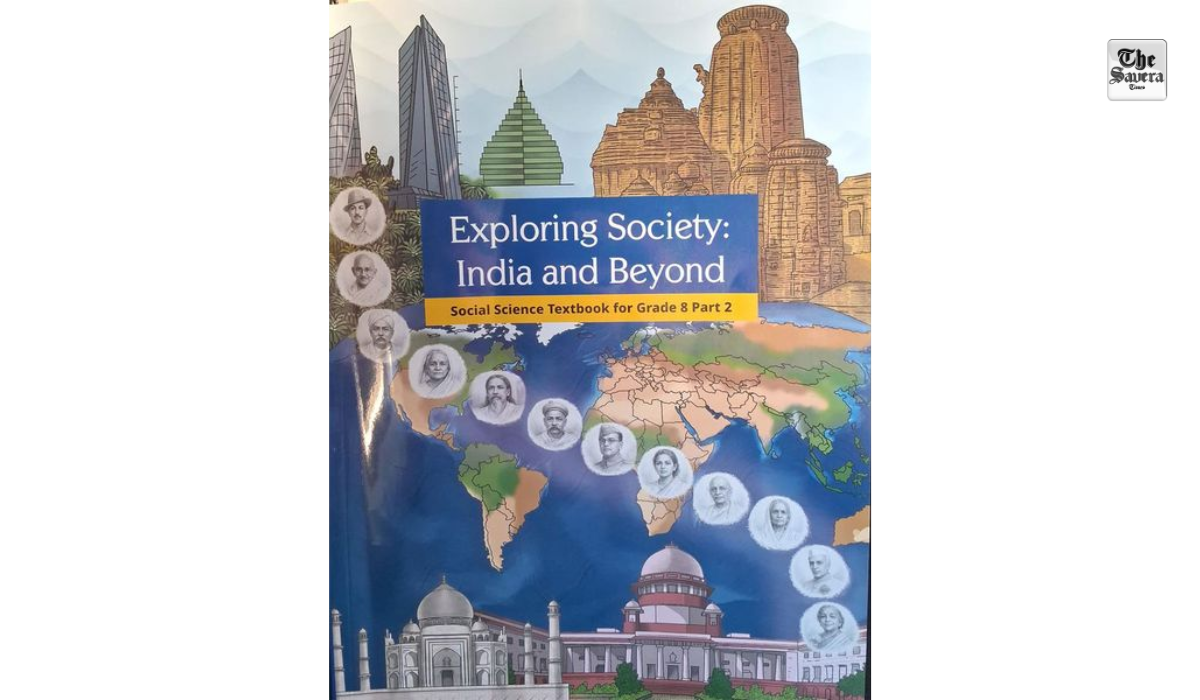
New Delhi: The National Council of Educational Research and Training (NCERT) has included a separate section on “Corruption in the Judiciary” in the new Class 8 social science textbook for the first time. Earlier editions focused primarily on the structure and role of the courts.
Changes to the chapter on ‘The Role of the Judiciary in Our Society’
The revised chapter “The Role of the Judiciary in Our Society” now not only provides information on the structure of courts and access to justice, but also discusses challenges facing the judicial system—such as corruption and pending cases.
Pending Cases Data Also Included
The book also provides data on pending cases—approximately 81,000 cases are pending in the Supreme Court, approximately 6.24 million in the High Courts, and approximately 47 million in the district and subordinate courts.
Mention of Accountability and Grievance Mechanism
The section on corruption states that judges are bound by a code of conduct that governs their conduct both inside and outside the courtroom. Furthermore, the Centralized Public Grievance Redress and Monitoring System (CPGRAMS) is mentioned for complaints, through which over 1,600 complaints were filed between 2017 and 2021.
Emphasis on Impeachment Process and Transparency
The textbook also explains that in the event of serious allegations, Parliament can remove a judge by passing an impeachment motion, but this process occurs only after a proper investigation and hearing. The book also cites a statement by former Chief Justice B.R. Gavai, in which he described transparency and accountability as part of democratic values.
Chief Justice Surya Kant said every citizen can approach the Supreme Court through a petition after declining a...
A major fire broke out at a scrap warehouse opposite the Maruti Temple in Sangameshwar, Maharashtra, around midnight....
A 48-year-old man, Pawan Sharma, died after an alleged altercation over a senior citizen seat at Delhi’s Supreme...
Shiv Sena (UBT), in its mouthpiece Saamana, has criticised the Centre over security measures and detentions during anti-government...
Former BJP MLA Attar Singh Bhedana died at Jaipur’s SMS Hospital after a violent clash at a crusher...
An eyewitness has recounted the fatal Mini Cooper crash in Nedumbassery, Kochi, claiming the driver said his father...

Aries: The day will be auspicious...