Last Updated: October 21, 2026
Last Updated: October 21, 2026






With the Bangladesh general election approaching, the National Citizen Party (NCP) has issued a clarification on its stance regarding a potential electoral alliance with Bangladesh Jamaat‑e‑Islami, even as internal dissent escalates, with senior leaders threatening to resign over the issue.
NCP Member Secretary Akhtar Hossain, in a statement on the party’s verified social media page, said that while discussions have taken place with various political blocs, the party’s priority remains reform, rebuilding, and establishing a new state structure for the nation.
Despite the clarification, significant unrest persists within the NCP. At least 30 senior central committee members have sent a letter to party Convener Nahid Islam, strongly objecting to any electoral understanding or alliance with Jamaat‑e‑Islami and the eight‑party coalition.
The letter, signed by founding members, warns that such an alliance could undermine the moral foundations of the party and alienate moderate supporters, threatening the NCP’s future credibility and political identity.
In their memorandum, leaders cited Jamaat‑e‑Islami’s controversial political history, especially its role in the 1971 Liberation War, where it was accused of opposing independence and complicity in atrocities. They argue that these historical positions are fundamentally incompatible with Bangladesh’s democratic principles and the core values of the NCP.
The dissenting members also criticized Jamaat’s recent activities, saying they have engaged in divisive politics and posed a threat to democratic norms and social cohesion.
The internal division has already resulted in high‑profile exits. Tasnim Jara, a senior joint member secretary of the NCP, resigned from the party and announced she will contest the upcoming election as an independent candidate from Dhaka‑9, amid reports that a seat‑sharing deal with Jamaat is close to being finalized.
In a separate move, Tajnuva Jabeen, another senior NCP leader, also quit the party, stating that her decision was driven by concerns over both the potential alliance and how it was being handled internally.
Critics within the party argue that any alignment with Jamaat could cost the NCP its centrist support base, with moderate backers withdrawing their support if the matter proceeds without addressing core ideological objections.
The dissenters have called on the leadership to base electoral strategy on principled positions rather than short‑term tactical gains, warning that compromising on fundamental values could inflict long‑term damage to the party’s credibility.
As the 13th National Parliamentary election nears, the NCP’s debate over alliances underscores deeper questions about political identity, ideological consistency, and leadership strategy in a transforming political landscape.
Whether the party can reconcile internal divisions and present a unified front before the polls will be closely watched by political observers and voters alike.
Protests in Jakarta, Yogyakarta and Bandung brought students onto the streets over rising costs, forest fires and civil...
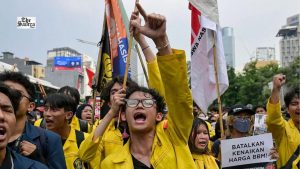
Organisations linked to Neville Roy Singham are under US congressional scrutiny over funding. Their coverage of protests in...

US President Donald Trump says Washington and New Delhi are close to a trade agreement that will differ...

Iran has ruled out transferring its enriched uranium stockpile outside the country, with security official Mohsen Rezaei reiterating...

Donald Trump has urged Volodymyr Zelensky to pursue a peace deal with Russia, warning that Ukraine could face...

Pakistan, battling insurgencies at home and tensions along multiple borders, is too overstretched to offer meaningful military support...
Aries: The day will be auspicious...