Last Updated: October 20, 2026
Last Updated: October 20, 2026





Abhishek Vij
There’s no doubt that under the leadership of Union Transport Minister Nitin Gadkari, India’s roads have undergone an unprecedented transformation. Narrow and congested roads have been transformed, transforming from two-lane to four-lane and six-lane. A large number of expressways and flyovers have been constructed. Roads have become so compact that they can accommodate the traffic congestion of cities, both large and small, that reaching their destinations has become easier.
Undoubtedly, a road revolution is visible across the country. But alongside this revolution, some alarming truths are also emerging. The unbearable fact is that accidents due to high-speed vehicles on these roads have already increased. The Supreme Court of India has also stated that expressways should not become corridors of danger.
This was already realized in Punjab, which is why the Punjab government established a Road Safety Force, providing immediate first aid to those injured or injured in road accidents, and then making arrangements to save their lives and transport them to the hospital. As the country’s roads improved, the number of accidents and life-threatening situations for travelers and drivers also increased. In hilly states, new roads were built by breaking mountains. However, the indiscriminate blasting used to break the mountains affected the strength of the mountains, and the weakened mountains were no longer able to withstand the impact of climate change. In some places, the danger of mountain slippage and leakage arose.
Every year, the mountainous regions of Himachal Pradesh, Uttarakhand, and Jammu and Kashmir are becoming victims of accidents.
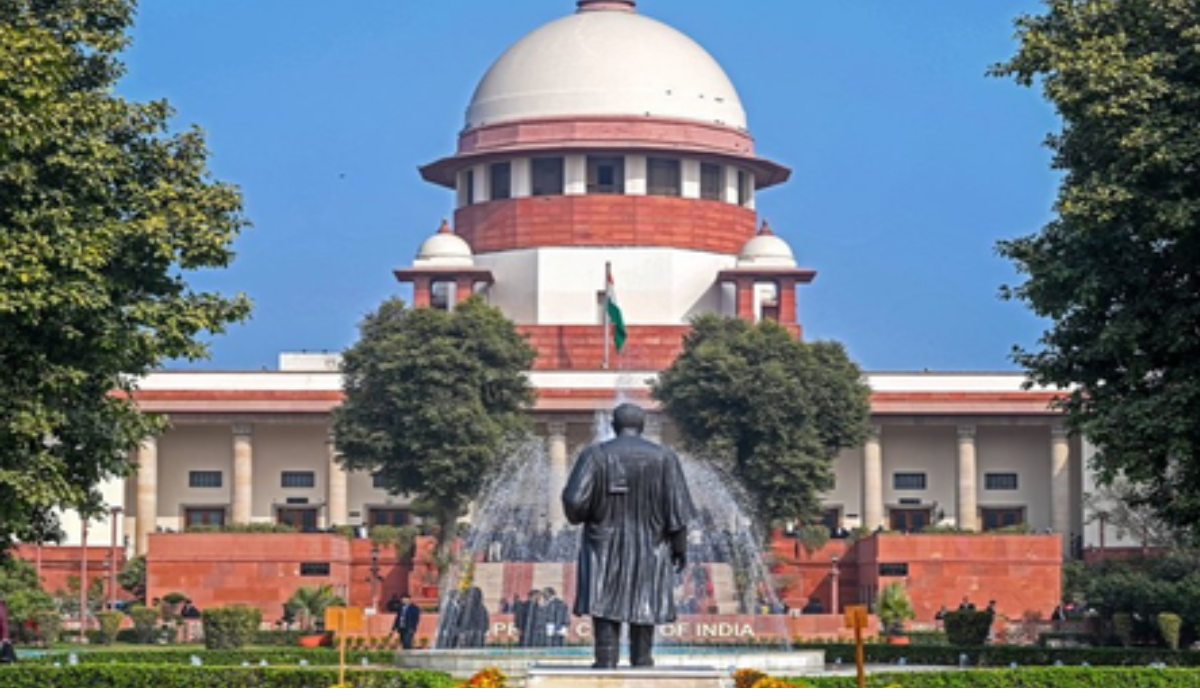
Tourism is one of the country’s main sources of income, and scenic tourism is at the forefront. When roads are laid in the mountains without due regard for caution, who can prevent terrible tragedies from occurring? The Supreme Court has taken cognizance of this matter. The bench of Justice Maheshwari and Justice Chandurkar expressed surprise that national highways constitute only two percent of the country’s total road length, yet road accidents here account for 30 percent of the total deaths each year.
National highways are four-lane and six-lane roads where speeding is permitted within a certain limit. The bench ordered the Ministry of Road Transport and the National Highways Authority of India to make the roads of states and union territories safer. The bench stated that illegal parking on roads or disregarding the safety of potential accident sites cannot be allowed to push even a single person to death. Even a single such death would be considered a failure on the part of the states. In its order on April 13, the court stated that the right to life, guaranteed under Article 21 of the Constitution of India, not only guarantees against the unlawful taking of life but also imposes an obligation on states to create a safe environment, respect human life, and take measures to protect it.
These orders were issued in cases filed after a series of road accidents in Phalodi, Rajasthan, and Rangareddy, Telangana, on November 2 and 3 last year, in which 34 people died. It stated that such accidents are caused by systemic negligence and infrastructure failure. The bench issued a nationwide directive stating that drivers and passengers have the right to live with dignity. For their safety, it is essential that any shortcomings in the system or administration be addressed. The bench stated that by issuing this order, based on the powers granted under Article 142 of the Constitution, we are taking responsibility for the safety of the citizens of the country.
Good Evening Viewers! Catch up on the day's biggest stories with The Savera Times Evening Bulletin. Get the...

Congress leaders continued their protest outside the Jaipur Police Commissionerate on Tuesday, demanding the registration of a zero...
On the auspicious occasion of Vijayadashami, Prime Minister Narendra Modi on Tuesday called on the countrymen to unite...
A historic milestone was achieved on Tuesday in the expansion of Chhattisgarh's rail networkA historic milestone was achieved...

Model Shraddha Dubey, one of the main accused in the death of Lucknow businessman Shiv Sharma, has been...
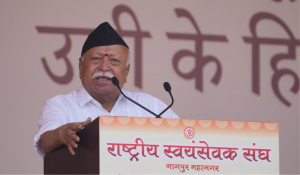
Rashtriya Swayamsevak Sangh (RSS) chief Mohan Bhagwat on Tuesday called for strengthening national unity, social harmony, indigenous practices...
Aries: The day will be auspicious...