Last Updated: November 9, 2026
Last Updated: November 9, 2026





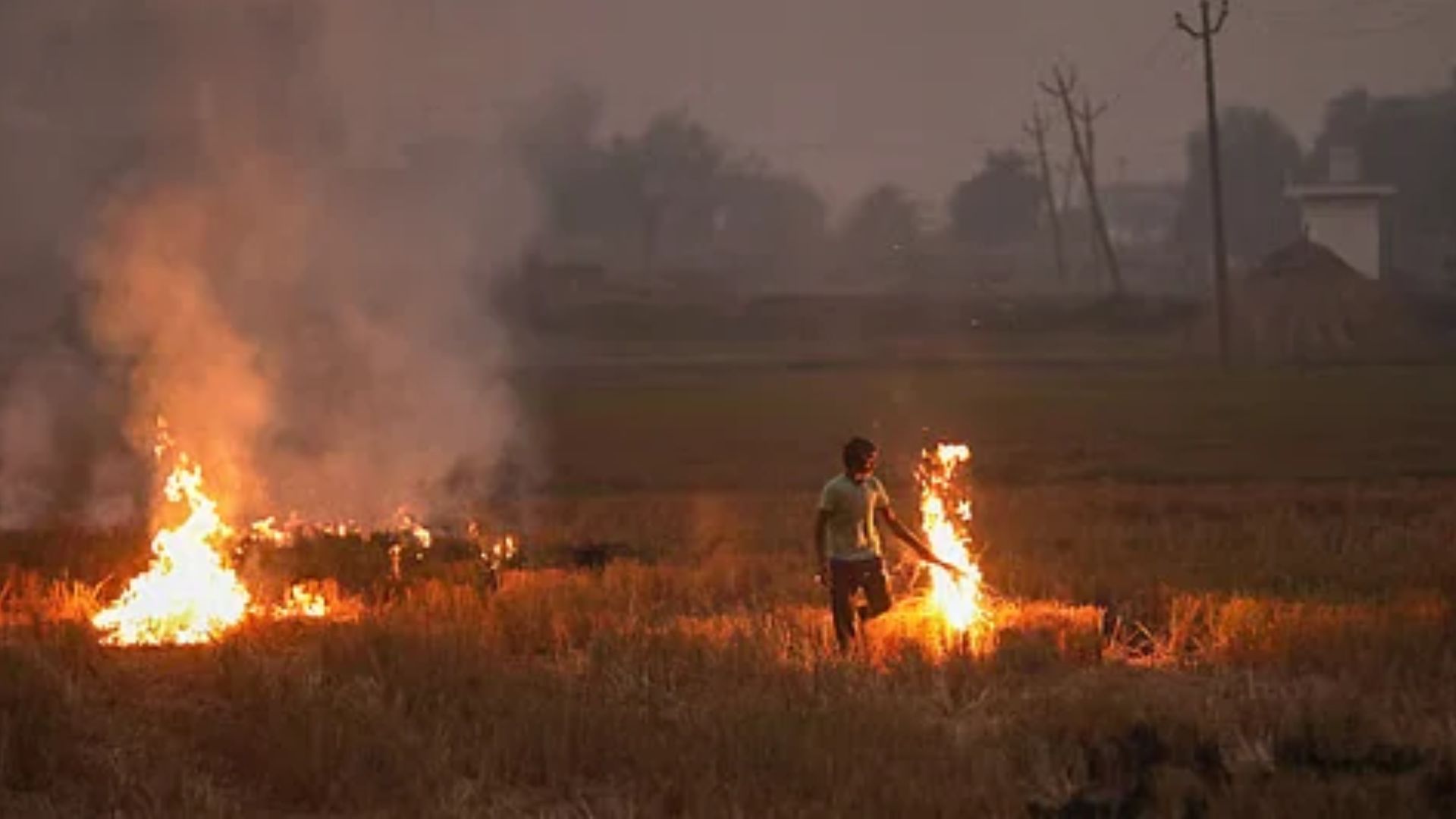
As Delhi’s winter smog season begibs, agricultural residue burning is once again drawing scrutiny as one of the contributors to deteriorating air quality across the National Capital Region and a threat to public health. Studies have also shown that emissions from stubble burning contribute to climate change. To address this, the Centre last year mandated that thermal power plants co-fire coal with biomass pellets and torrefied charcoal derived from municipal solid waste. It also set minimum shares of 7% for plants in and around the National Capital Region (NCR) and 5 per cent elsewhere. While this is a viable solution, a new field study suggests that its success will depend on a supply chain that is more reliable and inclusive. According to the National Biomass Atlas of India, prepared by the Sardar Swaran Singh National Institute of Bio-Energy under the Union Ministry of New and Renewable Energy, India generates about 228.5 million tonnes of surplus biomass residue each year; the gross power potential of this surplus bioresource is 28.45 gigawatt— that is roughly one-tenth of the country’s record peak demand of 270.8 GW, met in May 2026. However, before reaching the power plant, the agricultural residue passes through a diverse network of stakeholders. Farmers supply crop residues after harvest; aggregators organise their collection and storage; processors compress the loose biomass into pellets and briquettes at densification plants; and transporters move these from fields to processing facilities and then to thermal power plants, where the processed biomass or pellets are burned alongside coal to generate steam which is used to produce electricity. Researchers at the Ashoka Centre for a People-centric Energy Transition (ACPET) between January and February conducted a 45-day survey of 155 people in Haryana’s Panipat, Sonipat and Karnal districts to examine how biomass co-firing affects livelihoods along the supply chain. The respondents included 100 farmers, 20 aggregators, 15 transporters and 20 processors. The findings point to a visible decline in stubble burning. For farmers, collecting and selling crop residue can provide an additional source of income, and the state government offers an incentive of ₹1,200 per acre (0.4 hectare) a year to farmers for participating in crop-residue management programmes designed to curb the stubble burning practice. However, the field survey found that 61 per cent of farmers had to pay aggregators for residue management. The constraint appears to be last-mile logistics: few aggregators operate locally, and the window before the next sowing is short. Farmers reported improvement in their well-being, often through indirect benefits, such as lower health risks or savings on field preparation. Overall, 87 per cent reported health improvements associated with crop-residue management, alongside new opportunities to earn income. Biomass co-firing also advances the vision of Atmanirbhar Bharat (selfreliant India), launched by Prime Minister Narendra Modi in 2020, as much of the machinery are domestically manufactured and has local supply chains. This offers it a potential advantage over other renewable energy industries, notably solar, which remain dependent on imported equipment.
A tragic accident occurred in Chitrakoot, Uttar Pradesh, involving devotees returning from a Diwali fair.

A massive fire broke out in a three-story building in Katni on Diwali night, killing six members of...

A Diwali celebration of Kashmiri saffron, a distinctive goldfiltration process, and India’s extraordinary botanical wealth. Kashmiri saffron is...

October 2026 was the warmest October on record globally, with 2026 on course to exceed 1.5 degrees Celsius...

Ganderbal Police apprehended four persons during a raid on an alleged gambling racket in Rangil Nagbal. Cash worth...

Diwali is usually associated with lights, sweets, shopping and gifts. But this year, the festive mood comes with...

Aries: The day will be auspicious...