Last Updated: October 24, 2026
Last Updated: October 24, 2026





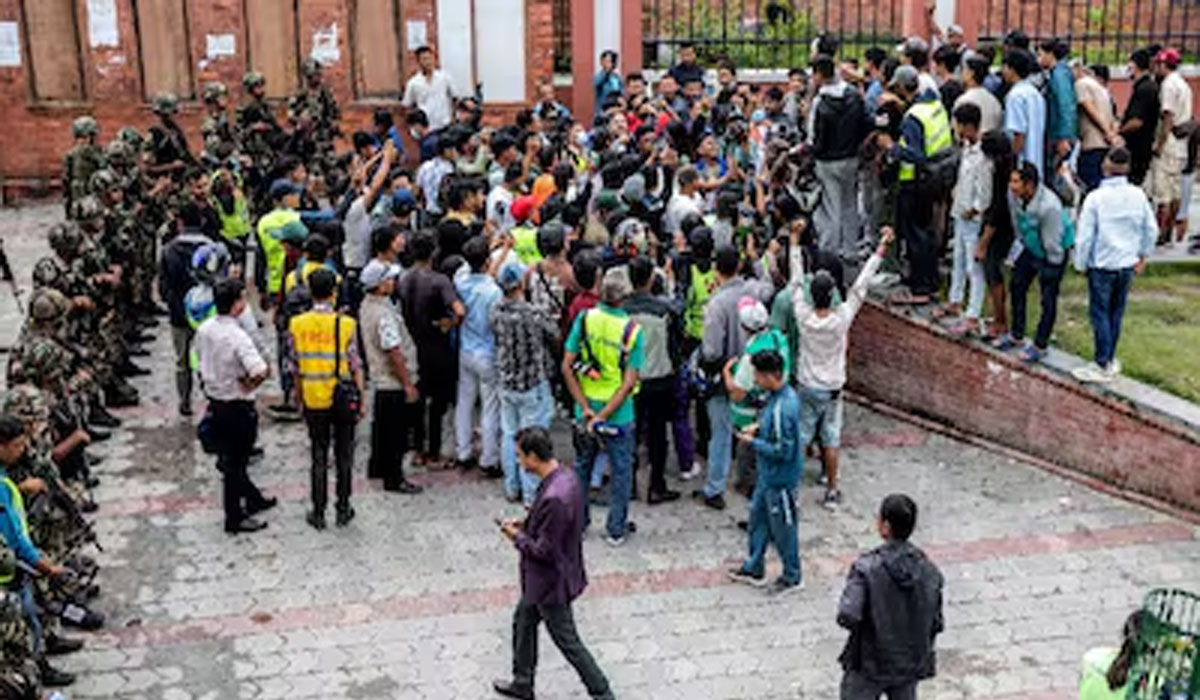
Nepal’s fragile politics has moved in to uncharted constitutional territory as youth-led unrest presses for a caretaker government headed by a retired chief justice. The proposal to install Sushila Karki, Nepal’s first woman chief justice, as interim prime minister highlights a collision between popular demands and clear constitutional limits, and it has exposed how quickly public protest can force legal and political improvisation.
The immediate trigger was a wave of Gen Z-led demonstrations that erupted after a controversial social media ban and broader g r i e v a n c e s a b o u t corruption and elite privilege. The unrest forced Prime Minister K.P. Sharma Oli to resign and left the capital in turmoil. Reports say negotiators have moved quickly to placate the protest movement by advancing Karki’s name as a neutral, respected figure who could lead an interim administration and organise a path b ac k t o n o r m a l c y. Reuters reported that a constitutional expert close to the president and army chief indicated Karki’s appointment was likely to be formalised after consultations. That prospect confronts a stark textual barrier.
Article 132 of Nepal’s constitution bars anyone who has held the office of chief justice or a judge of the Supreme Court from taking a government post. In plain terms, the constitution appears to exclude a former top jurist from political office, creating a prima facie legal obstacle to Karki’s direct appointment as interim prime minister. Legal scholars and practitioners have pointed to this clause as the most immediate constitutional hurdle. Yet political urgency h a s b r e d c r e a t i v e legal argument. Some constitutional experts advising President Ram Chandra Paudel have suggested a maximalist reading of the president’s duty under Article 61(4), which stresses the head of state’s role in upholding the constitution.
Under this line of reasoning, the president could argue that appointing a non-parliamentary figure temporarily would preserve constitutional o r d e r a n d e n a b l e elections, thus fulfilling the higher duty to protect the constitutional system. Media reporting on the deliberations said these interpretations have been discussed in Paudel’s consultations. Practical complications multiply when talk turns to dissolving parliament. Several youth groups and prominent backers, including Kathmandu Mayor Balendra “Balen” Shah, have conditioned support for an interim arrangement on the dissolution of the federal legislature. That demand carries its own legal and political costs. The constitution ordinarily requires that a prime minister be a member of parliament, so dissolving the House could weaken t h e r a t i o n a l e f o r appointing an outsider. At the same time, a parliamentary dissolution would create a governance vacuum that could deepen instability unless a clear transitional plan is in place. Another strain in the prodemocracy movement stems from internal divisions over the future shape of governance.
A faction of demonstrators has even raised the idea of restoring the monarchy, a proposal flatly barred by the current constitution. Other activists worry that sweeping demands, such as sacking incumbents in constitutional posts as a condition for agreement, would erode institutional continuity and produce further uncertainty. These fault lines have made consensus elusive even as a large segment of protesters converges on Karki’s name as an acceptable interim figure. The human cost of the unrest underlines the urgency driving political improvisation. Independent reporting and international outlets have documented dozens of deaths and hundreds of injuries amid clashes between security forces and crowds. The scale of violence has sharpened calls for a rapid resolution, but it has also increased the stakes of any legal shortcut; an appointment later struck down by the Supreme Court would risk inflaming tensions anew. Against this fraught backdrop, the president’s meetings with protest leaders and prospective appointees will be watched closely. Even if Paudel agrees to swear in an interim leader, legal challenges and political resistance are likely to follow. The Supreme Court could be asked to rule on constitutionality, a n d r i va l p o l i t i c a l parties retain leverage within institutional processes.
Any pathway that sidesteps clear constitutional text risks setting a precedent that may complicate Nepal’s governance long after the current crisis subsides. What emerges from the crisis is a cautionary lesson about the limits of emergency politics. Popular legitimacy can push rapid outcomes, and respected figures can offer short-term balm. But constitutional design exists precisely to manage transitions without undermining institutional stability. Nepal’s situation now tests whether legal ingenuity, political negotiation, and public pressure can be balanced to restore order while preserving the rule of law. The answers that unfold in the next days will shape not only who governs but how Nepal interprets the contract between its people, its laws, and its institutions
The Indian Army on Friday rejected claims on social media that the Army had taken action against the...
Abdul Majid Hakim Elahi, Iran's Supreme Leader's representative and senior diplomat, said on Friday that the US has...
New York, USA: The New York City Council has passed a law to ban horse-drawn carriages, naming the...

Washington: US President Donald Trump suggested that further military action against Iran remained possible, while acknowledging that the...
Lhasa: Sixteen people were killed and 32 others injured after a 7.0-magnitude earthquake struck Tibet on Thursday, according...
More than two weeks after the Yemeni government launched a major offensive against the Houthi group, front lines...
Aries: The day will be auspicious...