Last Updated: October 24, 2026
Last Updated: October 24, 2026





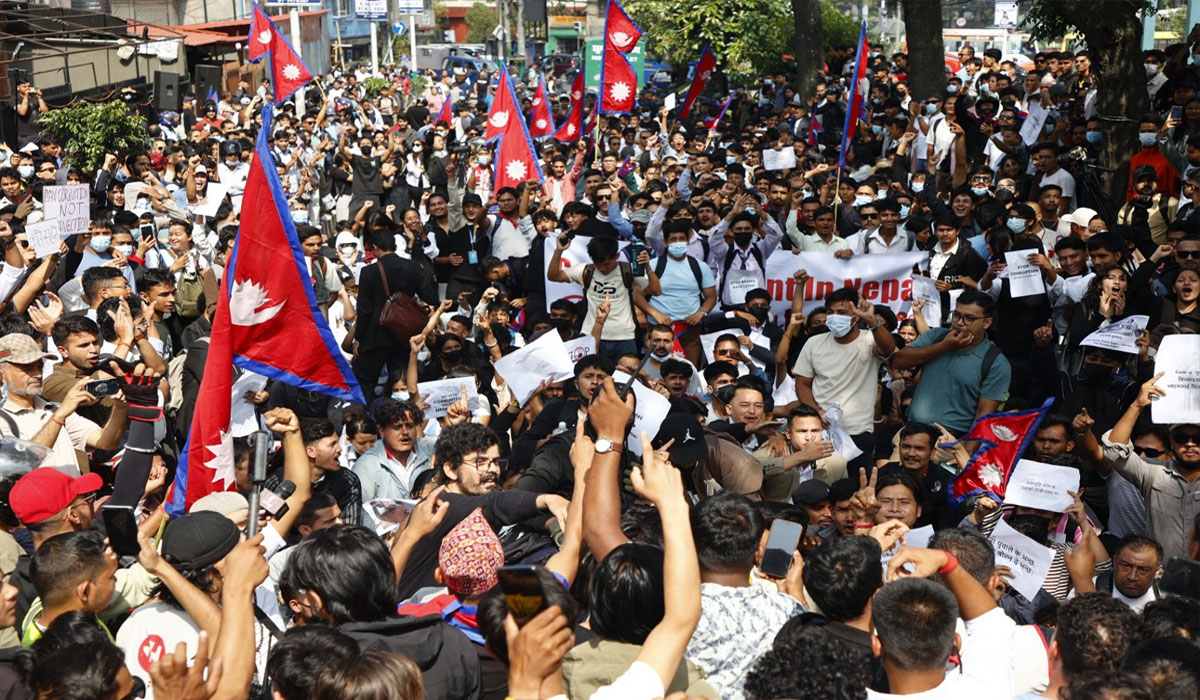
Nepal has been plunged into political crisis after violent protests forced Prime Minister KP Sharma Oli to resign. The unrest, triggered by a controversial ban on social media, has quickly escalated into wider demonstrations against corruption, nepotism and restricted economic opportunities. The turmoil has left at least 19 people dead and more than 300 injured, prompting fears of instability spilling across borders and raising fresh concerns in India. For New Delhi, the collapse of the Oli government comes at a delicate time. India and Nepal share a 1,751-km-long open border, and the violence in Kathmandu and other cities has placed security agencies on high alert. Central intelligence agencies have directed the Bihar Police, Uttar Pradesh Police and the Sashastra Seema Bal (SSB) to tighten vigil along the frontier.
High alert on the border
The scale of the protests and the heavy-handed response by security forces have already disrupted normal crossborder movement. At Panitanki in Darjeeling, a police post has been erected, and joint patrols are being conducted by state police and SSB. North Bengal Police chief Rajesh Kumar Yadav said while the Indian side remained peaceful, violent incidents were reported across the border in Nepal. He confirmed that additional police forces had been deployed and intelligence operations intensified. Movement across certain checkpoints has been halted after protestors attacked customs and immigration offices on the Nepal side. O n S e p t e m b e r 9, authorities sealed the Jogbani border in Bihar’s Araria district as unrest spread from Kathmandu. In Uttar Pradesh, police in border districts have been directed to remain on high alert, with helplines set up for Indians stranded in Nepal. At Sonauli in Maharajganj, many tourists cut short their trips and crossed back into India. The heightened security response is shaped by past concerns. India’s intelligence agencies have long warned that Pakistan’s Inter-Services Intelligence (ISI) has used the porous Nepal border to push terrorists into India. Smuggling of arms and narcotics has also been documented. Officials fear the current chaos could create space for criminal and extremist groups to exploit the situation.
Disruption of air links
The unrest has affected aviation as well. Several airlines, including IndiGo, Air India and Nepal Airlines, suspended flights to Kathmandu after Tribhuvan International Airport shut down during violent protests. At least three flights were diverted to Lucknow and one to Delhi after being unable to land in the Nepalese capital.
The Ministry of External Affairs (MEA) has advised Indian nationals to defer travel until the situation stabilises and urged those already in Nepal to remain indoors, avoid crowds and follow advisories from both Nepalese authorities and the Indian embassy in Kathmandu.
Impact on trade
Beyond security, the turmoil threatens to disrupt bilateral trade. Trucks carrying essential s u p p l i e s i n c l u d i n g petroleum products, LPG cylinders, cement and food grains have been stranded at checkpoints such as Bahraich in Uttar Pradesh. Reports said only a few fuel tankers were allowed entry into Nepal under army escort. India is Nepal’s largest trading partner, exporting goods worth \$7.32 billion in FY25 while importing $1.2 billion. With Nepal being landlocked, most trade moves by road through the border. Any prolonged disruption could affect supply chains and slow the movement of vital goods. Ajay Srivastava of the Global Trade Research Initiative told Livemint that even temporary interruptions in customs operations and transport routes could delay shipments and affect Nepali consumers dependent on Indian goods. For now, Indian officials say trade has not been significantly hit, though they are monitoring developments closely in consultation with export promotion councils.
India’s diplomatic stance
The MEA has responded with caution, describing the situation as deeply c o n c e r n i n g w h i l e expressing condolences for lives lost. In a statement, the ministry said India hoped “all concerned will exercise restraint and address issues through peaceful means and dialogue.” It acknowledged the curfews imposed in Kathmandu and other cities, urging Indian nationals to comply with local rules and advisories. This restrained response reflects New Delhi’s broader “wait-and-watch” approach. Analysts note that while India has historically had strong influence in Nepal, recent years have seen growing Chinese engagement, complicating the regional balance.
Timing of the protests
The timing of the agitation has attracted attention. The protests erupted shortly after Oli returned from the Shanghai Cooperation Organisation (SCO) summit in China and before a scheduled visit to India later this month. Some commentators in Nepal have suggested external dimensions to the unrest, though such claims remain speculative. Veteran journalist Keshav Pradhan noted that political crises in Nepal are often interpreted through the lens of IndiaChina rivalry, pointing to earlier pro-monarchy protests linked in public debate to Indian interests. What is clear is that the current movement is led largely by Nepal’s younger generation, reflecting frustration with corruption and lack of opportunity. The social media ban, which triggered the agitation, symbolised wider discontent with government restrictions and governance failures.
Wider context
Nepal’s unrest adds to the political turbulence in South Asia. Just last year, student-led protests in Bangladesh forced Sheikh Hasina to step down, underscoring how discontent among younger populations can rapidly reshape political landscapes. For India, Nepal holds particular strategic importance. Beyond close cultural and economic ties, the country serves as a geographic buffer with China. Instability in Kathmandu therefore has direct implications for India’s security and diplomacy.
Looking ahead
The resignation of KP Sharma Oli has opened a period of uncertainty in Nepal. Whether the protests translate into systemic political reform or give way to further instability remains to be seen. For India, the immediate focus is on maintaining security at the border, ensuring the safety of its citizens, and keeping trade routes open. While New Delhi has stopped short of taking s i d e s , i t s c a u t i o u s statements signal a desire to avoid being drawn into Nepal’s internal politics. Instead, India is likely to watch developments closely while seeking to protect its core interests in security, trade and regional stability. The crisis highlights how quickly unrest in a close neighbour can ripple across borders, requiring vigilance and careful diplomacy. For now, India is balancing preparedness on the ground with patience at the diplomatic level, waiting to see how Nepal’s latest political chapter unfolds
The Indian Army on Friday rejected claims on social media that the Army had taken action against the...
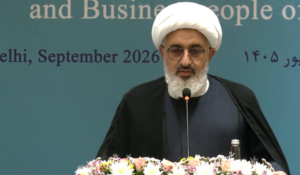
Abdul Majid Hakim Elahi, Iran's Supreme Leader's representative and senior diplomat, said on Friday that the US has...
New York, USA: The New York City Council has passed a law to ban horse-drawn carriages, naming the...

Washington: US President Donald Trump suggested that further military action against Iran remained possible, while acknowledging that the...
Lhasa: Sixteen people were killed and 32 others injured after a 7.0-magnitude earthquake struck Tibet on Thursday, according...
More than two weeks after the Yemeni government launched a major offensive against the Houthi group, front lines...
Aries: The day will be auspicious...