Last Updated: October 13, 2026
Last Updated: October 13, 2026





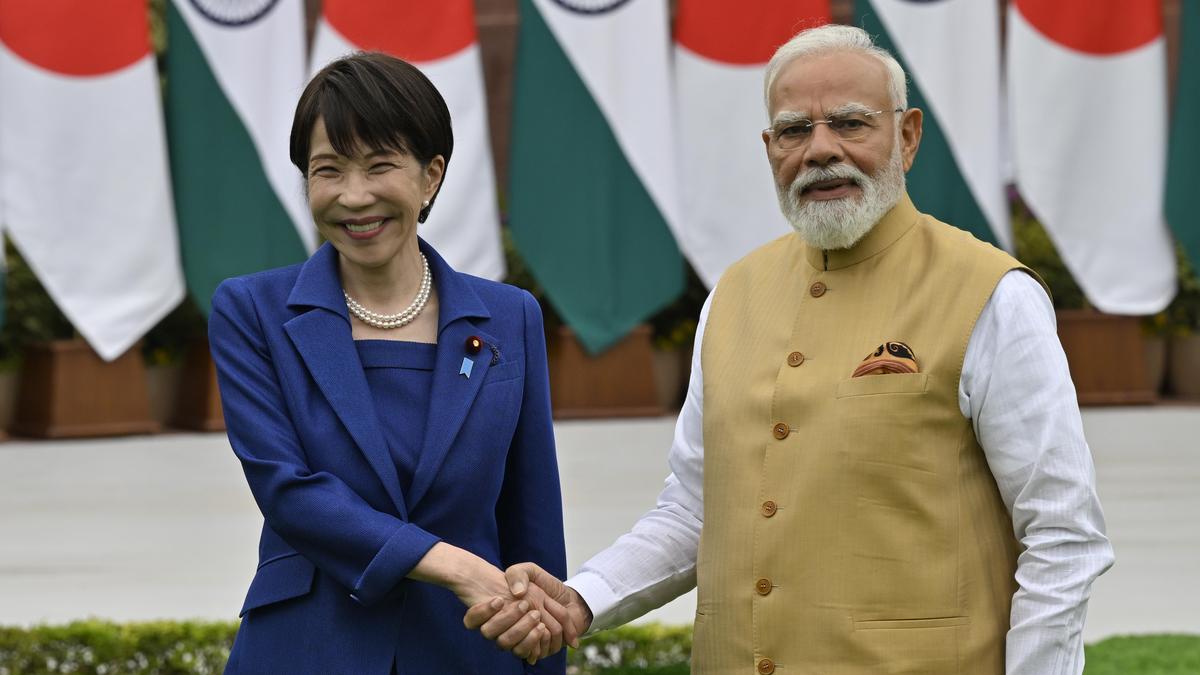
The closeness in relations between India and Japan was recently announced during the 16th India-Japan Summit in New Delhi. Japanese Prime Minister Sanae Takaichi’s visit to India concluded on Friday. The Japanese Prime Minister’s visit to India can be called a success. Japan, known as the Land of the Rising Sun, has long-standing ties with India. In 2027, the two countries will celebrate 75 years of ties. During the summit, emphasis was placed on enhancing mutual cooperation between the two countries, which will contribute to peace and stability in the Indo-Pacific region. Prime Minister Narendra Modi referred to the Japanese Prime Minister as his younger sister. Pakistan is particularly concerned by the warming of India-Japan relations. China is not far behind, having stated that the India-Japan partnership and bilateral cooperation should not harm any other country. India and Japan have signed not only an economic but also a defense agreement. Cooperation in the energy sector has also been promised to address the oil supply crisis. This agreement is part of the Indian government’s diplomatic initiative to cultivate diverse relationships with more and more countries around the world. Although Japan is considered a small country and earthquake-prone, its people are extremely hardworking. It is through hard work that Japan has become a prosperous nation. Japan is cited as an example of a country that has reached great heights through hard work in domestic and small industries. Domestic and cottage industries are vital for India’s lower middle class, so India should learn from Japan in this area. Japanese people practice Buddhism and exhibit a gentle and courteous demeanor. Now, let’s look at the India-Japan agreement. The two countries will also jointly develop military equipment. Cooperation between the two countries will increase in the defense and energy sectors. Japan has a significant mineral wealth, and India aims to share this mineral wealth, which Japan has accepted. The agreement for the development of military hardware and the expansion of energy ties during the rapid fluctuations in oil prices can certainly be considered beneficial for India. China should have no cause for concern, but China wants to become the uncrowned king of the South China Sea. China also aims to dominate the Indo-Pacific sea routes. To achieve this goal, China continues to take unilateral steps to change the status quo through its power. China seeks to dominate the Indo-Pacific region, just as Iran claims the Strait of Hormuz. India and Japan’s strong economic and political ties are a source of concern for rival nations, as both countries have declared their bilateral talks successful. Upon the conclusion of the Japanese Prime Minister’s visit, the Foreign Ministry spokesperson stated, “A memorable visit has concluded. Now, our task is to advance the India-Japan partnership.” Such understanding and agreement are enough to upset China and Pakistan. Pakistan even raised hue and cry over India-Japan’s closeness, but we can say that India is establishing diverse economic, trade, political, and cultural relations with all countries, without being tied to either Russia or the United States. India-Japan friendship is also a part of this chain -Abhishek Vij These days, meteorologists are increasingly assessing the impact of El Niño while forecasting the coming weather. El Niño is a seasonal phenomenon influenced and propagated by ocean waves. A parallel term to El Niño is La Niña. In reality, these three phases exist, with a neutral phase in between. Simply put, El Niño is a seasonal phenomenon characterized by changes in sea temperatures in the central and eastern Pacific Ocean, causing fluctuations throughout the atmosphere. El Niño’s effect is to increase the Earth’s temperature, while La Niña, a similar phenomenon, lowers the Earth’s temperature. This time, the El Niño effect was initially unreactive, but now it is becoming active and is increasing rapidly. The World Meteorological Organization generally states that the strengthening of El Niño will increase the risk of heat waves, droughts, and heavy rainfall in many parts of the world. Countries like India will not be spared. Similarly, when winter causes numbness in the hands and feet and people’s teeth chatter, it’s called the La Niña effect. For now, if we talk about the impact of El Niño on India, it’s a seasonal phenomenon. Previously, complete drought or lack of adequate rainfall was a weakness of El Niño, but as the effect strengthens, the risk of heavy rainfall increases. Last year, this same effect left much of India dry, but where it did rain, it was catastrophic, such as in Himachal Pradesh and Uttarakhand. Now, the World Meteorological Organization has stated that El Niño will strengthen in July and September. It could even collapse completely after some time. The same old pattern of above-normal rainfall is expected in central and eastern India, and El Niño, which influences and increases heat, is now shifting gears toward excessive rainfall. El Niño typically lasts 2 to 7 years and lasts for 9 to 12 months. This is why all the weather around the world has been disrupted. If the current rice sowing is adversely affected by the weather, agricultural production will be ruined. El Niño will cause disruption in global markets due to reduced supply, and people will be further distressed by the changing seasons. N
A major train accident occurred on Tuesday in the Multan district of Pakistan's Punjab province. At least four...

Canadian Foreign Minister Anita Anand will arrive in New Delhi on an official visit on Tuesday. During her...
International human rights organization Amnesty International has expressed serious concern over the alleged arbitrary arrests of prominent leaders...

US President Donald Trump says Vladimir Putin may be more willing than Volodymyr Zelenskyy to reach a peace...

A magnitude 6.1 earthquake struck Panama early Tuesday at a depth of 10 kilometres. The tremor followed a...

US President Donald Trump has indicated the possibility of meeting North Korean leader Kim Jong Un during his...
Aries: The day will be auspicious...