Last Updated: October 21, 2026
Last Updated: October 21, 2026





Abhishek Vij
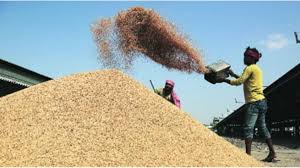
Punjab is a strong agricultural state in India. Wheat, rice, maize, and sugarcane are cultivated extensively here. Punjab’s markets contribute significantly to crop procurement by central agencies. The state’s basmati rice, pharmaceuticals, sports goods, and engineering products are renowned. Currently, 1.4 million small, medium, and cottage industries are operating in Punjab.
According to a recent NITI Aayog report, Punjab’s ranking in exports to other countries has improved. The state is currently ranked seventh, down from tenth in the 2022 report. Punjab is a landlocked state. According to NITI Aayog, exports from Punjab amounted to Rs 56,000 crore in one year. Thus, Punjab has risen from tenth to seventh among exporting states. Rice, tractors, cotton yarn, and motor vehicle parts are the largest exports.
The main markets for these are the United States, the United Arab Emirates, Bangladesh, Saudi Arabia, and the United Kingdom. Five cities in Punjab are the main exporters: Amritsar, Ludhiana, Jalandhar, Mohali, and Patiala. Bicycles, auto parts, and textiles come from Ludhiana, sports equipment and light engineering goods from Jalandhar, pharmaceuticals from Mohali, and engineering goods from Patiala. The United States is the largest customer, accounting for 15.52 percent of total exports, while the UAE accounts for 7.35 percent. Meanwhile, Punjab still leads in agriculture, contributing 46.3 percent of India’s wheat production and 31.2 percent of rice production. Exports from Punjab are improving, and new investment proposals are expected to materialize.
The industrial and commercial development of the border state of Punjab is facing the threat of increasing cross-border tensions. Our Wagah-Attari route with Pakistan has been disrupted, which has slowed our regional export growth. It’s true that we export a lot of textiles and have now achieved export success in agricultural processed goods. We can say that exports and investment in Punjab have reached their potential. However, a barrier to Punjab’s exports is limited research and development and the lack of state-of-the-art innovation. This increases costs and impacts Punjab’s export ecosystem.
Furthermore, US tariffs are a burden, but diversification agreements with other countries are significantly improving the situation. However, the state’s geographical location is unfavorable. Ports are far away, increasing both time and cost of transporting goods. The victims know that the lack of international certifications and compliance standards for Punjab’s small and medium-sized industries prevents industrial development from galloping like a horse and slows down.
The NITI Aayog’s news that Punjab has risen to seventh place in export growth is a welcome sign for the state. It also serves as a reminder to increase exploration and research, adopt new scientific methods, and make more efforts to facilitate transportation. These efforts are essential to ensure Punjab rises from seventh place to second or third. The government’s industrial incentives are commendable.
Good Evening Viewers! Get the latest updates from India and around the world with The Savera Times Evening...

Bharatiya Janata Party (BJP) National General Secretary Smriti Zubin Irani launched a scathing attack on Congress MP and...

New Delhi: Cockroach Janata Party (CJP) leaders Saurav Das and Ashutosh Ranka will be released from judicial custody...

According to police, three suspicious young men are seen in CCTV footage. Efforts are underway to identify them....
A video has surfaced of an alleged attempted assault on Jan Suraj Party's Bihar president Manoj Bharti. The...

Two accused have been convicted and sentenced to 10 years of rigorous imprisonment in a 2017 drug trafficking...

Aries: The day will be auspicious...