Last Updated: October 12, 2026
Last Updated: October 12, 2026





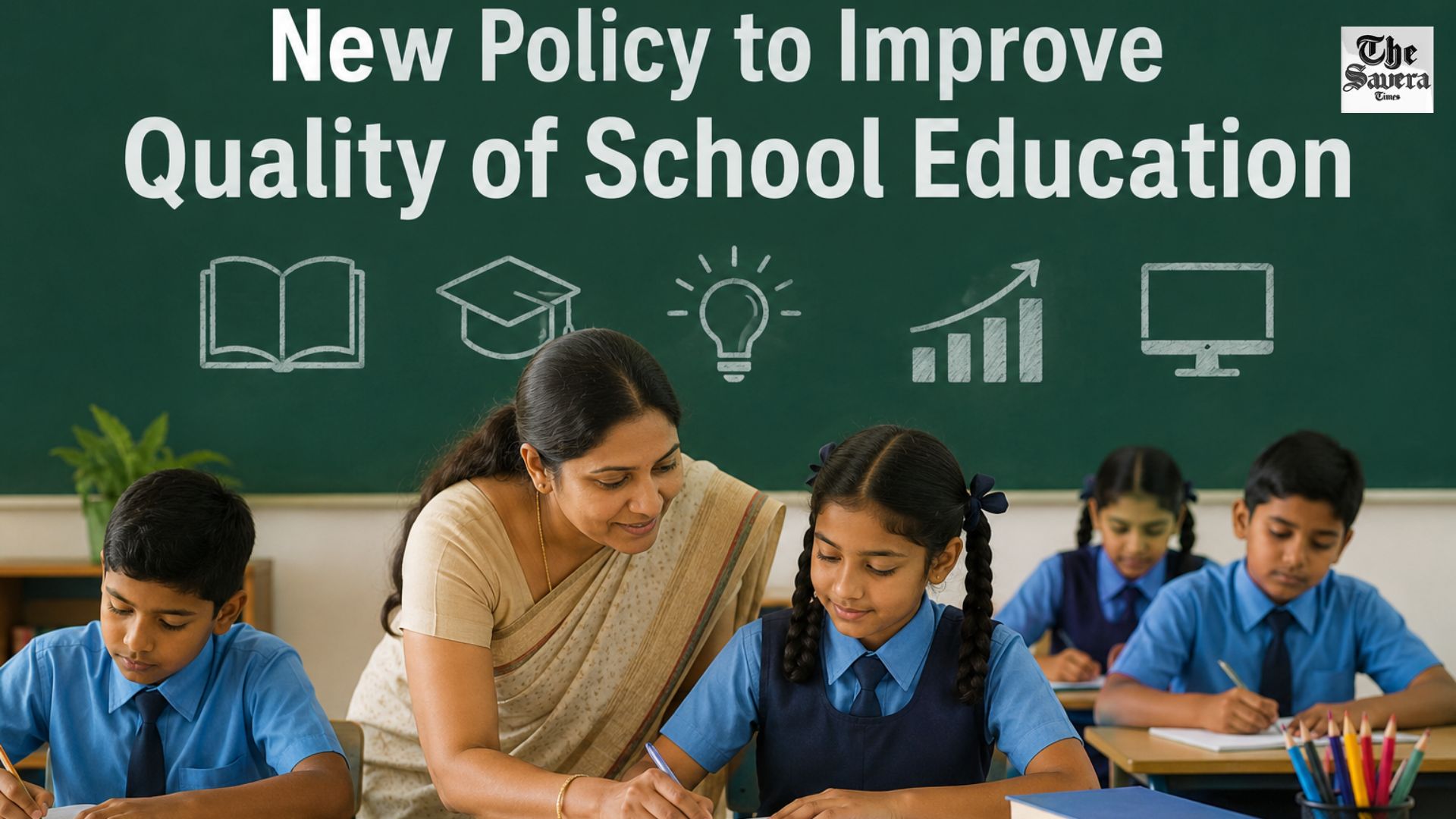
Various models of school education are implemented in different states across the country. However, it has been observed across India and its various states that although school enrolment of Indian children is 100% at the primary level, as they progress beyond this, children begin to drop out as their education fails to keep pace with practical life. By the tenth grade or higher secondary level, most children leave school. The country’s NITI Aayog is specifically considering ways to change this situation. The entire Indian education system includes 14.71 lakh schools, in which more than 24.69 crore students receive education.
From this perspective, it becomes the world’s largest education system. NITI Aayog has thoroughly reviewed the progress made in school education over the past decade and has put forward a new action plan for the country’s 36 states and union territories, aiming to improve school access, school infrastructure, fostering equality, inclusive education, and digital integration. Its first recommendation is to establish district-level task forces in states, and to integrate creative and student learning with advanced artificial intelligence pedagogy. Students should receive both basic knowledge and practical knowledge that provides them with training to earn money while simultaneously learning. While the new education system in India emphasizes digital and artificial intelligence knowledge, it has been emphasized at every step that school education should also be made employable.
Recently, NITI Aayog released a report, “Policy Framework for Improving the Quality of School Education in India,” which offers 13 recommendations for improving school quality. Previously, the Punjab government claimed that during its four-year tenure, it had provided buildings and toilet facilities to rural schools in the state. Yet, it is found that schoolchildren drop out midway. The dropout rate has not decreased, so NITI Aayog’s recommendations must be considered and implemented in every state.
The Commission’s first five recommendations include transforming teaching methods, fundamentally changing assessment and learning, emphasizing holistic education and student well-being, integrating vocational education and skills into education and early childhood care, and integrating artificial intelligence into educational innovation. There are also eight general system recommendations.
These include creating holistic schools, improving school structure through evidence-based teaching, strengthening school infrastructure, improving governance and administrative capacity, institutionalizing a holistic approach to society through task forces, and empowering school management committees. Other recommendations include improving teacher deployment and professional development, expanding digital and broadcast-based learning, and promoting equity and inclusion in the education system. NITI Aayog has emphasized the participation of girls at all levels. Scheduled Caste and Scheduled Tribe students should be encouraged to progress on the basis of equity and inclusion. This is the new policy that NITI Aayog has formulated for the entire country. Education is a shared subject between the states and the central government. It is hoped that state governments will accept this policy and appoint task forces in every district as soon as possible.
A major fire broke out at a scrap warehouse opposite the Maruti Temple in Sangameshwar, Maharashtra, around midnight....

A 48-year-old man, Pawan Sharma, died after an alleged altercation over a senior citizen seat at Delhi’s Supreme...
Shiv Sena (UBT), in its mouthpiece Saamana, has criticised the Centre over security measures and detentions during anti-government...
Former BJP MLA Attar Singh Bhedana died at Jaipur’s SMS Hospital after a violent clash at a crusher...

An eyewitness has recounted the fatal Mini Cooper crash in Nedumbassery, Kochi, claiming the driver said his father...

The Cockroach Janata Party plans to approach Parliament Street Police Station for permission to hold a peaceful protest...
Aries: The day will be auspicious...