Last Updated: October 15, 2026
Last Updated: October 15, 2026





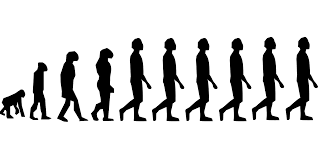
A groundbreaking study published in Nature Genetics has challenged the long-held belief that modern humans emerged from a single ancestral population. Instead, the research suggests that our genetic lineage can be traced back to two distinct ancient human populations that intermingled around 300,000 years ago.
According to the study, one of these populations contributed roughly 80 percent of the modern human genome, while the other contributed around 20 percent. This challenges the conventional view that Homo sapiens originated from a single group, instead supporting the idea that human evolution was shaped by a complex network of interbreeding populations.
The study’s authors propose that Homo sapiens likely descended from Homo erectus and Homo heidelbergensis, two early human species that lived in Africa and other regions. However, they acknowledge that further evidence is required to confirm this hypothesis. The question of how modern humans emerged has long been debated among scientists. Fossil evidence suggests that multiple human species coexisted in Africa around 300,000 years ago, but it has remained unclear whether all of them contributed to the ancestry of Homo sapiens.
“The fossil evidence suggests there may have been several different types of early human in Africa around 300,000 years ago, but were they all our ancestors or just one of them?” said Aylwyn Scally, a co-author of the study and researcher at the University of Cambridge, in an interview.
Previous genetic research had allowed scientists to infer aspects of human evolutionary history—such as the size of ancestral populations—using DNA from modern humans. However, Scally and his colleagues sought to extend this research by using more complex models that incorporated multiple ancient populations.
To investigate the origins of Homo sapiens, the researchers analyzed data from the 1000 Genomes Project, an international initiative that has sequenced the DNA of human populations across Africa, Asia, Europe, and the Americas. They then used a computational algorithm called COBRAA to model how ancient human populations split apart and later merged back together.
“COBRAA seeks to find an evolutionary model that best explains the observed distribution of mutations in a human genome sequence,” explained Trevor Cousins, a researcher from Cambridge’s Department of Genetics.
The analysis revealed that one ancient population was the primary ancestor of modern humans, contributing about 80 percent of the genetic material found in present-day populations. This group is also believed to have been the ancestor of Neanderthals and Denisovans, two extinct human species that later diverged from Homo sapiens.
The second ancient population contributed the remaining 20 percent of modern human DNA. This suggests that before the emergence of Homo sapiens, two genetically distinct human groups had already interbred in Africa.
Interbreeding between different human populations has played a crucial role in human evolution. Scientists already know that modern humans interbred with Neanderthals and Denisovans around 50,000 years ago. As a result of these interactions, non-African human populations today carry about 2 percent Neanderthal DNA. However, the new study suggests that genetic mixing occurred on an even larger scale much earlier—around 300,000 years ago. While Neanderthal DNA contributes only a small fraction to modern human genomes, the two ancient populations studied in this research contributed as much as ten times that amount.
“Mixing between different populations has always been a significant part of human evolution, as well as in other species,” Scally noted.
He pointed out that previous studies had generally found relatively small fractions of genetic mixing. For example, when modern humans and Neanderthals interbred 50,000 years ago, the resulting descendants—including all present-day non-Africans—retained about 5 percent Neanderthal ancestry.
“Our study is somewhat unusual in finding a much larger proportion of mixing: 80 and 20 percent. However, the same phenomena of migration and gene flow were likely involved,” he added.
Fossil records confirm that Homo erectus and Homo heidelbergensis lived in Africa and other parts of the world during the period when Homo sapiens first emerged. However, the researchers emphasize that more evidence is needed to confirm the precise identities of our genetic ancestors.
The authors of the study call for further research using advanced genetic models and the incorporation of additional ancient DNA samples. The discovery of new fossils could also provide valuable insights into human ancestry.
“Ultimately, without direct ancient DNA from a much earlier fossil than we presently have, it may be impossible to be truly certain who these ancestors were or what they looked like,” Scally stated.
This study represents a significant shift in our understanding of human evolution. Rather than originating from a single, isolated population, Homo sapiens appears to have emerged through the interbreeding of at least two distinct ancient groups.
This research aligns with the growing body of evidence that human evolution was a dynamic and interconnected process, shaped by migration and genetic exchange over hundreds of thousands of years. While many questions remain, these findings provide a clearer picture of our deep past and the genetic diversity that helped shape modern humanity.
As new fossil discoveries and genetic analyses continue to refine our understanding of human origins, researchers hope to uncover more details about the complex history of how Homo sapiens came to be.
The Supreme Court is set to hear opposition leaders’ petition seeking transparency in the Election Commission’s SIR decisions,...

Congress MP Angomcha Bimol Akoijam has been summoned by Delhi Police for questioning over sexual harassment allegations involving...

President Droupadi Murmu will inaugurate the national-level SARAS Mela at Punnami Ghat in Vijayawada on October 15. The...

Ankita Bhandari’s parents were detained during an overnight protest near India Gate in Delhi and released around 5...

New Delhi: Prime Minister Narendra Modi is scheduled to interact with the Indian contingent that participated in the...
New Delhi: The Central government has defended its decision to suspend mobile internet services in parts of central...
Aries: The day will be auspicious...