Last Updated: October 15, 2026
Last Updated: October 15, 2026





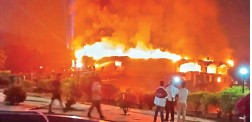
A devastating fire at the well-known nightclub Birch by Romeo Lane in Arpora, Goa, has claimed at least 25 lives, including 14 staff members and four tourists, in one of the state’s worst recent tragedies. The incident occurred shortly after midnight on Sunday, turning a night of leisure into a scene of panic, suffocation and mass casualties. As rescue operations concluded, the focus shifted to a widespread investigation into alleged illegal construction, safety lapses and regulatory failures that may have allowed the club to operate despite multiple warnings.
Most of the victims died of suffocation as they struggled to escape the rapidly spreading blaze. The magnitude of the loss prompted Goa Chief Minister Pramod Sawant to order a magisterial inquiry, while police registered a case against the club’s owner and general managers and issued arrest warrants. As investigators begin their work, several critical questions have emerged regarding how an establishment facing demolition notices continued to run a popular and crowded venue.
The cause of the fire remains unclear. Conflicting accounts have surrounded the moments leading up to the tragedy. Initially, the Goa police chief suggested a cylinder explosion triggered the blaze. However, multiple eyewitnesses contradicted this version, claiming the fire ignited on the first floor, where around 100 tourists were dancing. Without an official forensic conclusion, the exact point of origin is unknown, but some survivors noted that temporary structures made from highly flammable palm leaves contributed to the fire’s rapid spread and intensity.
Escape routes proved fatally inadequate. Survivors described a confusing interior layout, with a narrow entry and exit that created a bottleneck during the panic. Many guests and staff members fled toward a ground-floor kitchen area, which had poor ventilation. Several people were trapped inside, leading to a high number of deaths by suffocation. The accounts have raised concerns about whether the venue complied with basic fire and evacuation protocols required for commercial establishments that host large crowds.
The legality of the structure has also come under sharp scrutiny. Arpora-Nagoa sarpanch Roshan Redkar stated that the nightclub was operating without a construction license, and the local panchayat had already issued a demolition notice. That order, however, was stayed by the Directorate of Panchayats, enabling the club to continue its operations. Reports suggest the building stood on saltpan land that falls under a Coastal Regulation Zone, an area where any form of construction is prohibited. How the club managed to remain open despite these red flags is now a central focus of the investigation.
Emergency response was severely delayed due to the club’s remote location. Situated in the backwaters and accessible by only one narrow road, the nightclub was difficult for fire services to reach. Fire tenders reportedly had to park 400 metres away from the structure, causing crucial delays that may have further reduced victims’ chances of survival. Authorities are now examining whether these access limitations were known earlier and if the venue should ever have been permitted to host large crowds under such circumstances.
Chief Minister Sawant has publicly stated that the club did not comply with mandatory fire safety norms. The ongoing inquiry will determine whether regulatory bodies overlooked clear violations, and if officials or local authorities played a role in allowing the venue to function without proper checks. In response to public criticism, local leaders have announced that panchayats will begin conducting fire safety audits of all nightclubs, issuing notices and threatening license cancellation for those failing to comply.
The Prime Minister’s Office has announced financial aid of Rs 2 lakh for the next of kin of the deceased and Rs 50,000 for the injured. As families grapple with the sudden loss of loved ones, the larger question now confronting Goa is how a structure marked by repeated warnings, fire hazards and questionable legality continued to operate until the disaster struck. The findings of the magisterial inquiry will determine responsibility for the failures that allowed unsafe conditions to persist, and whether the tragedy could have been prevented.
Good Afternoon Viewers! Stay updated with The Savera Times Afternoon Bulletin, bringing you the latest news from Punjab,...

New Delhi: Heavy rain and thunderstorms swept parts of Delhi-NCR on Thursday as dark clouds covered the national...
A street vendor has approached the Delhi High Court seeking to stop the Cockroach Janata Party (CJP)'s protest...
Suva: India and Fiji on Thursday held discussions focused on deepening bilateral ties and reaffirmed their shared commitment...
Bokaro (Jharkhand): The protest by trained youth from displaced families affected by the Bokaro Steel Plant (BSL) intensified...
Varanasi: Uttar Pradesh Chief Minister Yogi Adityanath, on a two-day visit to Varanasi, honoured sanitation workers from the...
Aries: The day will be auspicious...