Last Updated: October 15, 2026
Last Updated: October 15, 2026





A Journey into the Eternal Shakti of Bharat
Dr Tanu jain
Chief executive officer Bareilly cantonment board Ministry of defence
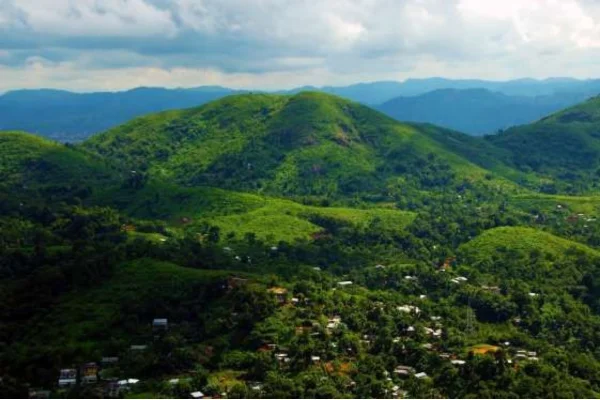
A quiet Saturday morning marked the beginning of a journey that would leave an indelible imprint on my soul. An early flight carried me eastward to Assam—not merely toward a destination, but toward the living presence of the Divine Mother. As the aircraft cut through the clouds, my heart was already chanting Her name. Each breath became a prayer, each thought a silent offering. I was aware that I was not simply travelling to a temple; I was returning to a primordial source of Shakti—Maa Kamakhya.
The moment I entered the sacred precincts of Nilachal Hill, a gentle lightness filled my being. The air itself felt ancient, as though it carried memories older than time. Around the Kamakhya Sarovar, sadhus sat in deep silence—still, composed, inward-looking. Their closed eyes and steady postures reflected a tapasya that was not performance, but inner alchemy. They were not praying to the Mother; they were existing within Her. In that stillness, I felt the pulse of timeless Bharat, where spirituality is lived, not displayed.
Though I have worshipped the Divine in many forms, this visit felt profoundly different. With conscious intent, I paused outside the temple to browse the sacred texts sold by local scholars. One book, detailing the mysteries of Kamakhya—its tantric traditions, history, and spiritual geography—called out to me. It spoke of ancient Assam, once known as Pragjyotishpur, the land of eastern light and cosmic wisdom. Long before political histories were written, this region was a centre of astrology, tantra, and Shakti worship.
Kamakhya was never merely a temple—it was, and remains, a living energy field.
The legends of Kamakhya are inseparable from the cosmic sacrifice of Goddess Sati. According to the Shiva Purana and Kalika Purana, when Daksha insulted Lord Shiva, Sati immolated herself in yogic fire. A grief-stricken Shiva carried her body across the universe, threatening cosmic dissolution. To restore balance, Lord Vishnu released the Sudarshan Chakra, dismembering Sati’s body. Wherever her limbs fell, Shakti Peethas emerged. It is believed that Maa Sati’s yoni—symbol of creation and fertility—fell at Kamakhya, making it the most powerful expression of life-force and regeneration. The Shiva Purana echoes this truth:
“Yatra yatra patitam devi shariram Parameshwari,
Tatra tatra sthitam Shakti Peetham loka-poojitam.”
(Wherever the body of the Divine Mother fell, that place became a Shakti Peetha, revered by all worlds.)
As I joined the long queue of devotees, I observed the quiet intensity in their eyes. Each person carried unspoken prayers—some seeking healing, some forgiveness, some strength, some surrender. There was no impatience, only anticipation softened by faith. When I finally entered the garbhagriha, words dissolved into silence. Unlike most temples, Kamakhya’s sanctum is enveloped in darkness. There is no idol, no visible form—only a sacred cleft representing the eternal feminine. Yet that darkness radiates light. It is the darkness of the womb, not of absence. A profound warmth enveloped me, as though the Mother herself whispered, “Creation begins in silence.” Water continuously flows over the sacred stone, symbolising the unbroken cycle of life. In that moment, I bowed not just my head, but my ego, my doubts, and my becoming.
Within the temple complex, I worshipped Maha Ganapati, the remover of inner and outer obstacles. A sacred havan followed, and as the flames rose, I felt a subtle yet unmistakable shift in energy. To the right of the main sanctum stands Kameshwar Bhairava—the fierce yet protective form of Shiva. Scriptures say that when Shiva overcame Kamadeva through penance, Bhairava emerged as the guardian of Kamakhya. Here, Shakti and Shiva exist in eternal union—creation and consciousness inseparable. Just outside lies the shrine of Maa Baglamukhi, embodiment of stambhana shakti—the power to still negativity. Then came a soft cue from the guide, almost divinely timed: “Upar Bhuvaneshwari Mata ka mandir hai.”
Maa Bhuvaneshwari, ruler of cosmic space, resides atop Nilachal Hill. I climbed quietly, lit a diya, and offered incense. It was my first visit there. On the hilltop, sadhaks sat with malas, chanting mantras carried away by the wind. The sky felt closer. Time felt suspended. The earth beneath my feet felt sanctified. As I descended, a realization settled gently within me: Kamakhya is not a destination one ever fully completes. Each visit unveils a new layer—of the land, of the Mother, and of oneself. This was not merely a pilgrimage; it was a beginning. At the threshold of a new year, I prayed for forgiveness, clarity, and inner strength—to live with humility, awareness, and devotion.
I left Nilachal Hill with folded hands and a full heart, whispering: “Om Aim Hreem Kleem Kamakhyai Namah.”
This is Spiritual India. This is Bharat. Not a memory—but a living experience that continues to awaken the soul.
Good Afternoon Viewers! Stay updated with The Savera Times Afternoon Bulletin, bringing you the latest news from Punjab,...

New Delhi: Heavy rain and thunderstorms swept parts of Delhi-NCR on Thursday as dark clouds covered the national...
A street vendor has approached the Delhi High Court seeking to stop the Cockroach Janata Party (CJP)'s protest...
Suva: India and Fiji on Thursday held discussions focused on deepening bilateral ties and reaffirmed their shared commitment...

Bokaro (Jharkhand): The protest by trained youth from displaced families affected by the Bokaro Steel Plant (BSL) intensified...
Varanasi: Uttar Pradesh Chief Minister Yogi Adityanath, on a two-day visit to Varanasi, honoured sanitation workers from the...
Aries: The day will be auspicious...