Last Updated: October 22, 2026
Last Updated: October 22, 2026





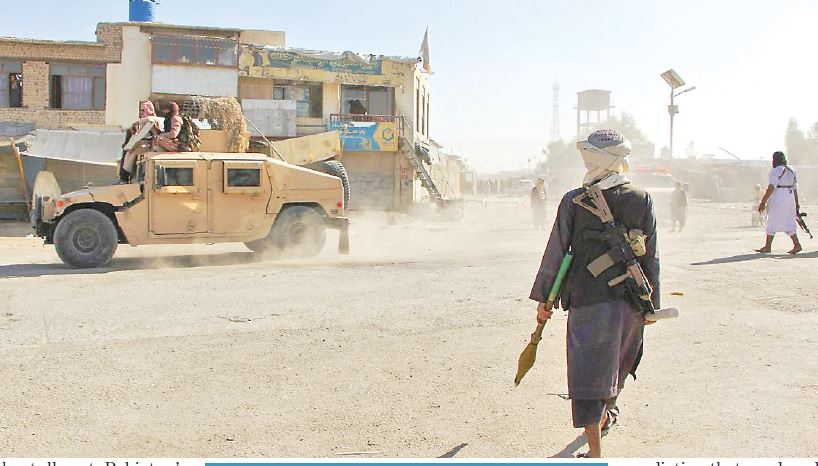
High-stakes peace talks between Pakistan and Afghanistan’s Taliban government ended in Istanbul this week with no breakthrough, leaving a fragile ceasefire at risk and exposing deep mistrust between the two sides. Mediated by Qatar and Turkey, the meeting was the second diplomatic attempt this month to secure a durable truce after border clashes that have killed and displaced many.
The first round of talks, held in Doha, produced a ceasefire on October 19. Delegations reconvened in Istanbul to address unresolved issues and to convert the ceasefire into a more durable agreement. After four days of closed-door discussions, Pakistan’s Information Minister Attaullah Tarar announced that the dialogue had failed to produce “any workable solution,” accusing the Afghan delegation of diverting from core issues and refusing to accept responsibility.
At the centre of the impasse was Pakistan’s demand that Kabul provide written guarantees to prevent the Tehreek-e-Taliban Pakistan, known as the TTP, from using Afghan soil to plan and launch attacks. The Pakistani government has repeatedly said the TTP operates from sanctuaries inside Afghanistan and that Islamabad needs enforceable commitments to stop cross-border militancy.
The Afghan delegation, according to sources cited by international news agencies, refused to provide the written assurances Pakistan sought. Afghan officials reportedly maintained that the TTP is a Pakistani internal problem and that Kabul could not offer the written guarantees Islamabad demanded. An Afghan source close to the talks described “tense exchanges” and said the Afghan side viewed Pakistan’s demands as unreasonable. The Afghan foreign and defence ministries did not issue an immediate public response after the talks.
Mediation by Qatar and Turkey underscored the regional stakes. Both countries have acted as diplomatic bridges on Afghanistan since 2021 and were invited to facilitate the talks at Pakistan’s request. Pakistan’s information minister acknowledged their role, saying Pakistan had, at the request of “brotherly countries” Qatar and Turkey, given peace a chance. Officials from both mediating states were present throughout the discussions, attempting to bridge differences that have deepened since the fighting resumed in 2023.
Accounts from inside the negotiations diverged sharply on several procedural matters. Three Pakistani security officials speaking to the Associated Press said the Taliban delegation was not fully prepared to accept Pakistan’s proposals and frequently sought guidance from Kabul before committing to positions. On the Afghan side, sources cited by local media accused Pakistan’s team of poor coordination. Security sources told TOLO News that Pakistani representatives had repeatedly stepped away from the table, which they said hindered progress.
The talks also exposed broader, sensitive issues that complicated negotiations. According to reports, Pakistan admitted during discussions that it had an agreement with a foreign nation permitting drone strikes on its territory. TOLO News reported that Pakistani officials said they could not prevent certain drone operations because of that agreement. The country in question was not named in reports. The admission came amid speculation about Islamabad’s growing defence ties with the United States and Saudi Arabia, including a Strategic Mutual Defence Agreement Pakistan signed with Riyadh in September.
The Taliban delegation raised concerns about Pakistan’s stance on drone strikes and demanded that Islamabad ensure its airspace would not be used for operations against Afghanistan. Afghan representatives also reportedly wanted Pakistan to prevent US drones from entering Afghan airspace via Pakistani territory. Pakistan did not accept those demands.
The TTP’s role in the crisis remained central. Islamabad insists the TTP continues to carry out attacks inside Pakistan from Afghan sanctuaries. Kabul rejects that claim and says Afghan territory is not used for hostile actions against Pakistan. Pakistani officials characterised the Taliban response as indifferent to Pakistan’s losses, with Minister Tarar accusing the Taliban of deflection and of failing to take responsibility. Afghan officials countered that Pakistan was failing to respect Afghan sovereignty and warned that Afghan territory would be targeted if it were bombed.
Analysts say the core of the problem lies in differing views on sovereignty, the limits of guarantees a ruling authority can offer, and mutual distrust borne of years of conflict and political rivalry. Pakistan demands concrete, verifiable mechanisms to prevent cross-border militancy. The Taliban, newly in control in Kabul since 2021 and facing its own internal security and governance challenges, is cautious about accepting obligations that could be perceived as compromising Afghan sovereignty or that it cannot implement on the ground.
The failure of the Istanbul talks leaves the ceasefire fragile and the risk of renewed clashes high. Border violence in recent weeks prompted both sides to seek a halt to offensive operations, but the lack of agreement on verification and enforcement mechanisms means ceasefire commitments could quickly unravel. For civilians living along the border, the collapse of talks raises the prospect of fresh displacement, casualties, and further strain on humanitarian needs.
Regional and international actors face a difficult task. Qatar and Turkey offered mediation that produced an initial pause in fighting, but their efforts have not resolved the underlying disputes. Observers say any sustainable settlement will require a clear mechanism for monitoring compliance, a shared approach to addressing militant groups operating across borders, and confidence-building steps to reduce suspicion between Islamabad and Kabul.
The talks in Istanbul also highlighted the limits of diplomacy in the absence of mutual trust and enforceable commitments. Both sides blame the other for the failure, and the public rhetoric since the collapse has been sharp. The next diplomatic moves are uncertain. Pakistan may pursue a range of options, from renewed pressure through international partners to military measures if it concludes diplomatic avenues are exhausted. Afghanistan’s approach will be shaped by internal politics and by how the Taliban balances diplomatic engagement with domestic priorities.
For now, the ceasefire stands on fragile ground. The Istanbul talks demonstrated the complexity of resolving conflicts that cross borders and involve nonstate militant actors. Without a credible framework for verification or mutual concessions that address core security concerns, the risk is that diplomatic efforts will stall and fighting will resume, with human costs that could be severe.
Pakistan's Defense Minister Khawaja Asif has questioned alleged plans by senior government officials to permanently settle abroad. He...
The Baloch Liberation Army (BLA) has claimed responsibility for carrying out 34 operations between October 9 and 20...
Russian President Vladimir Putin said on Wednesday that Russia's first tanker carrying 40,000 tons of diesel fuel will...
Ten people were killed and 44 others injured in a horrific road accident in Pakistan's Punjab province. The...
North Korean leader Kim Jong-un's influential sister, Kim Yo-jong, and a military marshal inspected fortification work along the...

New Delhi: US Secretary of State Marco Rubio has assured India that America’s relations with any country in...

Aries: The day will be auspicious...