Last Updated: October 21, 2026
Last Updated: October 21, 2026





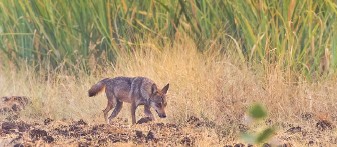
Savannas across India often remain unnoticed despite covering nearly a tenth of the country’s land area. These open landscapes of short grasses, thorny trees and hardy shrubs support pastoral communities, wildlife such as the Indian wolf and the Great Indian bustard, and more than 200 plant species found only in these habitats. Yet policy documents continue to describe them as wastelands or assume they are forests degraded by human use.
A new study published on November 25, 2025, in the journal People and Nature challenges these long-held assumptions using an unusual source: medieval Marathi literature. The research, by Ashish N Nerlekar of Michigan State University and Digvijay Patil of IISER Pune, finds that western India’s savannas have been open, grassy ecosystems for at least 750 years, long before colonial forestry and modern land use changes.
The researchers examined saints’ biographies, poems, oral traditions and regional retellings of mythological stories. They matched plant names found in these texts with their modern botanical identities using classical Marathi dictionaries and historical botanical works. Their goal was to determine whether the landscapes described in these sources were dense forests or the same open savanna ecosystems that exist today.
They identified 44 plant species, with nearly two-thirds typical of savanna habitats. Many of these plants are still found across western Maharashtra’s grasslands, providing strong continuity between past and present landscapes. Several examples highlight this link. A 16th century retelling of the Adi Parva describes the Nira River valley as empty and thorny, a place chosen by cowherds for its grass. The description closely matches today’s dry savanna terrain. A 15th century account from Pandharpur mentions a tarati shrub sprouting from a saint’s grave. Botanists identify it as Capparis divaricata, a species that grows only in open, sunlit savannas. The acacia Vachellia leucophloea, often mentioned by the 13th century philosopher Chakradhara, also continues to dominate these landscapes.
The findings reinforce that western India’s savannas are ancient ecosystems shaped by climate, fire and grazing, not degraded forests. The study argues that policymakers should recognise grasslands as distinct biomes rather than treat them as empty spaces for large-scale tree plantations. Nerlekar told Down To Earth that despite growing scientific evidence on the antiquity of tropical savannas, policy continues to rely on colonial ideas that valued timber above all else.
Misunderstanding these ecosystems has significant consequences. Planting dense forests in naturally open areas can damage grassland biodiversity, disrupt fire cycles and eliminate species adapted to sunlight. The authors recommend that policymakers protect savanna habitats, avoid indiscriminate tree planting, and support pastoral practices that help maintain open landscapes. They also call for researchers to use folklore and classical literature as meaningful ecological archives.
A fire in a hut in Nonapar village of Deoria district claimed three lives, including those of a...

Amit Shah paid tribute to police personnel who died in the line of duty at the National Police...

Reduced water levels at Har Ki Pauri and other Haridwar ghats have inconvenienced pilgrims during the Upper Ganga...

Six people returning from a Dussehra Mela were seriously injured when a car hit them on National Highway...

A bus travelling from Pachiound to Ramnagar fell into a gorge at Gulli Gula in Udhampur district. Nine...
Start your day with The Savera Morning Brief, bringing you the latest news from India and around the...

Aries: The day will be auspicious...