Last Updated: October 21, 2026
Last Updated: October 21, 2026





Sheena Sandhu
(Views are personal)
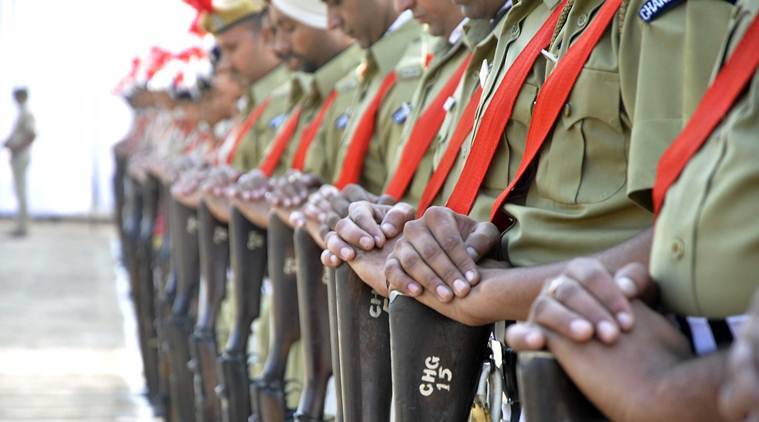
Police Commemoration Day is not just a ritual of mourning, but a reminder of sacrifice, service and the reforms still unfinished Every year on October 21, police forces across India observe Police Commemoration Day — a solemn occasion to honour the men and women who laid down their lives in the line of duty. It is a day of wreaths, parades, and silence. But it must also be a day of reflection — on the burden carried by the police, the expectations of society, and the reforms still left undone.
The origins of the day
The date is not arbitrary. On 21 October 1959, in the remote Hot Springs area of Ladakh, a patrol party of the Central Reserve Police Force was ambushed by Chinese troops. Ten policemen were killed, others captured or injured. Their sacrifice, in what was not yet formally a battlefield, symbolised the dual role of the Indian police — not only as keepers of domestic peace but also, when needed, as defenders of national frontiers.
In January 1960, police chiefs from across the country resolved that October 21 would be observed annually as Police Commemoration Day. What began as remembrance of a single incident has since evolved into a nationwide ritual of respect for every policeman and woman who dies on duty each year. The tribute gained a physical centrepiece in 2018, when the National Police Memorial was inaugurated in Delhi’s Chanakyapuri. Its 30-foot tall black granite monolith, the Wall of Valour engraved with thousands of names, and the museum chronicling the history of Indian policing, together create a space for collective remembrance.
Beyond ritual
Like many memorial days, there is a risk of this occasion being reduced to a ritual of parades and official statements. The real meaning of Police Commemoration Day lies in recognising the everyday realities of policing.
A larger message
To commemorate the fallen is to also commit to the living. Governments, at both central and state levels, must treat police welfare as policy, not charity. This includes better service conditions, mental health support, and reducing political interference that often compromises professionalism. Equally, the police leadership must push for transparency and accountability, so that public confidence is not eroded by excesses or corruption. Trust, once broken, cannot be restored by memorial walls alone. Finally, the day underlines that security is not the task of the khaki alone. Citizens share the responsibility — by respecting law, cooperating with authorities, and demanding reform.
Not just a day of mourning
October 21 is not only a day to grieve. It is a day to remember the thin khaki line that stands, often invisibly, between chaos and order. It is a day to salute the courage of those who never returned home — and to ensure that those who still wear the uniform are equipped, respected, and supported. Only then will commemoration move from ritual to responsibility
We are very proud that at present India is the number one country in the world by surpassing...

Every investor wants the wealth-creating power of equity and the reassuring stability of debt. Balanced Advantage Funds attempt...

Tourism is a major source of government revenue in our country. There are different types of tourism. Scenic...
Good Evening Viewers! Catch up on the day's biggest stories with The Savera Times Evening Bulletin. Get the...

Congress leaders continued their protest outside the Jaipur Police Commissionerate on Tuesday, demanding the registration of a zero...
On the auspicious occasion of Vijayadashami, Prime Minister Narendra Modi on Tuesday called on the countrymen to unite...
Aries: The day will be auspicious...