Last Updated: October 2, 2026
Last Updated: October 2, 2026





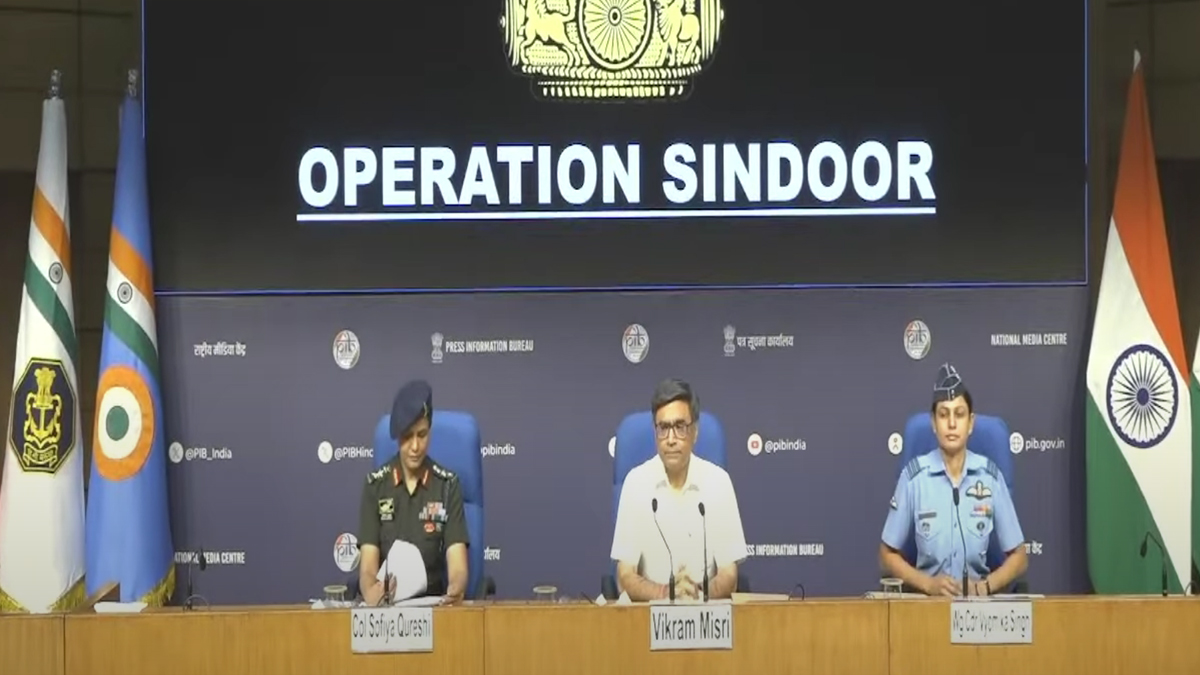
Operation Sindoor has left deeper aftershocks than Delhi first acknowledged. In the months since Indian strikes in May targeted nearly a dozen militant sites across Pakistan and Pakistan-occupied Kashmir, leaders of Pakistan-based groups have offered public statements that clash with Islamabad’s official denials — and in some cases confirm long-held Indian allegations about training camps and state links.
The most striking disclosure comes from a video posted by a Lashkar-eTaiba (LeT) commander who stood amid ruined structures at Muridke and described the compound there as a functioning centre for training and indoctrination. The compound, known as Markaz Taiba or the Government Health and Educational Complex, sits near Muridke in Sheikhupura district, about 30 kilometres from Lahore. The commander identified as Qaasim said the site had been destroyed in the May strikes and said reconstruction was already under way.
“I am standing on the ruins of Markaz Taiba in Muridke, which was destroyed in the (Indian) attack. The process of rebuilding it is underway. With God’s grace, this mosque will be built bigger than before,” he said in the footage. Qaasim also confirmed what New Delhi has long alleged: that militants were trained at Muridke. He described the camp’s programmes — including a training syllabus named Daura-e-Suffa, which blends basic paramilitary drills with religious instruction — and openly called for new recruits to join. Those admissions, coming from a senior LeT figure, directly contradict public claims by Pakistani authorities that sites such as Muridke were no longer being used to train fighters.
A second LeT statement added a new dimension. Saifullah Kasuri, identified in comments circulating on social media and militant channels as an LeT deputy, said Pakistan’s military and government were financing reconstruction. In his remarks, Kasuri indicated that official and unofficial resources were being mobilised to restore the compound and resume activities.
He also set a target date for a public reopening: 5 February 2026, observed by militants and sympathisers as Kashmir Solidarity Day, a date LeT reportedly plans to use for a formal inauguration and its annual convention. Those claims have strategic implications. New Delhi has repeatedly urged international bodies such as the Financial Action Task Force (FATF) to scrutinise Pakistan’s efforts to curb terror financing; Pakistan has been placed on the FATF “grey list” multiple times in the past for shortcomings in countering money flows to extremist groups.
Officials in New Delhi say reconstruction and renewed training would amount to the institutional revival of militant infrastructure. The disclosures from LeT arrive against a parallel admission from Jaish-e-Mohammed (JeM). A senior JeM commander, Masood Ilyas Kashmiri, said in a separate video that India’s May strikes on a JeM site in Bahawalpur had killed several of Masood Azhar’s family members. Kashmiri said that members of Azhar’s extended family and aides died in the Bahawalpur attack and described the aftermath in graphic terms on camera.
JeM is headquartered at the Jamia Masjid Subhan Allah campus in Bahawalpur, and Kashmiri’s account — if accurate — represents one of the most personal blows the group has faced in recent years. Kasuri and other militant voices went further, alleging that Pakistan’s military publicly memorialised the dead by attending funerals of militants, a detail New Delhi has cited to argue that certain elements in Pakistan condone or support proxy groups. Kashmiri also claimed senior military figures attended funerals and suggested a level of sympathy or political cover. Those assertions feed directly into a larger diplomatic debate over whether Pakistan’s institutions have done enough to sever ties with armed groups that operate from its soil. Militant defiance is unmistakable in tone. Kasuri vowed vengeance for Operation Sindoor, issuing threats aimed at India and specifically naming infrastructure and hydrological targets in Jammu and Kashmir. “We will avenge the blood of our brothers,” he said, according to circulated statements, and spoke of a readiness to “sacrifice” to capture dams, rivers and territory — a rhetoric New Delhi treats as not only provocative but dangerous because it signals intent to target civilian infrastructure. New Delhi’s own posture has been firm.
Operation Sindoor, launched after the Pahalgam attack in April in which 26 civilians were killed, was presented as a precise response targeting launchpads and camps used to orchestrate cross-border terrorism. Indian authorities have maintained that the strikes degraded militant capacity. Intelligence inputs cited by Indian officials since then have suggested that a number of groups are attempting to repair damage and reconstitute their networks. The videos and statements from group commanders appear to confirm at least some of those assessments. For analysts, the recent public admissions mark a worrying stage: they are both propaganda and evidence. Militants seek to turn damage into symbolism — rebuilding “bigger than before” is a recruiting message — while the admissions themselves provide concrete pointers about where planners, trainers and infrastructure may be concentrated. Diplomatically, the disclosures complicate Pakistan’s position. Islamabad has denied that many of the targeted facilities were being used for militant training and has condemned cross-border strikes as violations of sovereignty.
The new footage and statements, however, are likely to become part of New Delhi’s case at international forums pressing for tougher action on terror financing and safe havens. The emergent picture is stark. Operation Sindoor damaged known militant sites; commanders and deputies have publicly declared their intent to rebuild and resume operations; and at least one senior JeM officer has acknowledged the deaths of family members in the Bahawalpur strike.
Whether reconstruction proceeds as advertised or remains a rhetorical device, the admissions underscore that militant groups and their supporters are intent on reconstituting capabilities and messaging defiance. For security planners in the region, the immediate question is how to translate these admissions into validated intelligence and policy responses that prevent a renewed cycle of recruitment and crossborder attacks
Security was tightened in central Delhi on Friday ahead of a proposed demonstration at Jantar Mantar against Chief...
Five people were killed and 21 others sustained injuries after a truck crashed into a Bolero pickup van...

Prime Minister Narendra Modi on Friday paid tribute to Mahatma Gandhi at Rajghat on the occasion of his...
The current global climate, coupled with the protracted war between the US and Iran, has created a supply...

Sanjay Jog All is not well with the MahaYuti in Maharashtra in the time of drought. A major...

As the monsoon approaches and the first rains arrive, cities across India begin preparations to address the seasonal...
Aries: The day will be auspicious...