Last Updated: October 21, 2026
Last Updated: October 21, 2026





Abhishek Vij
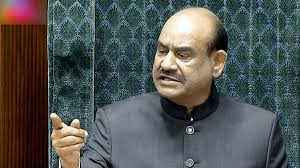
Amidst the ongoing parliamentary deadlock, the opposition has submitted a notice of no-confidence motion against Lok Sabha Speaker Om Birla to the Lok Sabha Secretary General. Om Birla, in keeping with the dignity of his position, has stated that he will recuse himself from the daily proceedings of the Lok Sabha until the no-confidence motion is decided and would like a decision to be taken soon. This is the fourth no-confidence motion against a Lok Sabha Speaker since independence.
Before Om Birla, three Lok Sabha Speakers (G.V. Mavalankar in December 1954, Hukam Singh in 1966, and Balram Jakhar in 1987) have faced no-confidence motions, but none have been passed. Given the current party alignment of MPs in the Lok Sabha, it is clear that this no-confidence motion will also be defeated, but it will likely be accompanied by acrimonious speeches from both the ruling and opposition parties, uproar, and ample news material for the media. A question that inevitably arises in the minds of ordinary people is: when the crucial budget for the financial year was presented in Parliament, shouldn’t such a ruckus have been created instead of a discussion, and proper reflection on the budget have been allowed?
The budget debate began on Wednesday, but the noise and raising of irrelevant issues continued. The no-confidence motion notice against Om Birla accuses the Speaker of the Lok Sabha of conducting the House in a biased manner, making false allegations against Congress members, and abusing his position. Furthermore, the notice also states that on February 2nd, Leader of the Opposition Rahul Gandhi was not given a full opportunity to speak during the motion of thanks on the President’s address in the Lok Sabha. This has been the case with him every time. On February 3rd, eight Congress MPs were arbitrarily suspended for the entire Budget Session, punishing them for attempting to speak. On February 4th, a ruling party MP’s personal attacks on two former Prime Ministers were allowed, but Rahul Gandhi was not allowed to quote from former Army Chief General Naravane’s book.
Although the MP’s name was not mentioned, the allegations against Nishikant Dubey were leveled against him, citing disregard for decorum. The opposition’s no-confidence motion has been signed by 118 MPs. The Trinamool Congress has not yet signed it, stating that they will first write a letter opposing it and, if they don’t receive a response, will sign the motion. It seems as if the goal of such controversies is to create uproar and grab headlines. In a democracy, public representatives should seriously consider every problem responsibly and seek solutions. Unfortunately, this does not happen.
Earlier, there was a major uproar over the labor laws passed in Parliament. Due to the uproar, many important proposals could not be discussed. Why are the core problems facing the country not addressed, while other issues are magnified and sessions are wasted? The outcome of the current no-confidence motion is already known, but the amount of precious time the Lok Sabha will waste during the bitter debate is well known. Such behavior by public representatives in the world’s largest democracy is unacceptable.
Start your day with The Savera Morning Brief, bringing you the latest news from India and around the...

Union Home Minister Amit Shah will pay tribute to police martyrs at the National Police Memorial in New...
Four more people, including two women, have been arrested in the Tiger Shroff firing case. Delhi Police are...
We are very proud that at present India is the number one country in the world by surpassing...
Every investor wants the wealth-creating power of equity and the reassuring stability of debt. Balanced Advantage Funds attempt...

Tourism is a major source of government revenue in our country. There are different types of tourism. Scenic...
Aries: The day will be auspicious...